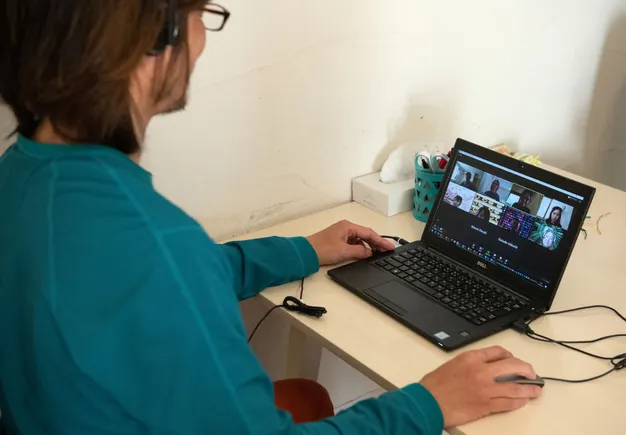
A good remote relationship does not require constant availability. It requires dependable presence.gettyIt can feel slightly strange to care about someone you have never met in person. You know their writing style, their working rhythm, the way they apologize when they reply late and the kinds of details they notice. You may know that they are starting their day in Minneapolis as yours is already halfway through in London. Or that a message sent from Seattle will land in Singapore when the other person is closer to sleep than work.Then one day you realize the connection feels real.This happens more often than people admit, especially in remote and global work. Two colleagues collaborate across time zones. A consultant and client exchange long, thoughtful messages. A researcher and editor work through drafts asynchronously. A mentor and mentee build trust through voice notes, emails, documents and small replies sent at odd hours.They may never have sat in the same room. Yet the relationship can develop a texture that feels unusually intimate. Not necessarily romantic, though it can be mistaken for that. Not necessarily friendship in the conventional sense either. It is something quieter: a connection built through attention, timing, imagination and repeated evidence of being understood.Why Distance Can Make Connection Feel Stronger Sometimes it concentrates it. When people are not casually present in each other’s daily lives, the moments of contact can feel more deliberate. A message is not just background noise. It becomes an event. Someone took time, across a different day, to respond to something you said.MORE FOR YOUTime zones add another layer. London and Minneapolis do not share the same workday. Seattle and Singapore overlap awkwardly, if they overlap at all. One person writes at the end of a long day. The other reads it over morning coffee. There is a delay, but the delay can create anticipation. The conversation stretches across time rather than happening all at once.That can create a different kind of closeness. People often reveal more in writing than they do in passing conversation. They choose words carefully. They explain context. They think before replying. In an office, proximity can produce familiarity. Across time zones, consistency can do the same thing.The Role Of Selective AttentionPart of the connection comes from attention. In ordinary workplace life, people are surrounded by partial interactions. Meetings, interruptions, side comments, quick chats and rushed messages. Remote relationships strip some of that away. What remains is often more focused.If someone consistently reads your work carefully, remembers what you said three messages ago, notices a small shift in tone, or responds to the part of your message that others might miss, the relationship begins to feel meaningful. Not because it is dramatic, but because attention is rare.This is why asynchronous connection can sometimes feel disproportionately strong. You are not only responding to the person. You are responding to the experience of being received well. A thoughtful reply from another time zone can feel more intimate than a full day in the same office with someone who barely listens.There is also a kind of projection involved. When people know only part of someone, they fill in the rest. They imagine the room the person is writing from, the weather outside, the life around the work. That does not make the connection fake. It simply means it is partly built from evidence and partly from imagination.Most human relationships are. Distance just makes that more visible.Why Time Zones Create A Private RhythmRelationships often deepen through rhythm. Not constant contact, but predictable contact. A message before someone logs off. A reply that arrives overnight. A shared joke that survives a twelve-hour delay. A document that passes back and forth until it feels like a conversation no one else is in.This rhythm can create a private world inside a public role. Two people may be working on an ordinary task, but the pattern of exchange gives it emotional shape. They begin to know how the other person thinks, when they are likely to respond and what kind of reply means they are tired, amused, distracted, or engaged.That kind of familiarity is easy to underestimate because it does not look like traditional closeness. There may be no lunches, no shared commute, no after-work drink, no office gossip. But there is repeated mutual orientation. Each person becomes part of the other’s working day, even when their days do not overlap.The connection forms in the handoff.What It May Actually MeanFeeling connected to someone you have never met does not automatically mean the relationship is deeper than your in-person ones. It may mean the relationship is meeting a specific need. Perhaps it offers intellectual recognition. Perhaps it gives you a sense of being understood without being interrupted. Perhaps the distance makes it feel safer because the relationship is bounded by work, time zones and screens.That is important. Some remote connections feel powerful because they are partial. You see the person in a particular mode: thoughtful, responsive, funny, generous, precise, available in small ways. You may not see the fuller complexity of their life, habits, moods, obligations, or contradictions.This does not make the connection meaningless. It makes it incomplete.In workplace terms, that distinction matters. A strong remote connection can be professionally valuable. It can improve collaboration, trust and creativity. It can make global work feel less transactional. But it can also become emotionally confusing if people mistake intensity for intimacy, or consistency for closeness in every sense.A relationship can be real without being fully known.Why It Can Feel EndearingThere is something endearing about small signs of humanity across distance. A typo sent late at night. A message that begins with “sorry, just waking up.” A reply that arrives from another season, another weather pattern, another part of the day. These details remind people that work is not happening in one shared room anymore. It is happening across lives.That can soften people. The colleague becomes less like a function and more like a person. You begin to picture their constraints. You understand why a delay happened. You learn their rhythm and stop interpreting every silence as disinterest.This is one of the overlooked gifts of global work. Done well, it can expand empathy. It reminds people that your own working day is not the center of everyone else’s. Someone else is finishing when you are starting. Someone else is making space for you from the edge of their own day.Connection can grow from that awareness.The Risk Of Overreading The BondThere is a risk, though, in making the connection carry more meaning than it can hold. Distance can make people feel safer, but it can also make them idealize. Because there are fewer mundane details, fewer awkward silences and fewer ordinary irritations, the relationship may feel cleaner than it would in person.This is especially true when the exchange is emotionally charged or creatively intense. Working closely on ideas, writing, strategy, research, or difficult decisions can create a sense of shared mental space. That can feel personal because thought itself is personal. But not every feeling of closeness requires a larger story.Sometimes the meaning is simply this: someone met you at the level of attention you needed.That is not small. But it is also not always a signal to turn the relationship into something else.The Leadership LessonFor leaders, the lesson is that remote connection does not happen automatically. It is built through reliability, specificity and care. People feel close across time zones when communication is thoughtful, when replies show memory and when the relationship has a rhythm that can survive delay.Global teams often focus on the mechanics of time zones: meeting times, handovers, calendar pain and response windows. Those things matter. But the emotional side matters too. People need to feel that distance does not make them peripheral.A good remote relationship does not require constant availability. It requires dependable presence. A message answered with care tomorrow can sometimes build more trust than a rushed reply today.So why does connection develop with someone you have never met? Because attention travels. Because rhythm matters. Because being understood can feel intimate even when it happens through a screen. Because another person can become part of your thinking before they ever become part of your physical world.And what does it mean?Usually, it means something real has formed. Not necessarily something simple, not necessarily something complete, but real enough to notice. In a world where many people are physically near and emotionally unavailable, being carefully met from far away can feel surprisingly close.
Why Remote Work Can Make Distant Relationships Feel Surprisingly Close
Remote connection can feel real when attention, rhythm and thoughtful communication build trust across time zones and screens.
1,412 words~6 min read