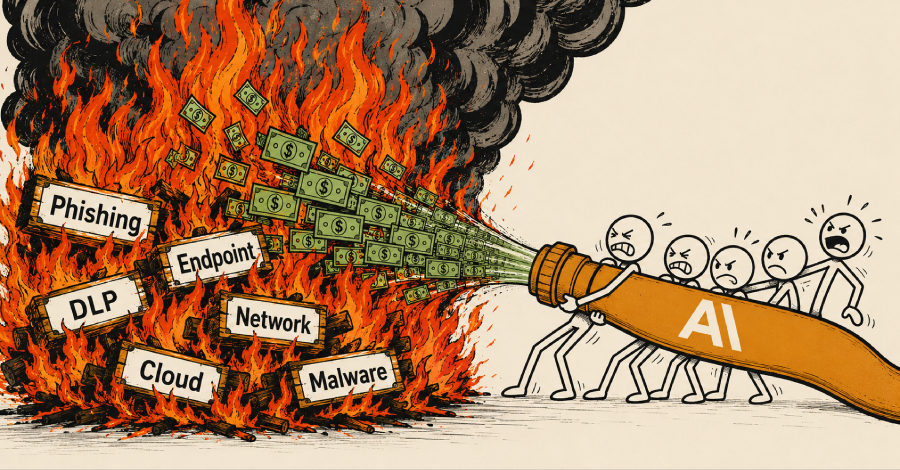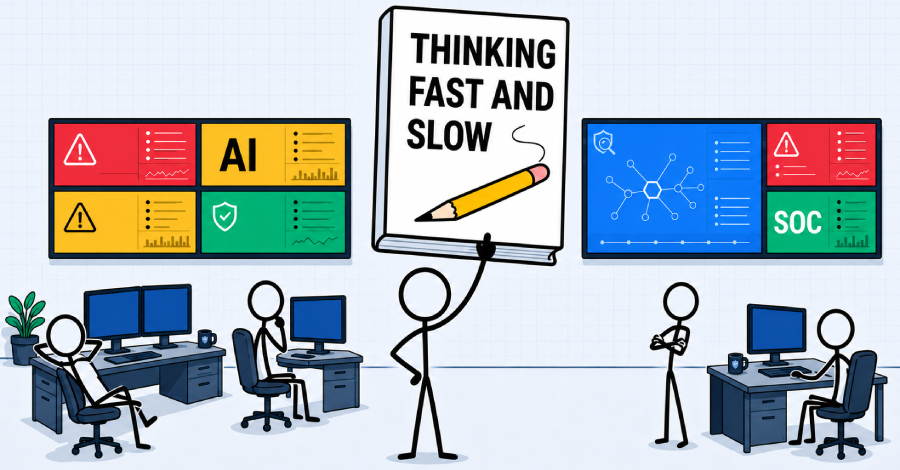
A few days ago, I was sitting with the CISO of a Fortune 50 company, walking through how his security team was thinking about AI agents in the SOC. Smart team. Serious program. They had already connected Claude to a few detection tools and were seeing real value in specific investigations. But as we mapped out the broader architecture, something kept nagging at me. The design they were building was going to work beautifully for a tiny percentage of alerts that genuinely needed deep human judgment. It was going to completely ignore the rest.
On the flight home, I picked up a book I had not touched in a few years. Daniel Kahneman's Thinking, Fast and Slow. Kahneman is one of the rare people who genuinely changed how we understand human decision-making. He spent his career as a psychologist studying how people actually think, as opposed to how economists assumed they did. In 2002, he won the Nobel Prize in Economics, which tells you something about how far his work traveled beyond its starting point.
The book's central argument is that the human mind is not one thing. It is two systems operating in parallel, often in tension.
System 1 is the brain that runs automatically. It recognizes patterns instantly, reads a room in seconds, and keeps you alive without conscious effort. It is fast, associative, and unconscious. According to Kahneman's research, 95% of all human cognition happens here, running quietly in the background like an operating system you never see.