Serving tech enthusiasts for over 25 years.
TechSpot means tech analysis and advice you can trust.
The big picture: A new generation of cooling technology is beginning to move from lab testing into early real-world trials, as researchers and startups look for ways to cool buildings without relying on traditional refrigerants. The push comes as demand for air conditioning accelerates in Europe, where rising temperatures are exposing the limits of both existing systems and the buildings they are meant to cool.
Several of these new approaches are now being tested. Some rely on metals that cool when stretched and released. Others use semiconductors, magnetic fields, or pressure-sensitive materials to move heat without the chemical refrigerants used in conventional air conditioning. Most are still in early stages, but the activity reflects a growing effort to rethink how cooling works at a fundamental level.
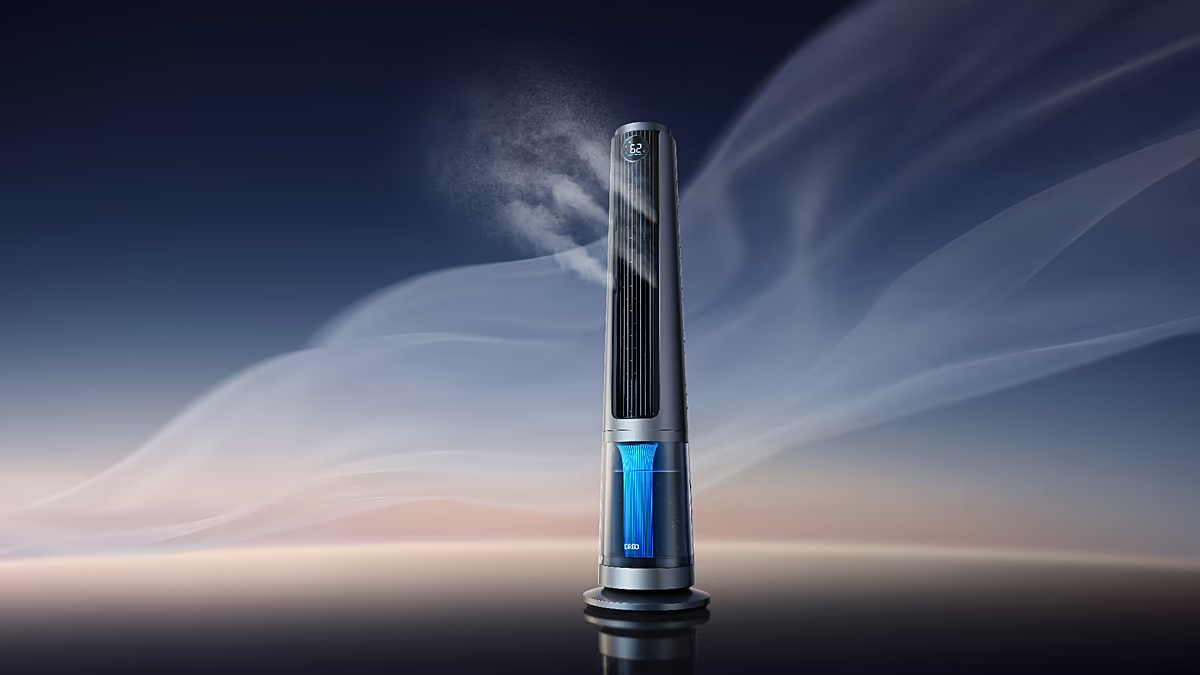
The urgency reflects how quickly climate conditions are shifting beyond what much of Europe's infrastructure can handle. In late June, temperatures exceeded 40 degrees Celsius in parts of the region, triggering a surge in demand for cooling equipment. In France, shoppers forced their way into stores to grab portable air conditioners and fans before supplies ran out. The International Energy Agency estimates that by 2050, two-thirds of households worldwide could have air conditioning.