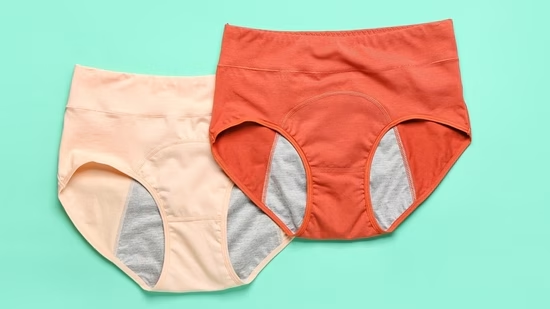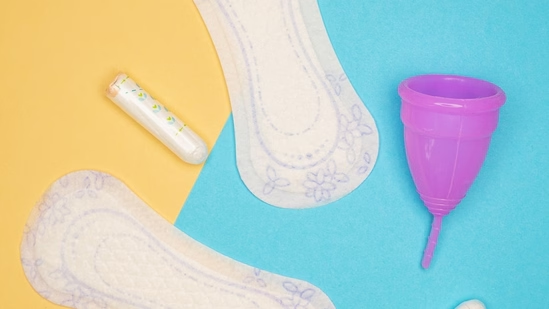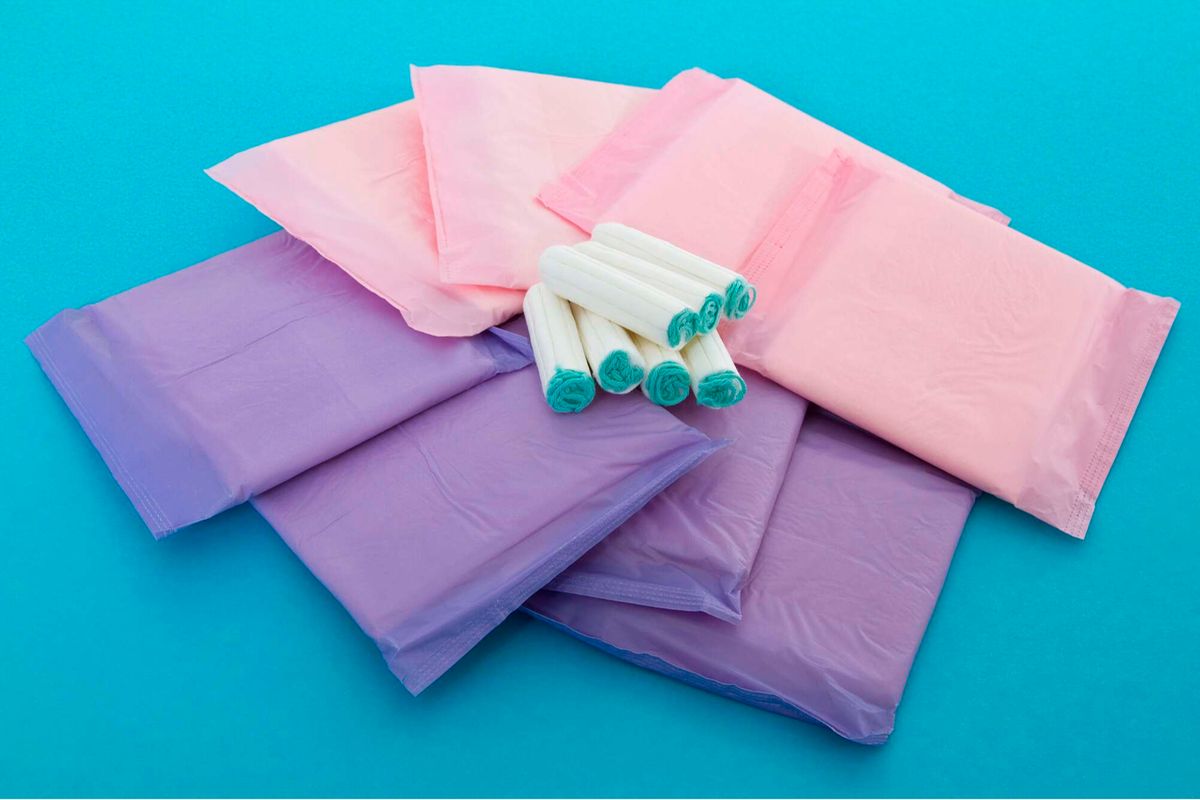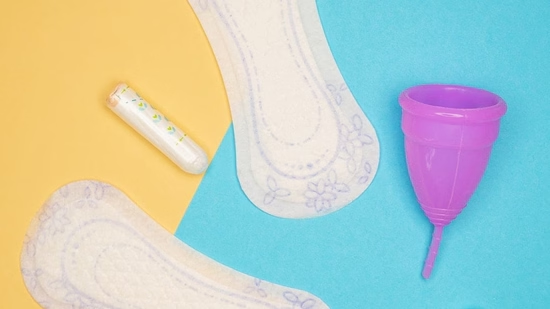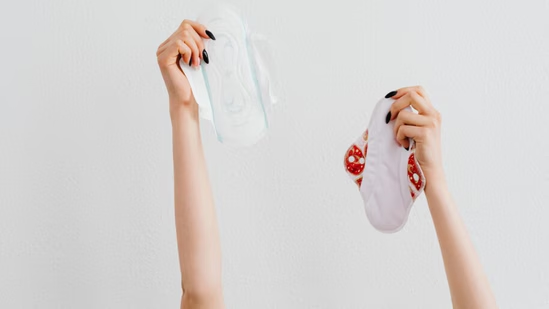
Proper care essential for reusable sanitary pads to prevent infections, says Dr. Shahasane. (Pexels ) Reusable cloth sanitary pads are gaining popularity, but are they safe? Dr Ankita Shahasane shares why hygiene practices like washing and sun-drying matter.Reusable cloth sanitary pads are increasingly being marketed as a sustainable, affordable alternative to disposable pads. But before making the switch, obstetrician-gynaecologist Dr Ankita Shahasane says women should understand the hygiene measures needed to minimise the risk of infections.In a July 13 Instagram video, Dr Shahasane explained that while she supports sustainability, reusable cloth pads may pose health risks if they are not washed, dried and stored correctly. "For years, we have told women not to use cloth during menstruation. And now, in 2026, we're back to cloth. We've simply stitched it in the shape of a sanitary pad, added a few layers and labelled it as 'antibacterial'," she said.Are reusable cloth sanitary pads safe?According to Dr Shahasane, the "antibacterial" claim often depends less on the fabric itself and more on how the user maintains the pad. "The antibacterial property is not in the fabric. It depends on you, the user, how you wash it, how you store it, how long you dry it and whether you sun-dry it properly," she explained.She pointed out that many brands market reusable cloth pads as eco-friendly, reusable and affordable, but consumers also need to understand the hygiene requirements that come with using them. "What the marketing doesn't tell you is that the effectiveness of these pads depends entirely on proper washing, drying and storage," she said.Improper washing and drying can increase infection riskDr Shahasane also raised concerns about the practical challenges women in many parts of India may face. "In Tier 2 and Tier 3 regions, where these pads rely on proper sun drying to remain hygienic, do you think women will always be able to dry them in direct sunlight? Given the social stigma around menstruation, many may hesitate to do so," she said.She added that inadequate drying and improper storage can encourage the growth of bacteria and yeast. "Improper washing, drying and storing can foster bacteria and yeast. Reusable sanitary pads can lead to infections if they are not maintained correctly," she cautioned.Explaining the science behind her concern, Dr Shahasane noted that bacteria thrive in blood. "In laboratories, we use blood agar to grow bacteria because bacteria grow extremely well in blood. Even difficult-to-grow bacteria thrive on it," she said.'Go green, but don't compromise on menstrual hygiene'While emphasising that she supports environmentally friendly practices, Dr Shahasane believes menstrual hygiene should not be compromised. "I'm all for sustainability, reuse and recycling. But before promoting reusable cloth pads, we should educate people about proper hygiene and eliminate unnecessary plastic in other aspects of daily life first," she said.She concluded with a word of caution: "Go green, but don't compromise where science tells you to be careful. Why choose something that could increase the risk of infection for one of the most infection-prone areas of your body? Sustainability is important, but this should be the last place where we compromise on hygiene."About the doctor Dr. Ankita Shahasane is an Obstetrician, Gynecologist, Infertility Specialist and Minimal Access Surgeon with over 11 years of experience in women’s health. She holds an MBBS, MS/MD in Obstetrics and Gynaecology, DNB in Obstetrics and Gynaecology, FMAS in Minimal Access Surgery, and DRM in Reproductive Medicine. She also holds DHA eligibility/licensure as a Specialist Obstetrician and Gynecologist in Dubai.Note to readers: This article is for informational purposes only and not a substitute for professional medical advice. Always seek the advice of your doctor with any questions about a medical condition.This report is based on user-generated content from social media. HT.com has not independently verified the claims and does not endorse them.Akanksha Agnihotri is a lifestyle journalist with over 3 years of experience. She is a psychology graduate and holds a postgraduate diploma in Radio and Television Journalism from the Indian Institute of Mass Communication, Delhi, where she graduated as a gold medalist. Originally from Bhopal, the beautiful capital of Madhya Pradesh, she draws inspiration from the city’s rich cultural heritage and layered storytelling traditions that subtly shape her narrative voice.
Think reusable cloth sanitary pads are antibacterial? Gynaecologist Dr Ankita Shahasane has a warning for you
Reusable cloth sanitary pads are gaining popularity, but are they safe? Dr Ankita Shahasane shares why hygiene practices like washing and sun-drying matter. | Health
921 words~4 min read