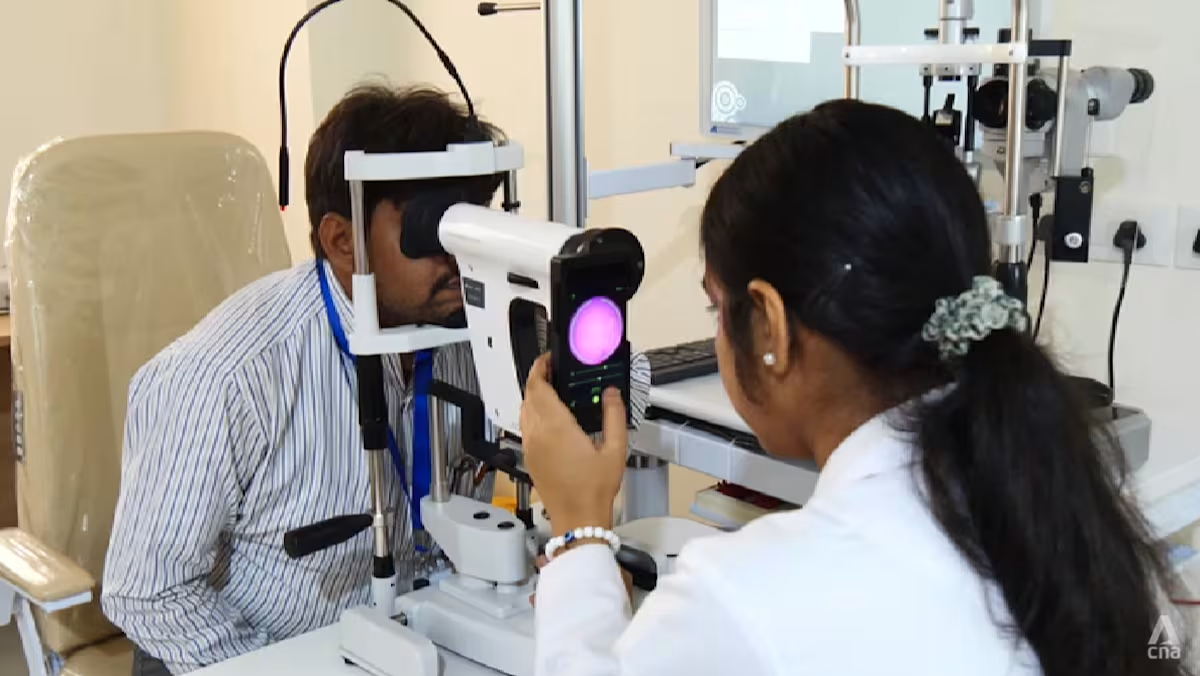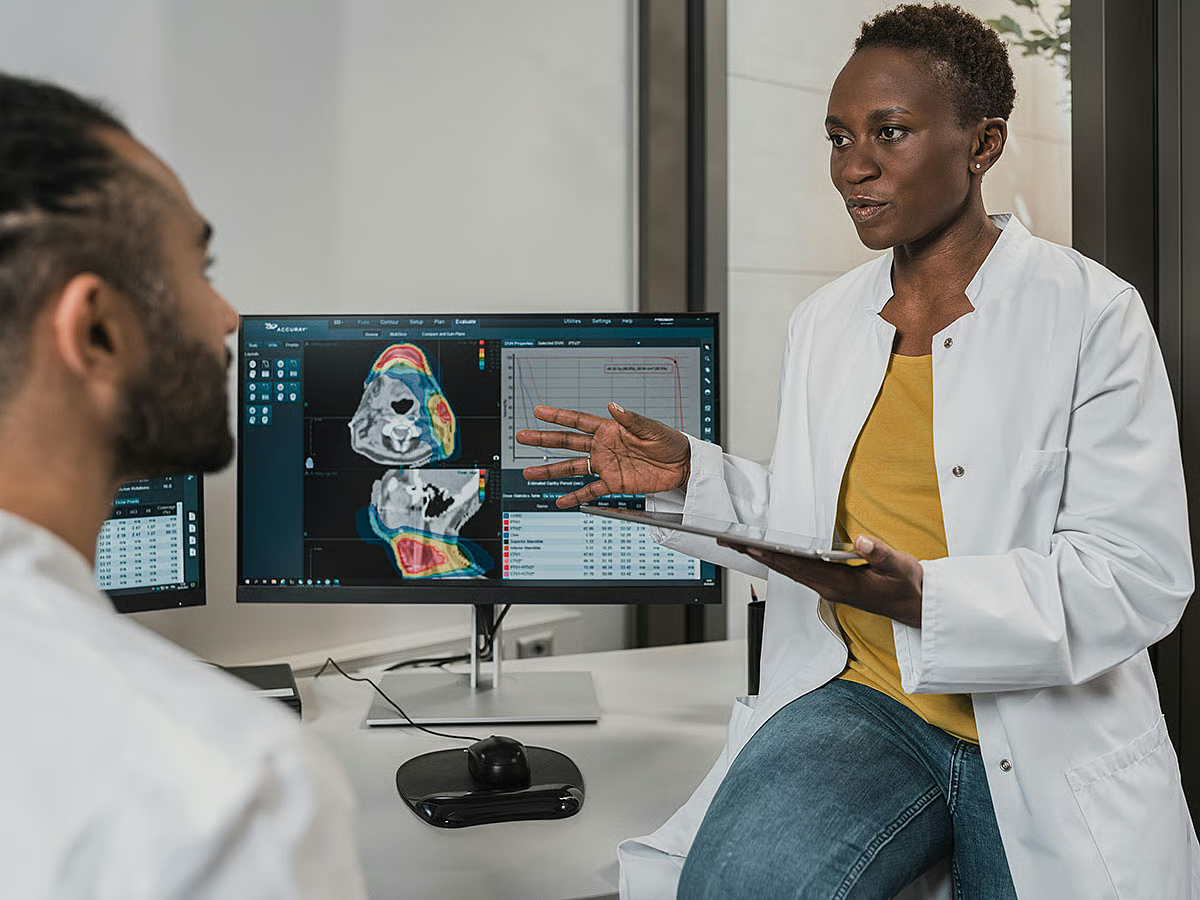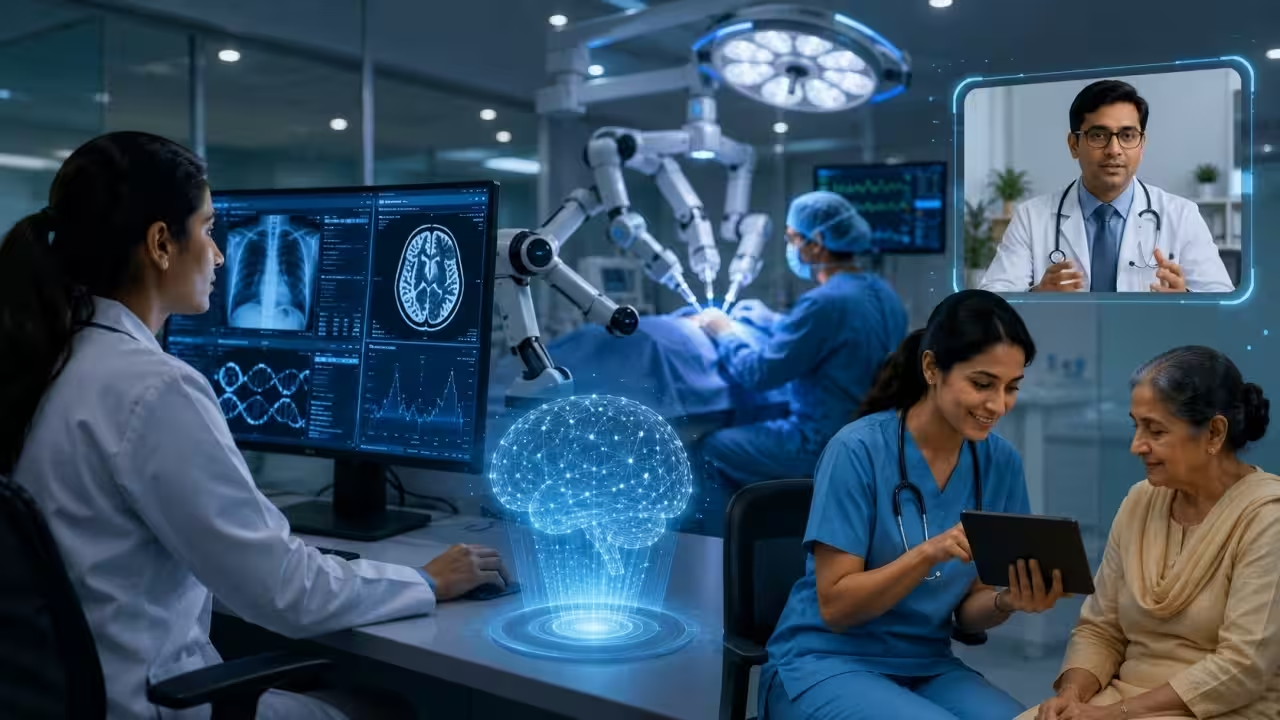
India’s HealthTech sector is among the most dynamic in the world, with startups deploying AI across the full spectrum of healthcare. (AI image)Healthcare was the first sector to demonstrate that AI could outperform human specialists in specific diagnostic tasks. The landmark 2016 study in which Google’s AI system matched or exceeded dermatologists in identifying skin cancer from images set the agenda for what followed: a decade of increasingly validated AI applications in radiology, pathology, ophthalmology, cardiology, and clinical decision support.India’s healthcare sector is among the fastest-growing AI adopters globally, with a compound annual growth rate in AI adoption of 36.8 per cent — the highest of any sector measured in a 2026 analysis of global AI adoption patterns. This reflects both the urgency of the problem and the scale of the opportunity.Diagnostics: Speed, Accuracy, and AccessIndia’s diagnostic bottleneck is well-documented. Radiologist-to-population ratios in many Indian states are less than 1 per 100,000 people. The consequences of this shortage are measured not in waiting times but in missed diagnoses, late-stage presentations of treatable conditions, and preventable mortality. AI-powered diagnostic systems are beginning to address this gap.AI systems deployed in radiology can analyse chest X-rays, CT scans, and MRI images in seconds, flagging anomalies for human review and prioritising critical cases for immediate attention. In a healthcare system where a single radiologist may review hundreds of images per day — with the attendant quality degradation that comes with cognitive fatigue — an AI system that never tires and flags potential anomalies with consistent accuracy is a qualitative improvement in the standard of care.Research on AI in healthcare diagnostics has demonstrated accuracy rates in specific tasks that consistently match or exceed specialist performance: AI systems for diabetic retinopathy screening from fundus images, for tuberculosis detection from chest X-rays, for cervical cancer screening from cytology images. Each of these applications addresses a specific high-prevalence condition in India with a documented screening gap.Clinical Decision Support: AI as the Second OpinionBeyond diagnostics, AI is emerging as a clinical decision support tool that can give every doctor access to the equivalent of a specialist consultation. AI systems trained on vast clinical datasets can surface treatment protocols, drug interaction risks, differential diagnoses, and outcome probability assessments at the point of care, in real time, for the conditions most likely to be encountered in that clinical setting.For India’s primary care system — where MBBS-trained generalist physicians manage the vast majority of the country’s disease burden, often without specialist backup — this capability is transformative. A doctor in a Tier-3 city, managing a patient with an unusual presentation, with access to an AI clinical decision support system, is effectively practicing with the combined knowledge of thousands of specialist cases. This is what high AIQ means in healthcare: not replacing the doctor, but making the doctor more powerful.Hospital Operations: AI Behind the ScenesThe operational complexity of a large hospital — bed management, theatre scheduling, pharmacy inventory, staffing optimisation, infection control, billing and coding — is a system of extraordinary complexity that has historically been managed through a combination of experience, intuition, and spreadsheets. AI is beginning to bring rigour to each of these domains.AI-powered patient flow management systems can predict emergency department attendance patterns, optimise bed allocation, and reduce the time between admission decision and bed allocation. AI-driven pharmacy management systems can predict drug consumption, optimise ordering, and flag potential drug interactions before prescriptions are dispensed. AI in healthcare coding and billing is reducing claim rejection rates and accelerating reimbursement cycles.Healthcare AI spending globally exceeded USD 20 billion annually in 2025, reflecting the breadth and depth of AI deployment across clinical and operational domains.The HealthTech EcosystemIndia’s HealthTech sector is among the most dynamic in the world, with startups deploying AI across the full spectrum of healthcare: telemedicine platforms using AI for symptom triage, mental health applications using natural language processing for counselling support, fertility treatment platforms using AI for embryo selection, and preventive health platforms using wearable data and machine learning to identify health risks before they become conditions.For these organisations, AI is not a feature. It is the product. Their competitive advantage is the quality of their models, the richness of their data, and their ability to translate AI insight into actionable health guidance for their users. They represent a new category of high-AIQ healthcare organisation — one that was born AI-native and is building the healthcare infrastructure of the next decade.What AIQ Means for Healthcare OrganisationsA high-AIQ healthcare organisation has embedded AI across both its clinical and operational dimensions. Its diagnostic pathways are AI-enhanced. Its clinical decision support is AI-informed. Its operations are AI-optimised. And its leadership understands that AI in healthcare is not a technology investment — it is a patient outcome investment.The TOI AI Quotient Awards invites India’s healthcare leaders — hospital groups, diagnostic chains, HealthTech companies, pharmaceutical organisations, and public health institutions — to demonstrate the AI Quotient they have built. The award is, in this sector more than any other, a recognition of the lives that intelligent technology is helping to save.
AI is changing how India diagnoses, treats, and delivers healthcare & the transformation is just beginning
Healthcare was the first sector to demonstrate that AI could outperform human specialists in specific diagnostic tasks. The landmark 2016 study in which Google’s AI system matched or exceeded dermatologists in identifying skin cancer from images set the agenda for what followed: a decade of increasingly validated AI applications in radiology, pathology, ophthalmology, cardiology, and clinical decision support.
837 words~4 min read