This is Follow the Money, our weekly series that unpacks the earnings, business, and scaling strategies of African fintechs, financial institutions, companies, and governments. A new edition drops every Monday.
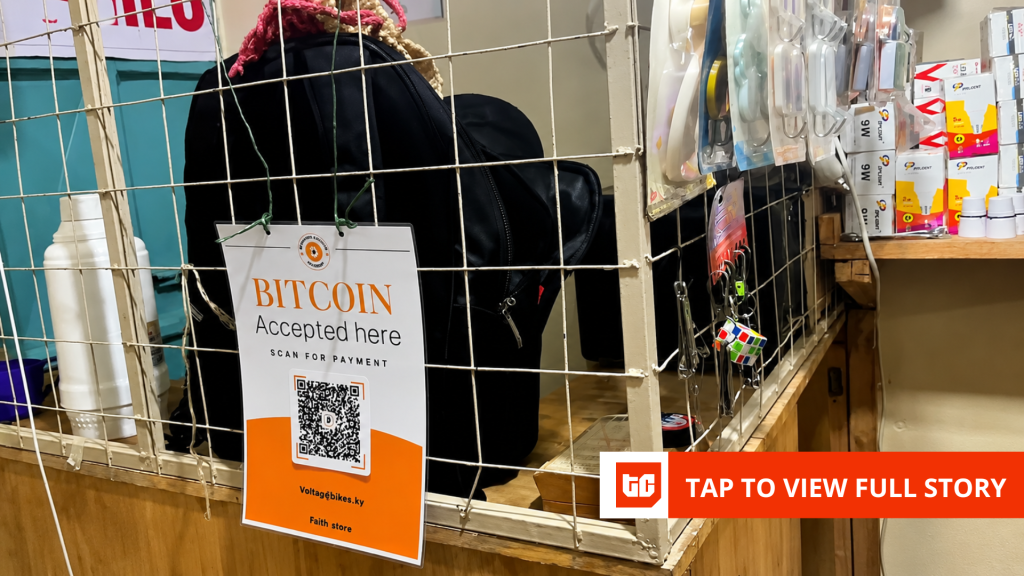
In Juja, a busy area in Kenya’s Kiambu County, Faith Mbinya, a local mom-and-pop trader, proudly displayed an orange-and-white banner bearing a quick response (QR) code that read “Bitcoin accepted here.”
Inside the household goods shop she runs, customers browse plastic buckets, cookware, electronics, toiletries, and cleaning supplies. Every so often, someone pays for a dustbin, toilet brush, or other household item with Bitcoin.
Mbinya began accepting the cryptocurrency in November 2025 after a friend introduced her to it. For her, the appeal has little to do with Bitcoin’s price and everything to do with the cost of moving money.
“I accept Bitcoin because it reduces the transaction cost, which is a very major problem when we go to our Kenyan local banks or local M-PESA,” Mbinya told TechCabal. “It helped me save on those little transactions.”