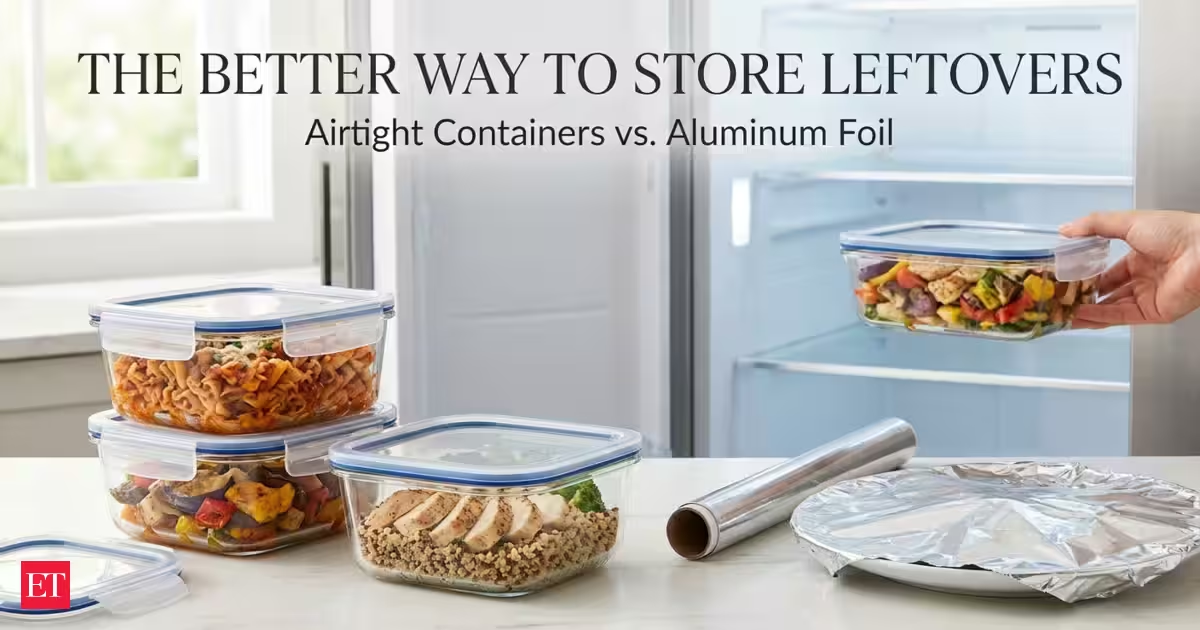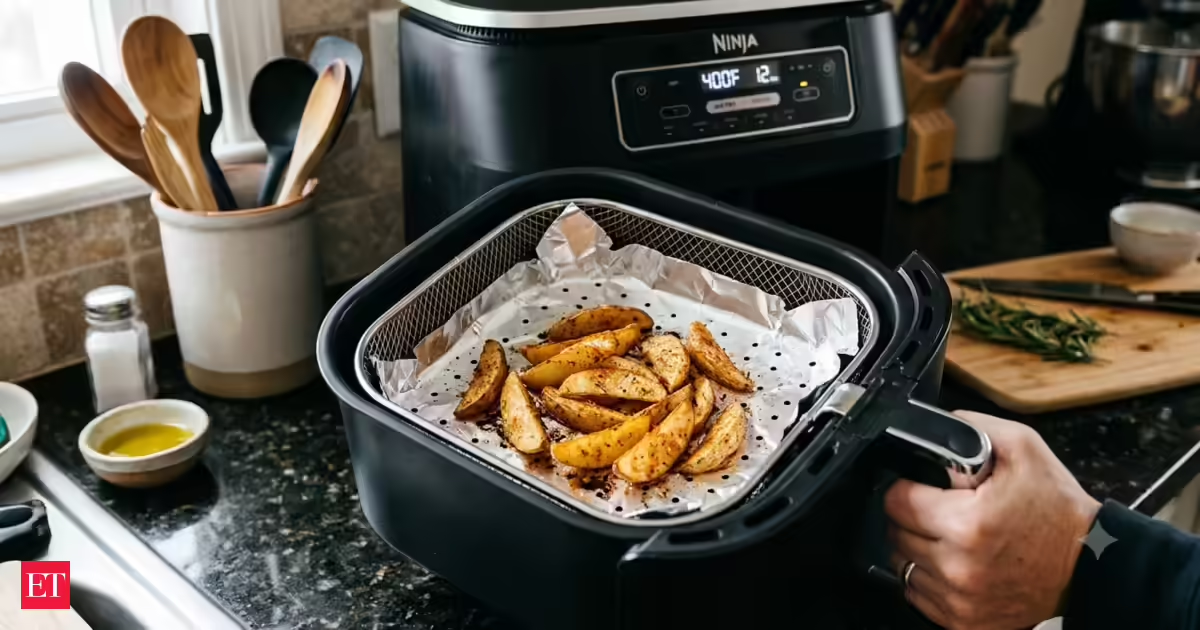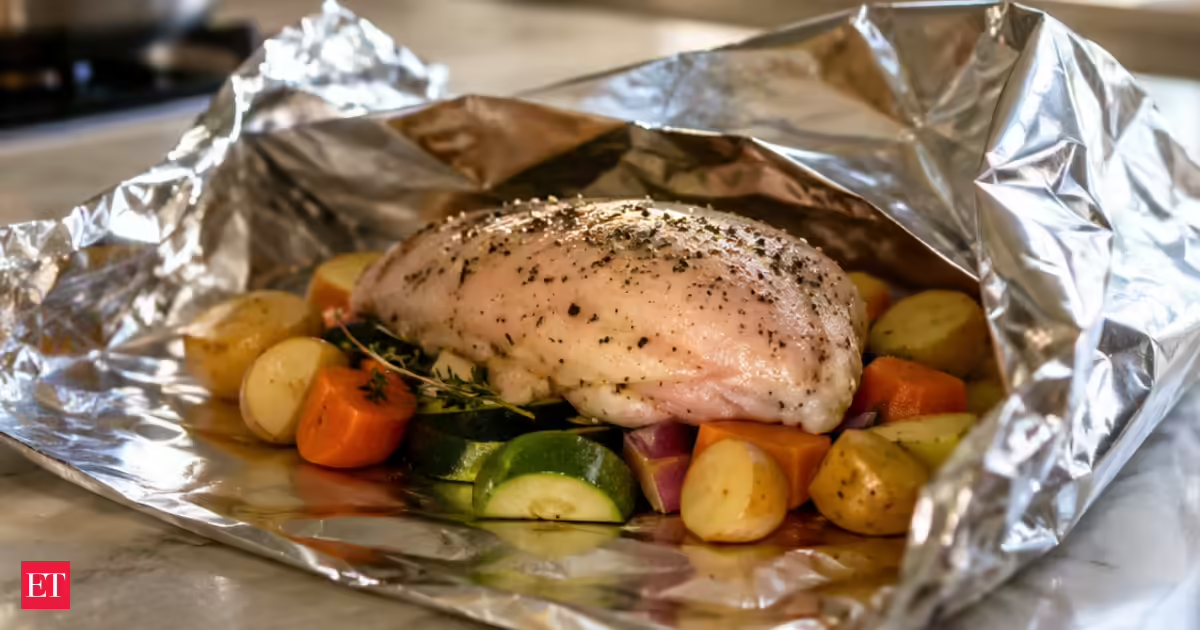
Aluminum foil is a kitchen staple nobody thinks twice about, whether you're sealing up a foil packet of chicken and veggies or lining a baking sheet before it goes in the oven. It's cheap, it's convenient, and it feels completely harmless. But that shiny piece of metal may not be as inert as it appears.According to a 2012 study published in the International Journal of Electrochemical Science, foil can quietly shed aluminum into whatever it touches. If your go-to dinner involves a tomato-based marinade, a splash of vinegar, or a heavy hand with the spice jar, this one is worth a read.What the researchers actually didAccording to the same study, ‘Risk Assessment of Using Aluminum Foil in Food Preparation,’ a team of chemical engineers in the UAE and Egypt tested how much aluminum leaches out of foil during everyday cooking. They made several meat sauces with varying combinations of tomato juice, citric acid, salt, apple vinegar, and spices, and exposed foil strips to the boiling liquid, its steam, and food cooking under foil in an oven.They then measured the foil to see if any metal had been lost, studied its surface with a scanning electron microscope, and used mass spectrometry to determine how much aluminum had been transferred to the food. This is a small, lab-based study and not a clinical trial, but these are standard, credible methods to track metal leaching.The findings that should make you pauseIn every test, some weight was lost from the foil, which meant metal was leaching into the food. Depending on the amount of foil covering the pan, a family-style meal prepared with a mild tomato and citric acid sauce added 22.8 to 75.4 milligrams of aluminum per person, the study found. Increasing the citric acid level brought that up to the 40 to 132.4 milligram range.The type of water also played a role. The same recipe made with tap water leached about half the amount of aluminum, some 65.2 milligrams per person, compared to the version made with drinking water, at 132.4 milligrams. Even just tomato juice made a difference. The study also found that adding tomato juice to plain meat extract, without acid or salt, more than doubled leaching by dropping the pH of the solution from 6.9 to 4.9.Vinegar and spices were the biggest wild cardsSwapping citric acid for apple vinegar changed things dramatically. According to the study, a sauce made with apple vinegar leached about 465 milligrams of aluminum per person, more than three times the amount leached from the citric acid sauce. Spices were more dramatic. Researchers said that adding only 3 grams of spice to the same citric acid and tomato sauce made leaching about four times higher, at roughly 537.2 milligrams per person in one meal. They were unable to say exactly what compound was responsible but noted that organic acids and other complexing agents are known to more aggressively extract aluminum ions from the surface of the metal.Tomato sauce and citrus are common triggers for aluminum leaching, research shows. Image Credits: ChatGPTThe oven made things worse, not betterThe study reported that covering a roasting pan with foil and baking a similar sauce in a hot oven for ninety minutes produced combined leaching from both pan and foil of roughly 361 milligrams per person. Electron microscope images showed the foil surface was cracked, pitted, and, as the researchers put it, almost completely damaged. The higher the oven temperature, the faster this damage occurred, the researchers found. Heat thickens and restructures the thin oxide layer that normally protects aluminum from dissolving.How much aluminum is actually too muchAccording to the WHO food safety experts at JECFA, as summarized by the European Food Information Council, adults can safely consume up to 2 milligrams of aluminum per kilogram of body weight per week. That’s about 136 milligrams a week for a 150-pound adult from all sources, food, water and cookware combined.In this study, some of the foil-cooked meals, especially the vinegar and spice versions, have provided that much in a single meal. It’s a genuine health risk rather than a guaranteed harm, the study’s authors say, since the body excretes most dietary aluminum fairly efficiently, but regularly eating near or beyond that weekly ceiling is not something nutrition experts recommend.Where does the rest of your weekly aluminum come fromThe 136-milligram-per-week figure for aluminum doesn’t come solely from cookware. Aluminum compounds are often used as stabilizers and leavening agents in baking powder, some processed cheeses, and pickled foods, while aluminum hydroxide is an active ingredient in some over-the-counter antacids and can sometimes provide several hundred milligrams in one dose. Aluminum sulphate is also used in the coagulation of drinking water. Small quantities are added, and the amount varies with the municipal supply. This doesn’t mean that the average diet is dangerous; most people keep well under the weekly guideline through normal eating, but it does mean that a foil-heavy, acidic dinner is not happening in isolation. It's adding on top of a baseline that, for some people, especially those on antacids, is already higher than they would assume.How much people actually eat, on averageEFSA-reviewed dietary surveys have estimated average intake of aluminum for most adults to be well below the 2 mg/kg weekly guideline, though intake varies widely depending on diet, with people who eat a lot of processed or pickled foods, or who use aluminum-based antacids regularly, sitting much closer to the ceiling than the average. That is the useful context here, because the guideline isn’t a line most people are anywhere near crossing through normal eating, which is exactly why the fact that one foil-cooked, vinegar-and-spice-heavy meal could supply that much aluminum in one sitting stands out as unusual rather than routine.Foil versus glass, a small swap that could make a real difference for acidic, spiced dishes. Image Credits: ChatGPTWhat about the Alzheimer's link?Aluminum's reputation took a hit decades ago when some early studies suggested a possible link to Alzheimer’s disease, and the association has stuck in public memory since. Current scientific consensus, including reviews from the Alzheimer's Society and major health bodies, does not support aluminum exposure through food, water, or cookware as a cause of Alzheimer's or dementia. The theory was largely built on studies that have not stood up to further scrutiny, and large population studies have failed to find a consistent causal link. That doesn’t mean that there’s no issue with unlimited aluminium intake; the kidney and dosage concerns above are still real. It does mean that the leaching this study measured is worth managing for general safety margins, not out of fear of a specific, scientifically confirmed neurological risk.Who should be more carefulNot everyone processes aluminum the same way. The 2 mg/kg weekly guideline assumes normal kidney function, since the kidneys filter out the aluminum that the body doesn't need. People with impaired kidney function, including those with chronic kidney disease, clear aluminum far less efficiently, which allows it to build up in the body over time. This is why aluminum-containing antacids and phosphate binders are used cautiously, if at all, in dialysis patients. Infants and young children are also generally considered more sensitive to aluminum exposure relative to body weight. If you fall into one of these groups or cook for someone who does, the parchment-paper barrier and cookware swaps above are worth treating as a default rather than an occasional precaution, especially for the acidic, salty, or spice-heavy dishes flagged by this study.This is not a one-off findingA separate 2019 peer-reviewed study found that when researchers baked salmon, mackerel, duck breast, tomatoes, and other foods in foil, aluminum levels increased significantly after cooking, particularly in marinated dishes. Both studies find the same pattern: acid, salt, and heat make foil go from convenient to leaky.How to minimize your exposureIf you want to keep using foil for acidic or spicy dishes, a few adjustments will help. When you place a layer of parchment paper between the food and the foil, you create a barrier that keeps the sauce or marinade from coming into contact with the metal. The study also found that shorter cooking times and lower oven temperatures slow the breakdown of the protective oxide layer that cracks and pits under heat. None of these tricks eliminates leaching altogether, but they do reduce the surface area and time of contact, which the researchers said are the main drivers of how much aluminium gets into the food.Why does some aluminum cookware not have this problemNot all aluminum is equally reactive. The study found that anodized aluminum cookware undergoes an electrochemical process that thickens the naturally occurring oxide layer on the metal's surface, the same layer that thin foil relies on for protection but that easily cracks under heat. This thicker layer makes anodized aluminum much more resistant to acidic and salty foods than plain foil or uncoated aluminum pans. It's why hard-anodized cookware is commonly marketed as safe for tomato sauces and other acidic dishes, while plain foil is not built to withstand the same conditions. If a recipe calls for direct metal contact with something acidic, reaching for anodized cookware instead of wrapping it in foil sidesteps the issue rather than just minimizing it.What this means for your weeknight dinnerNobody is asking you to throw out your foil. It is fine for wrapping sandwiches, storing leftovers, or lining a pan under something that won’t come in direct contact with acidic or heavily seasoned food. The concern is specific to tomato sauces, citrus or vinegar marinades, and spice-forward dishes cooked in direct contact with foil, especially at high oven temperatures or for long periods of time. Parchment paper, glass dishes, or stainless steel are easy swaps for those recipes. If foil-wrapped fish or chicken with a lemon and herb marinade is a weekly habit, this is a small kitchen adjustment worth making.
Many people wrap hot, acidic food in aluminum foil, but a study found that cooking with foil leaches aluminum into the meal, especially with tomatoes, vinegar, and spices
A recent study reveals that using aluminum foil for cooking acidic foods can leach harmful aluminum into meals, especially with tomatoes, vinegar, and spices. Learn how to safely use foil in your kitchen.
1,637 words~7 min read