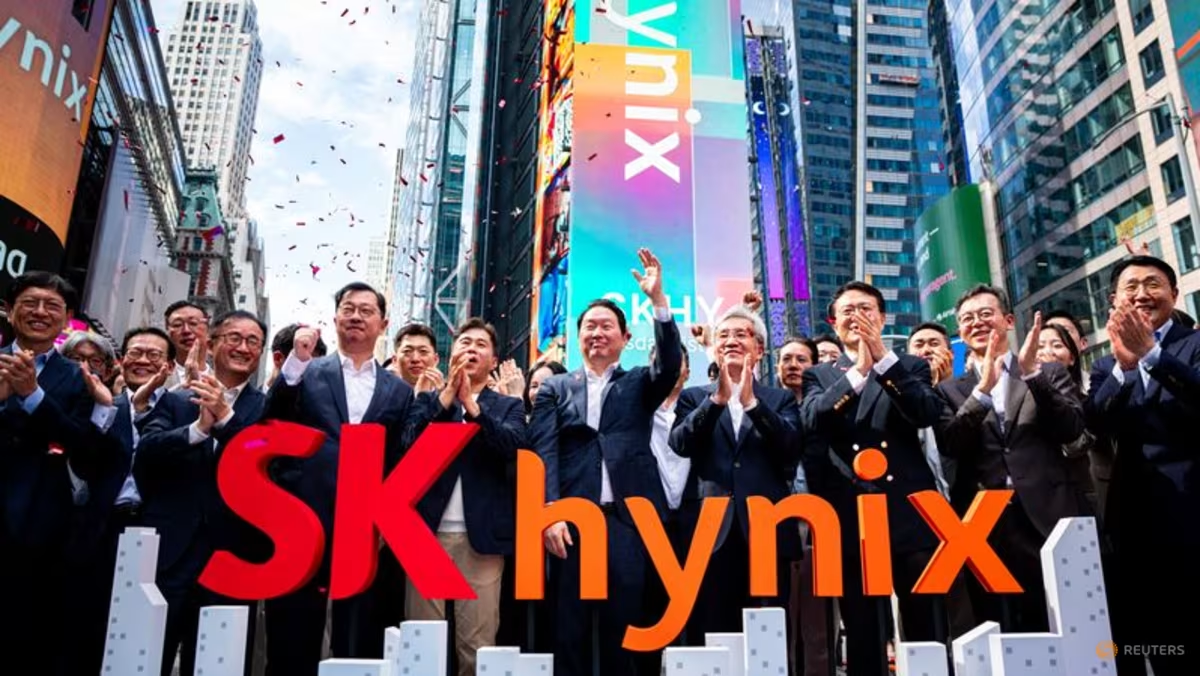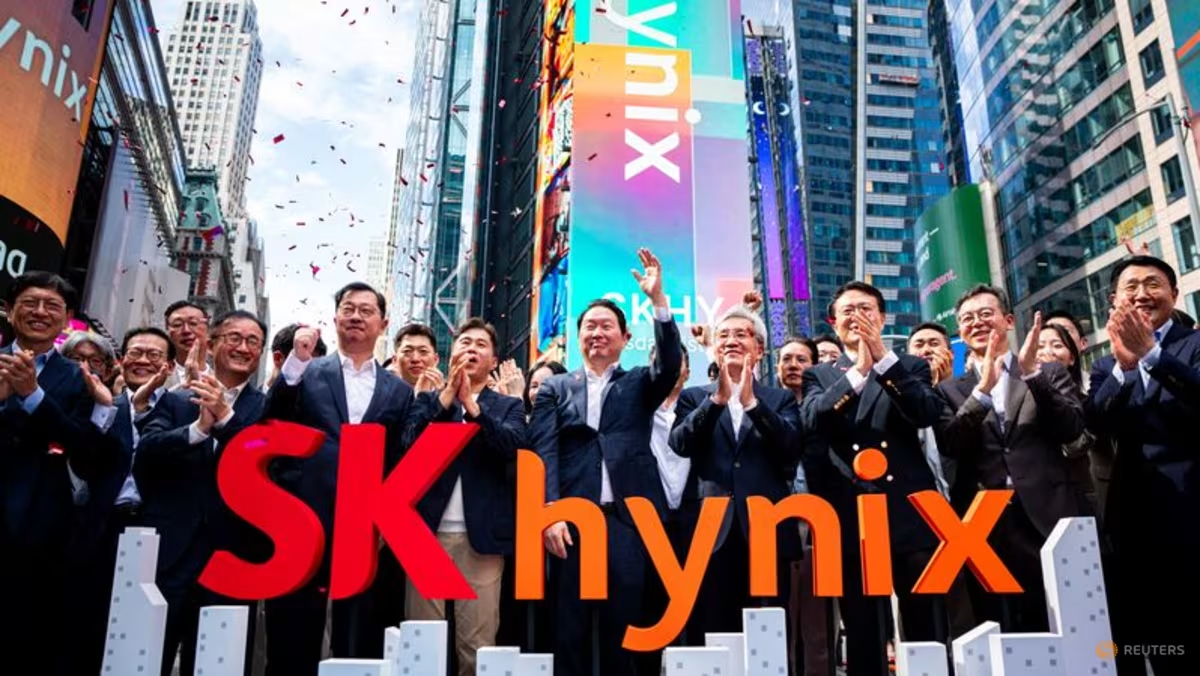
SEOUL – SK Hynix shares tumbled by the most on record in Seoul on July 13 after the memory chip giant’s highly anticipated US trading debut.It was the latest sign of how volatile the South Korean market has become after the artificial intelligence boom drove massive outperformance versus global peers. Shares of SK Hynix sank 15.4 per cent on the Korea Exchange to the lowest level in over two months, while peer Samsung Electronics slid 10.7 per cent. The pair drove a 9 per cent plunge in the benchmark Kospi index that triggered a brief circuit-breaker suspension for the seventh time in 2026.The losses came after SK Hynix’s American depositary receipts (ADRs) climbed 13 per cent on July 10, in follow-on buying after the second-largest share sale in history.“The ADR listing was highly successful, but much of that success had already been priced in,” said Chan H. Lee, managing partner at hedge fund Petra Capital Management in Seoul. “Today’s weakness appears to reflect a typical ‘sell the news’ reaction and profit-taking rather than any change in fundamentals.”The company’s US$26.5 billion (S$34 billion) US offering was closely watched as a test of demand for overseas offerings as well as for the longevity of the AI rally. Even amid recent concerns over stretched AI valuations and high spending levels, the deal was more than seven times oversubscribed, according to people familiar with the matter.SK Hynix has gained attention among global investors for its key position as a supplier of high-bandwidth memory (HBM) that works with Nvidia’s AI processors. The company’s South Korean shares are still up more than 500 per cent over the past year as the AI boom has pushed up prices of all kinds of memory chips, resulting in record earnings.As a retail-led investor frenzy chases AI profits in shares of SK Hynix and Samsung, the South Korean stock has become increasingly volatile. Daily moves in the Kospi of 5 per cent in either direction have become increasingly common.The popularity of leveraged exchange-traded funds (ETFs) tracking the memory pair has fed the wild swings. The local bourse has activated a total of 13 circuit-breaker suspensions on the Kospi since 2000, of which seven were issued in 2026. Meanwhile, the AI boom has driven market expectations to levels that are getting harder to beat. Samsung’s preliminary results last week were followed by a sell-off that weighed on the global tech supply chain. A Korea Investment & Securities report on July 13 projects that SK Hynix’s operating profit for the latest quarter may trail consensus by 8 per cent due to the company’s large share of revenue from HBM, where prices are rising more slowly than for conventional chips. While memory prices overall are climbing on dramatic shortages, HBM supply contracts are often based on less-flexible long-term agreements. That has been one argument used by those who say AI has created a “supercycle,” beyond the normal boom-and-bust pattern of chip demand.SK Hynix chief executive Kwak Noh-Jung on July 10 said in an interview that memory chip shortages will probably persist beyond 2030. Still, memory-makers racing to add production capacity have made the market nervous of the eventual profit hit when demand subsides.With worry over capacity additions and the sustainability of AI spending, SK Hynix shares are down more than 35 per cent from their June all-time high.With the sell-off, technical metrics for SK Hynix indicate a cooling-off from overheated levels earlier in 2026. MRM Research analyst Nico Rosti says the chipmaker’s shares now look “deeply oversold”.“One more week down is possible, but we see that as an opportunity to buy more,” Rosti wrote in a note on Smartkarma. “A rally in Korea should push the ADR higher. So this is a good spot to buy.” BLOOMBERG
SK Hynix shares plunge 15.4%, most on record, in deepening South Korea sell-off
SK Hynix shares are down more than 35 per cent from their June all-time high amid worries over the sustainability of AI spending. Read more at straitstimes.com. Read more at straitstimes.com.
624 words~3 min read