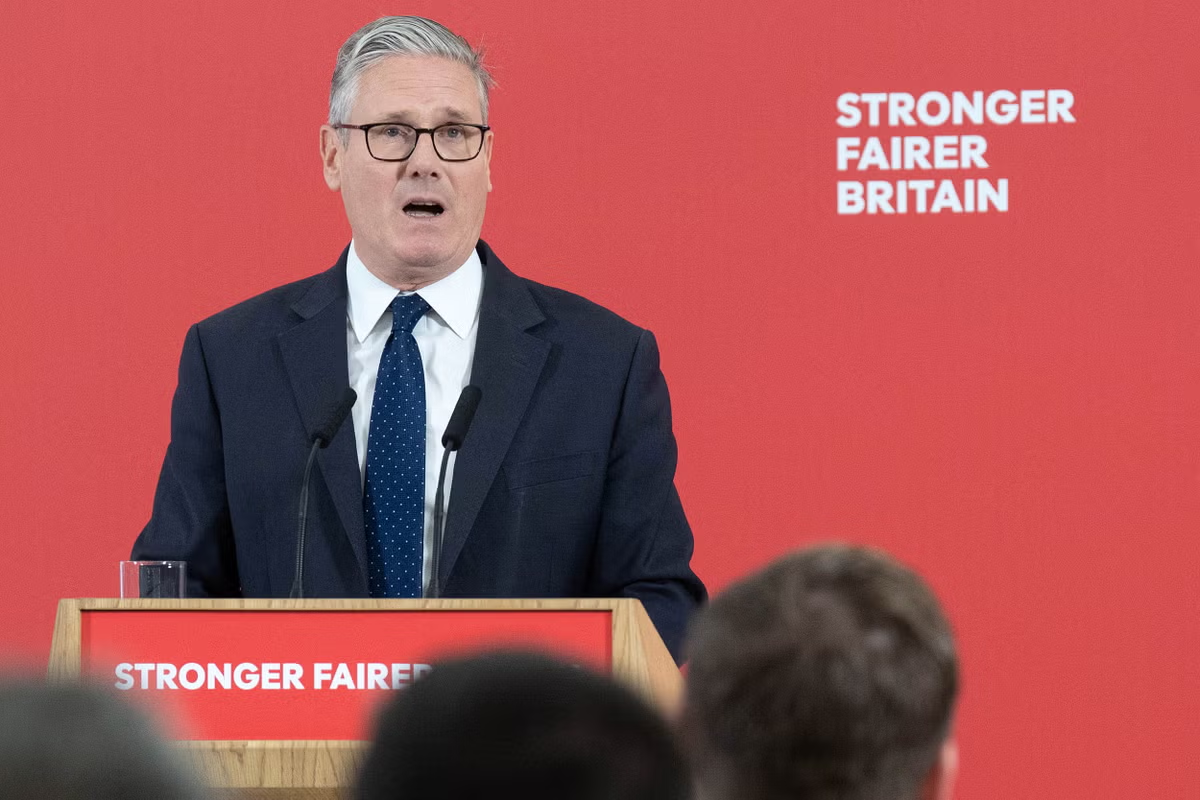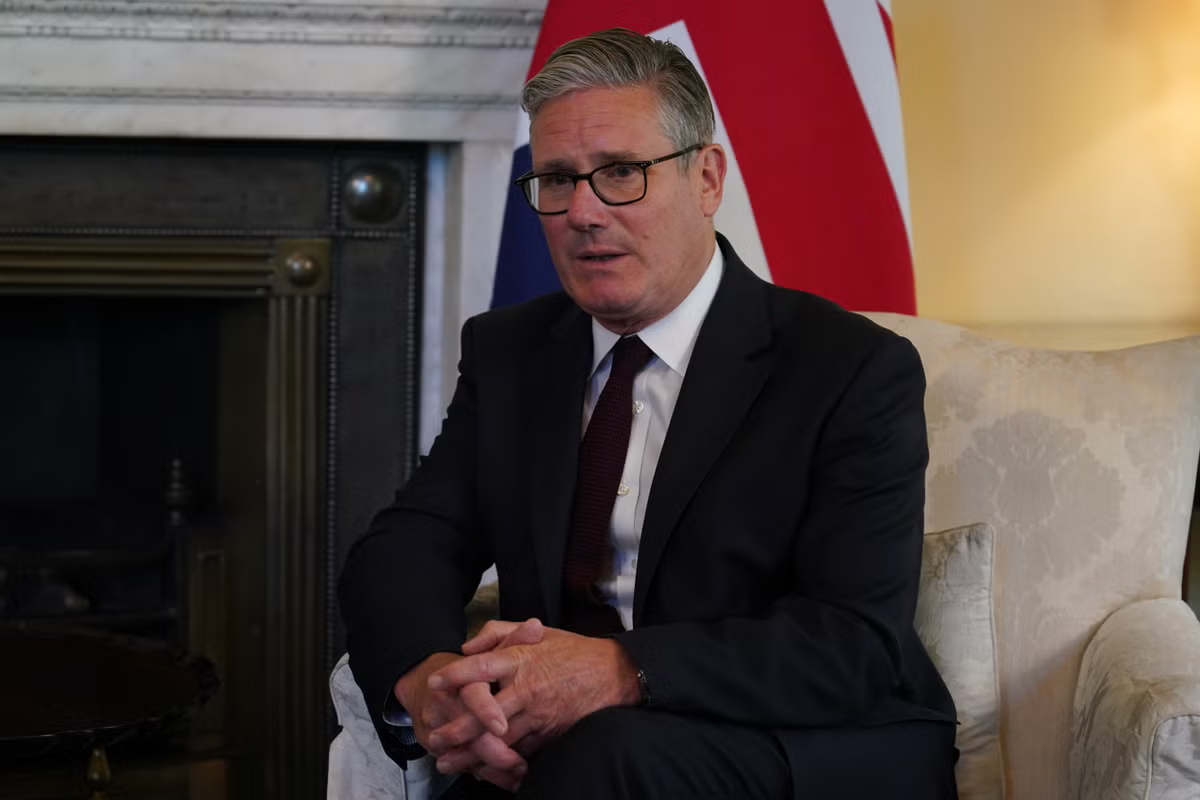
British Prime Minister Keir Starmer’s Defence Investment Plan (DIP), although presented as an urgent response to unprecedented security threats facing Britain, says more about the imperatives of domestic politics than about national security needs.
These big military spending announcements have always, to a large extent, been calculated to suit domestic political prerogatives rather than actual defence, but the DIP is explicitly the product of political manoeuvring.
The plan, unveiled with much fanfare on 30 June after intense lobbying and weeks of concerted propaganda conducted through the media, proposes throwing another £15bn ($20bn) into the gaping maw of the Ministry of Defence (MoD); this is below the £28bn (approximately $37bn) it had sought, but however much the MoD receives at the expense of other government departments, it never seems to be enough.
It was completely predictable, then, that hawkish critics would immediately respond by arguing that the new settlement remained inadequate and that yet more should be spent, as indeed they did.
The demand for higher arms expenditure has no obvious ceiling, however, even though it is now forecast to reach £80bn ($107bn) annually by 2030.