Comments
War! What is it good for? A ding-dong political row. The Defence Investment Plan (DIP) continues to dominate Westminster, following its unveiling by Keir Starmer yesterday. An extra £15 billion will now be spent on military budgets – a figure far short of the £28bn that John Healey was demanding prior to his resignation as defence secretary. That shortfall has been roundly condemned as insufficient by both opposition parties and much of the military establishment. If the chiefs do not think it is enough, the argument goes, then why should the British public?
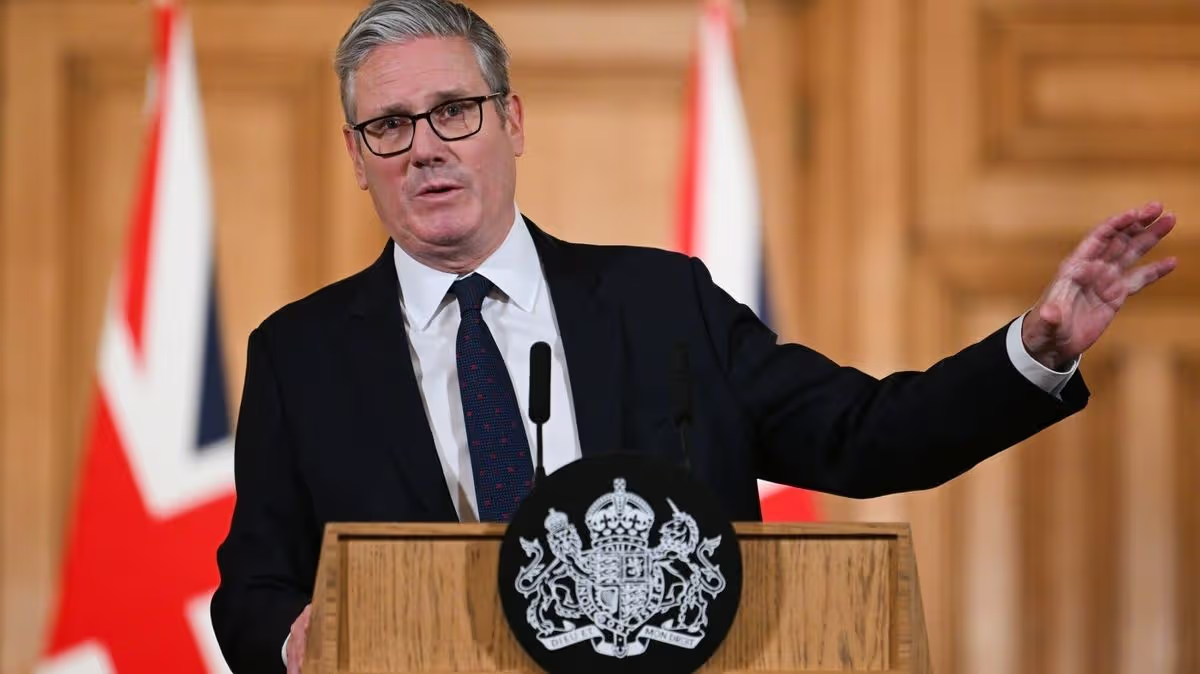
Starmer was not unreasonable on the subject at Prime Minister’s Questions. He pointed out to both Kemi Badenoch and Ed Davey that both of their parties, when in government, had failed to adequately provide for the Armed Forces. But while he has a point about the past, his provisions for the future look grossly insufficient. Starmer put a decent gloss on the DIP at yesterday’s press conference, but the 81-page document is now being poured over by analysts, who find much of the content to be deeply alarming
The plan itself is full of lengthy jargon, impenetrable prose and unexploded bombs. Three of the most glaring are the £4.7bn funding gap, which has been deferred to the next Budget, the date for the 3 per cent GDP defence target, which was not listed in the DIP, and £10.7bn in efficiency savings, all of which are described in vague, euphemistic terms. Andy Burnham’s team briefed yesterday that the DIP was ‘settled’. Based on these numbers, the reality is anything but. Burnham is yet to comment on where he will find the extra money or whether he would be open to hiking the defence budget further.