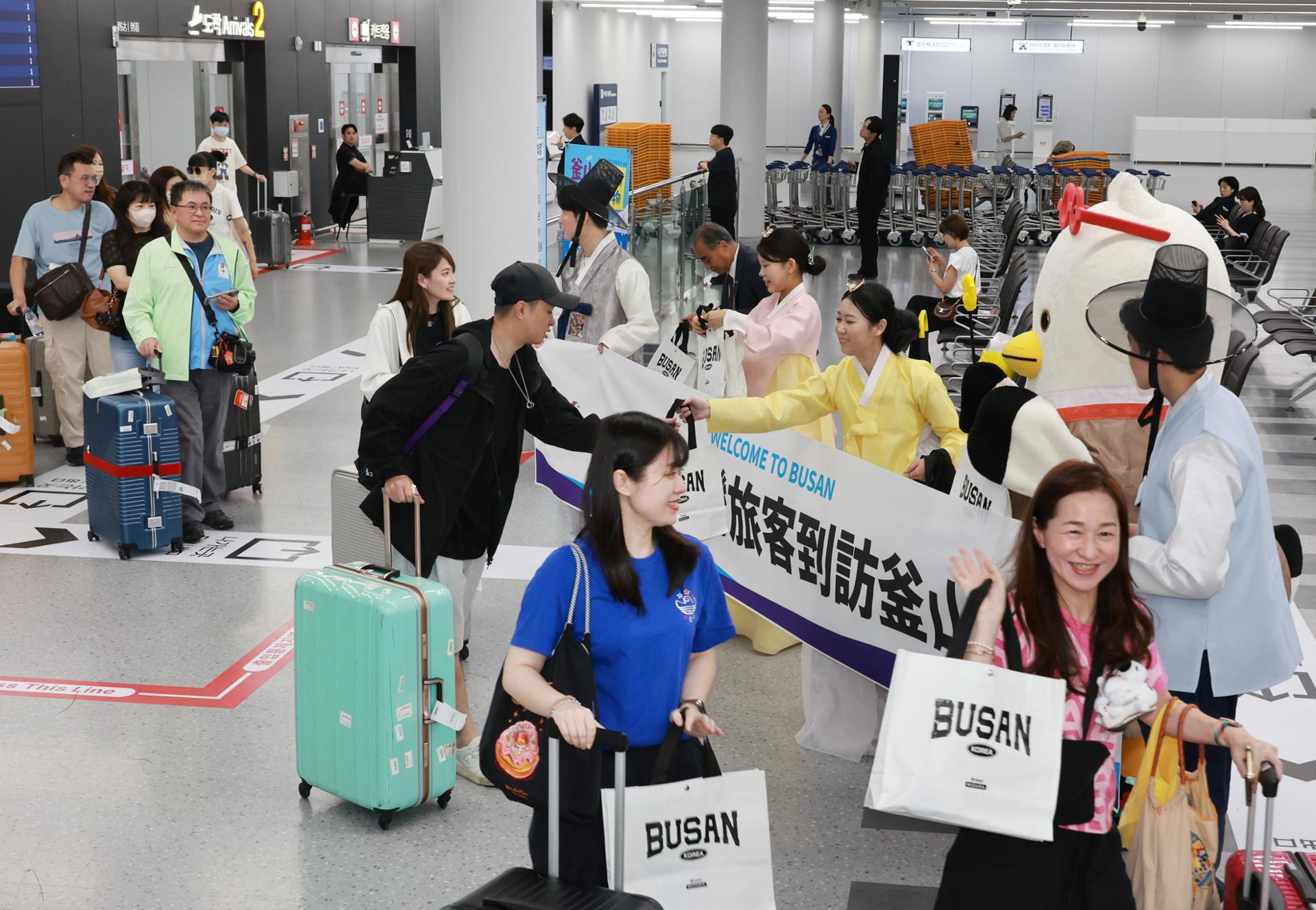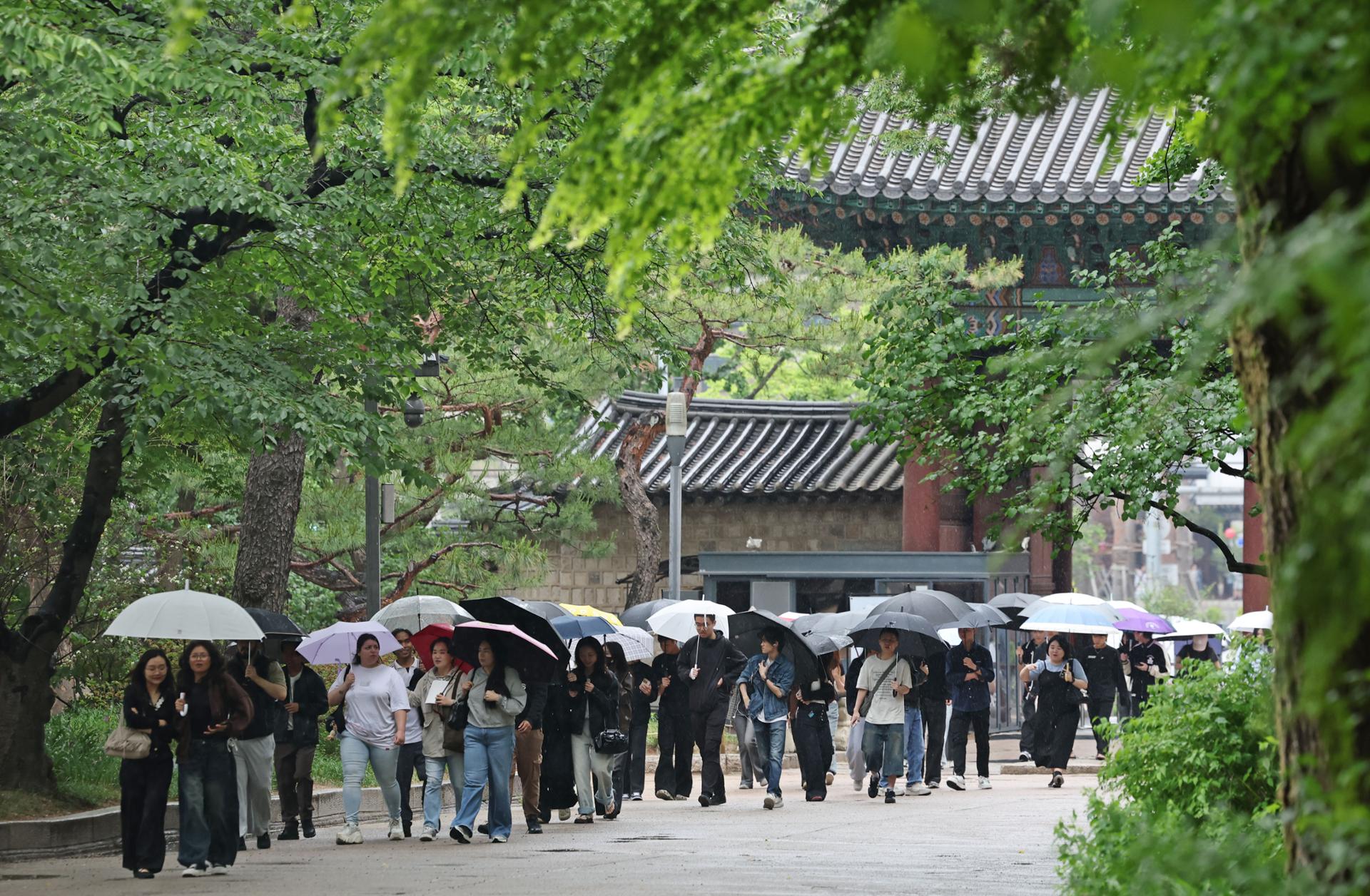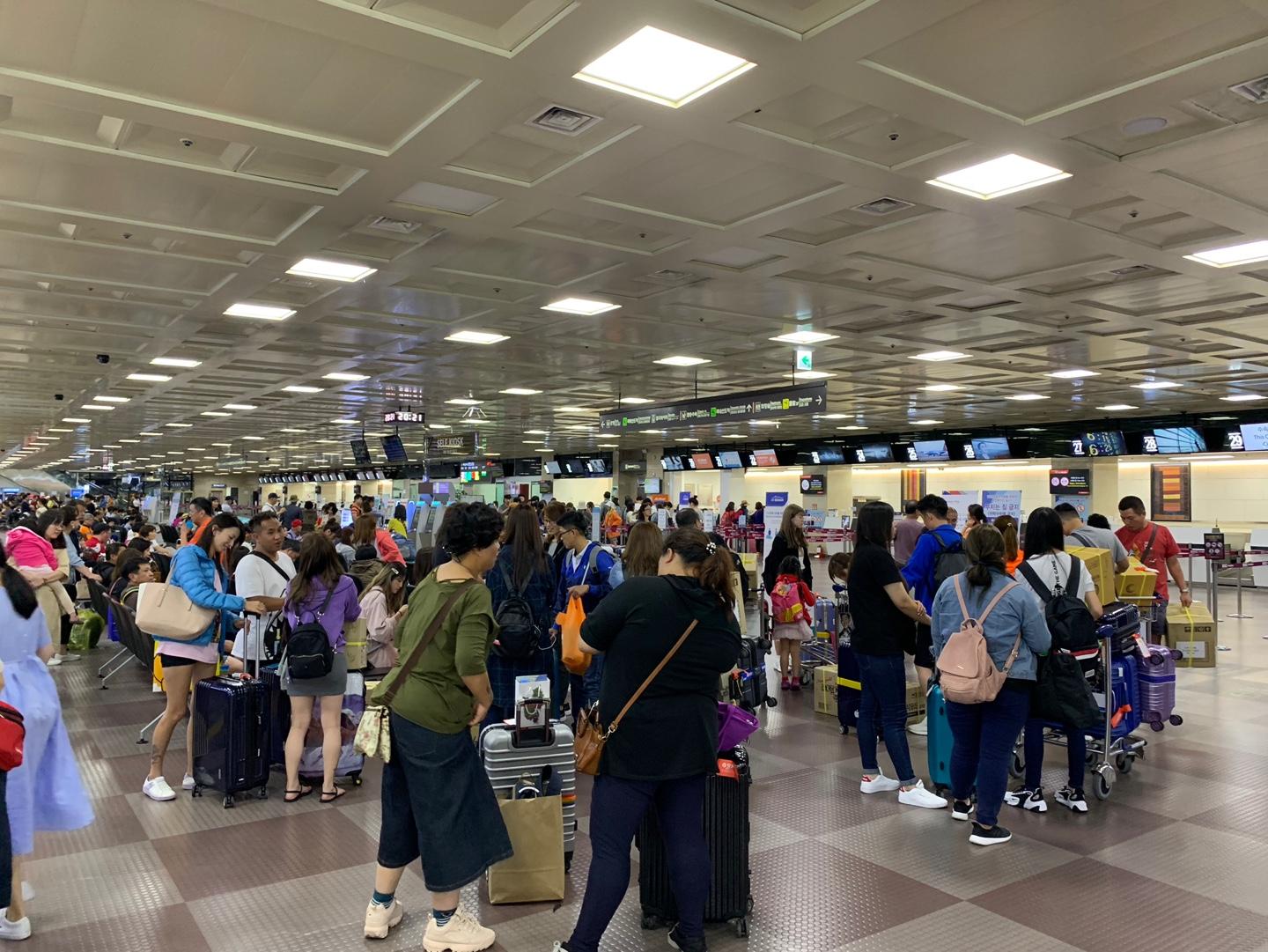
Park Sung-hyeuck, president of the Korea Tourism Organization, inspects Cheongju Airport in Cheongju, North Chungcheong Province, in May. (KTO) South Korea wants to encourage overseas tourists to explore outside Seoul.To make that happen, tourism authorities are betting on regional airports, hoping visitors who fly into cities such as Cheongju and Daegu — instead of Incheon, the country's main international gateway — will explore and spend more across the provinces.A government push hopes to attract 30 million foreign visitors annually, a target that names regional airports as key entry points and regional tourism as a pillar of growth.Early signs suggest the strategy is gaining traction. More than 50,000 international travelers entered the country through Cheongju Airport in the first five months of the year, a jump of over 114 percent from the same period last year, according to the Korea Tourism Organization. Daegu Airport recorded some 46,000 foreign arrivals over the same period.Chartered flights are driving much of the growth: As of the first half of the year, 356 nonscheduled flights to Cheongju and Daegu had been confirmed through year-end, with 195 to Cheongju in North Chungcheong Province and 161 to Daegu, more than double the KTO's initial target.To keep the momentum going, the KTO launched a task force in April to develop Cheongju and Daegu airports as pilot models, pairing its overseas offices with specific airports and regions so that each office markets routes and travel products tailored to its local market. The aim is to turn regional airports into entry points in their own right, rather than secondary gateways that merely absorb overflow from Incheon.Some of the new demand is coming from cities with no scheduled service to Korea at all. The KTO has developed chartered flights and packaged products targeting Kunming and Lanzhou in China and Matsumoto in Japan, markets it says represent untapped inbound demand rather than travelers diverted from existing routes.Airlines are part of the arrangement. The KTO signed an agreement with Aero K, the low-cost carrier based in Cheongju, to market the airport to foreign travelers through chartered flights, familiarization tours for overseas travel agencies, and airfare promotions. The two sides aim to raise the share of foreign passengers at Cheongju to as much as 35 percent by 2028.A similar agreement with Tway Air covers Daegu, focusing on travelers from Japan and Taiwan. The KTO is also developing tour products that link Daegu with Gyeongju and Andong in North Gyeongsang Province to lure visitors to the region's historic sites.Getting tourists to land outside Incheon is only half the goal. The other half is getting them to travel once they arrive. The KTO says it has identified 333 tourism draws that can be packaged with flights into the two pilot airports and has designed 35 tour courses.One leads Cheongju arrivals through Sungsimdang bakery in Daejeon, the Boryeong Mud Festival in South Chungcheong Province and Taean Thalassotherapy Center in South Chungcheong Province. Another takes Daegu arrivals to Haeinsa in Hapcheon, South Gyeongsang Province, the lantern festival in Jinju, South Gyeongsang Province, and Haedong Yonggungsa in Busan. Promotions run with online travel agencies in China have generated more than 15,000 bookings and roughly 26 million ad impressions, according to the KTO.The KTO is also expanding airport bus connections, mobile payment infrastructure, hotel luggage delivery services, currency exchange and tax refund services to support arrivals.The KTO plans to extend the model to other regional airports starting in 2027."Regional airports are no longer auxiliary gateways but strategic bases for Korean tourism that connect foreign visitors directly to the regions. Based on the results confirmed in Cheongju and Daegu, we will refine attraction models suited to each airport's characteristics and market demand, and accelerate the regional airport hub strategy so that tourism spending spreads across the country," said KTO President Park Sung-hyeuck.
Korea bets on regional airports to spread tourism beyond Seoul
South Korea wants to encourage overseas tourists to explore outside Seoul. To make that happen, tourism authorities are betting on regional airports, hoping vis
632 words~3 min read