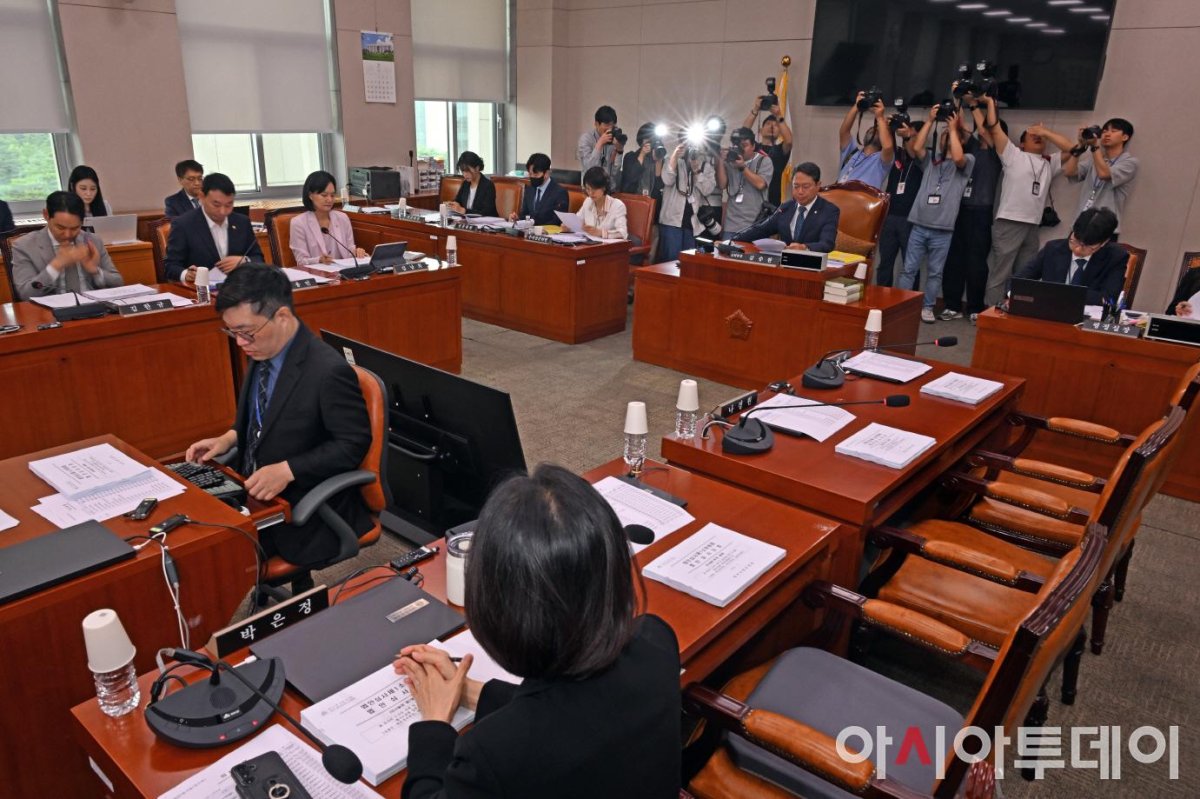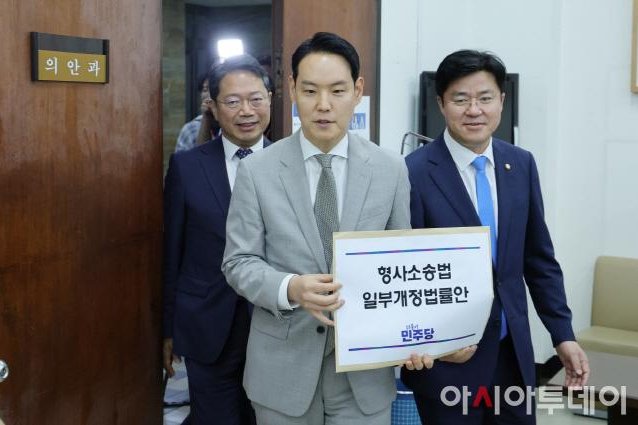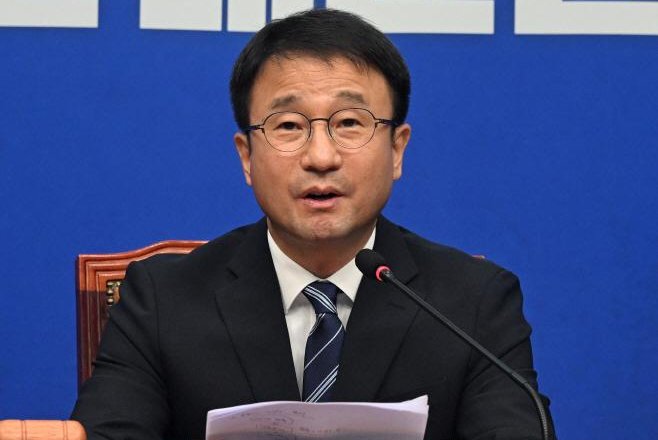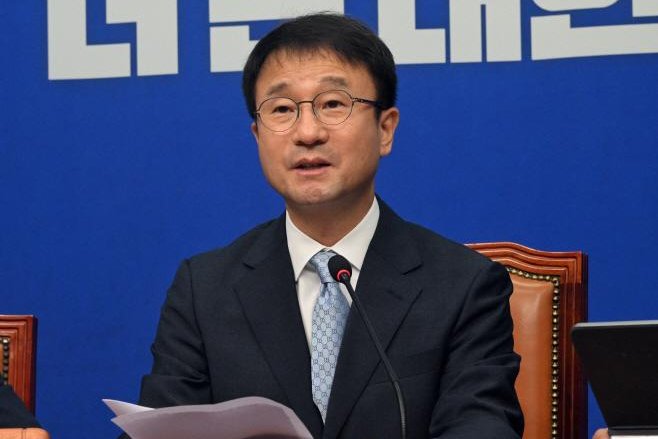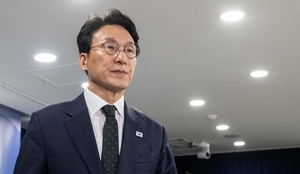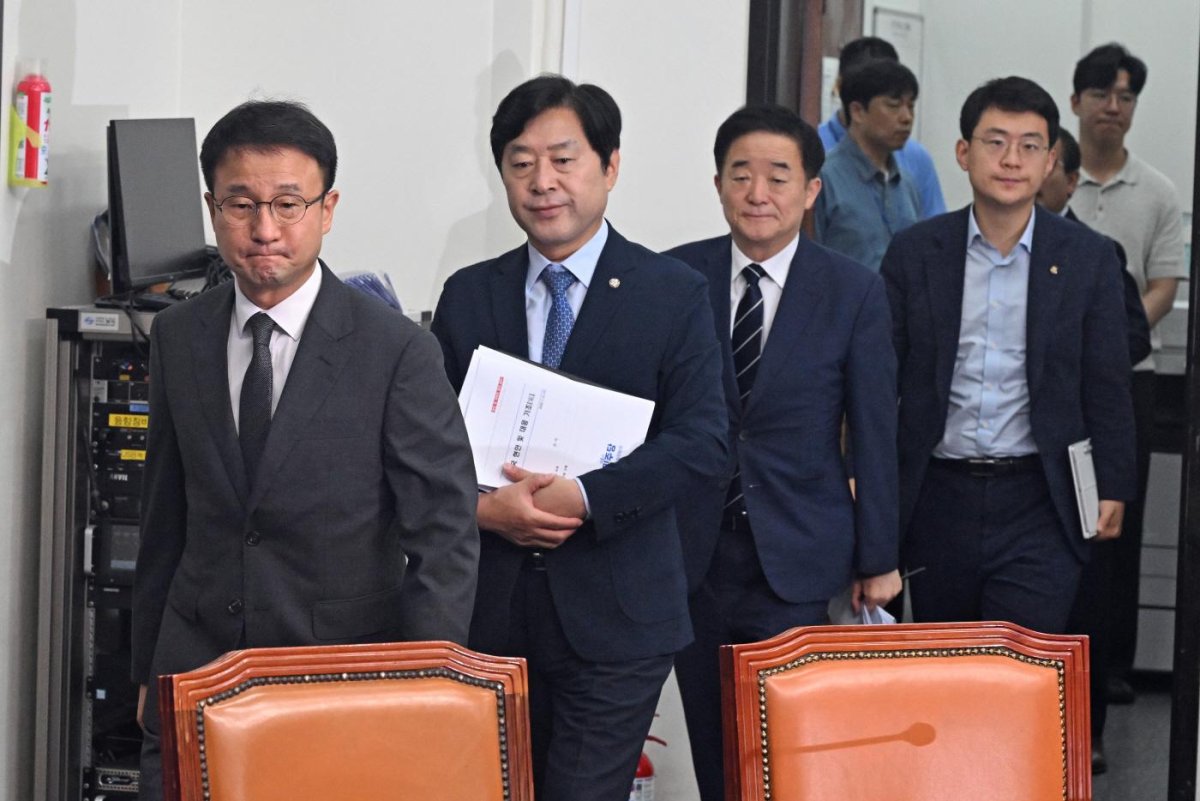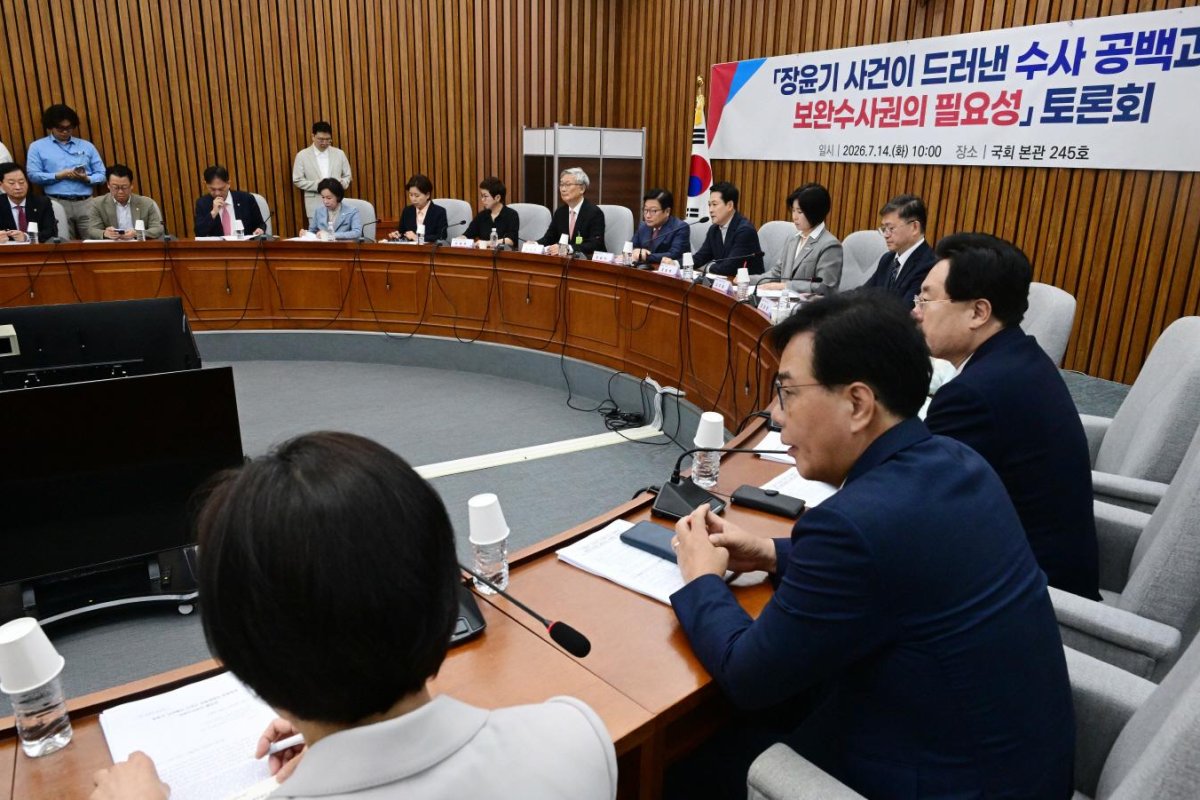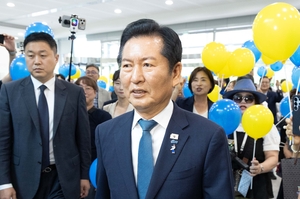
This photo shows a man walking past the Supreme Prosecutors' Office in Seocho-gu, Seoul on June. 25. (Yonhap) The debate has deepened within the ruling party over whether to completely remove prosecutors' supervision of police in its handling of criminal cases, a key agenda item ahead of the convention to elect a new party leader.Some Democratic Party lawmakers are expressing mixed views amid growing concerns that the party's ongoing legislative push could leave the police unchecked and invite corruption.Some hawkish politicians said the party should continue to push for the prosecutorial reform plan regardless of the potential byproduct of the legislation.Rep. Park Jie-won, a five-term lawmaker, said in a radio interview with SBS on Monday that there is no going back in the liberal party's prosecutorial reform push.Since President Lee Jae Myung's inauguration in 2025, the party has pushed to curb the prosecution's abuse of power against politicians by carving out the prosecution's investigative agency, which currently has the power to investigate crimes and indict criminals."Various doubts have recently emerged over the police's capability to investigate (a criminal case) but we cannot go back to the era of former President Yoon Suk Yeol, when politically motivated prosecutors were rampant," said Park, who was cleared in January of criminal charges of abusing his power as the former spy chief in a case concerning a death of a civil servant in the West Sea.The carveout is expected in October, when the prosecution office will be rebranded as the Indictment Agency. It was to have limited power to conditionally intervene in criminal investigations if prosecutors found that a police investigation was insufficient before bringing a case to court.The latest bill on Thursday to revise the Criminal Procedures Act, sponsored by the Democratic Party of Korea, is designed to strip the prosecutors in the Indictment Agency of the conditional power. Instead, if the bill becomes law, the only remaining power for the prosecutors would be to ask police to conduct further investigations.Removing the prosecutors' powers is the pledge of some ruling party chair hopefuls, including former Prime Minister Rep. Kim Min-seok and Rep. Jung Chung-rae, the former party chair seeking to run for the position again. Rep. Jung Chung-rae (center) is seen Monday entering the venue in the National Assembly for his announcement to rerun for Democratic Party leader in the upcoming party convention in August. (Yoon Chang-bin/The Korea Herald) The party, which has the majority in parliament, is seeking to pass the revision bill before its convention on Aug. 17.Others, however, are calling for caution.Rep. Kim Nam-hee of the Democratic Party said Monday that removing the prosecution's investigative power without an exception could leave some victims more vulnerable."Although we are in the right direction for the reform, no innocent people should fall victim in the middle of the process," Kim said. "There are voices saying that the recent revision to the Criminal Procedure Act should not make matters worse."This followed Democratic Party Rep. Lee So-young remarks on Sunday that the controversial reform bill is concerning in that a prosecutor would indict criminals "without ever seeing them in person," forcing them to "make a decision solely based on paperwork."Jung, who officially announced his bid to rerun for party chair on Monday, told reporters that his prosecutorial reform push will be "complete, perfectly, 100 percent."Jung also said in an online bulletin for his supporters that calls for deliberation in reform "effectively means an objection."Meanwhile, the Legislation and Judiciary Committee held a subcommittee meeting Monday to discuss the revision bill without the presence of lawmakers from the main opposition People Power Party.Rep. Kim Seung-won of the Democratic Party, who led the subcommittee Monday, said the byproduct of the police being unchecked by the prosecution under its revision bill could be handled with the prosecutor in charge of an indictment cooperating with police investigators in the process of search and seizures, as well as arrest warrant applications.
Ruling party debate over prosecutors' powers deepens
The debate has deepened within the ruling party over whether to completely remove prosecutors' supervision of police in its handling of criminal cases, a key ag
651 words~3 min read