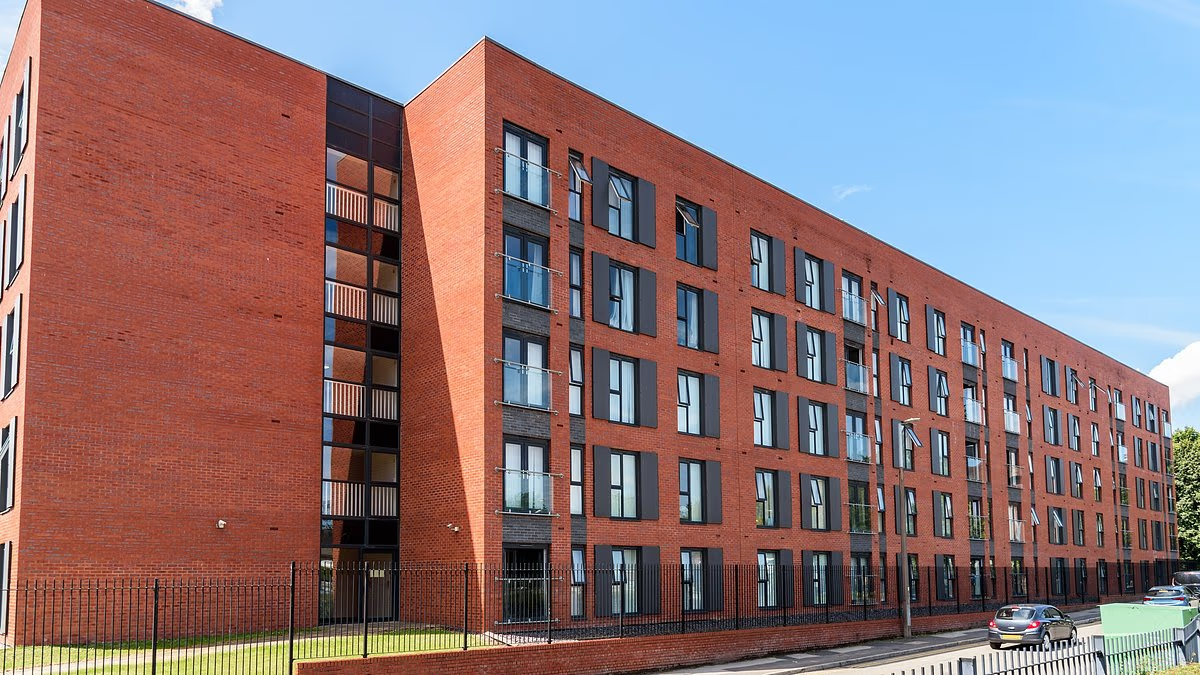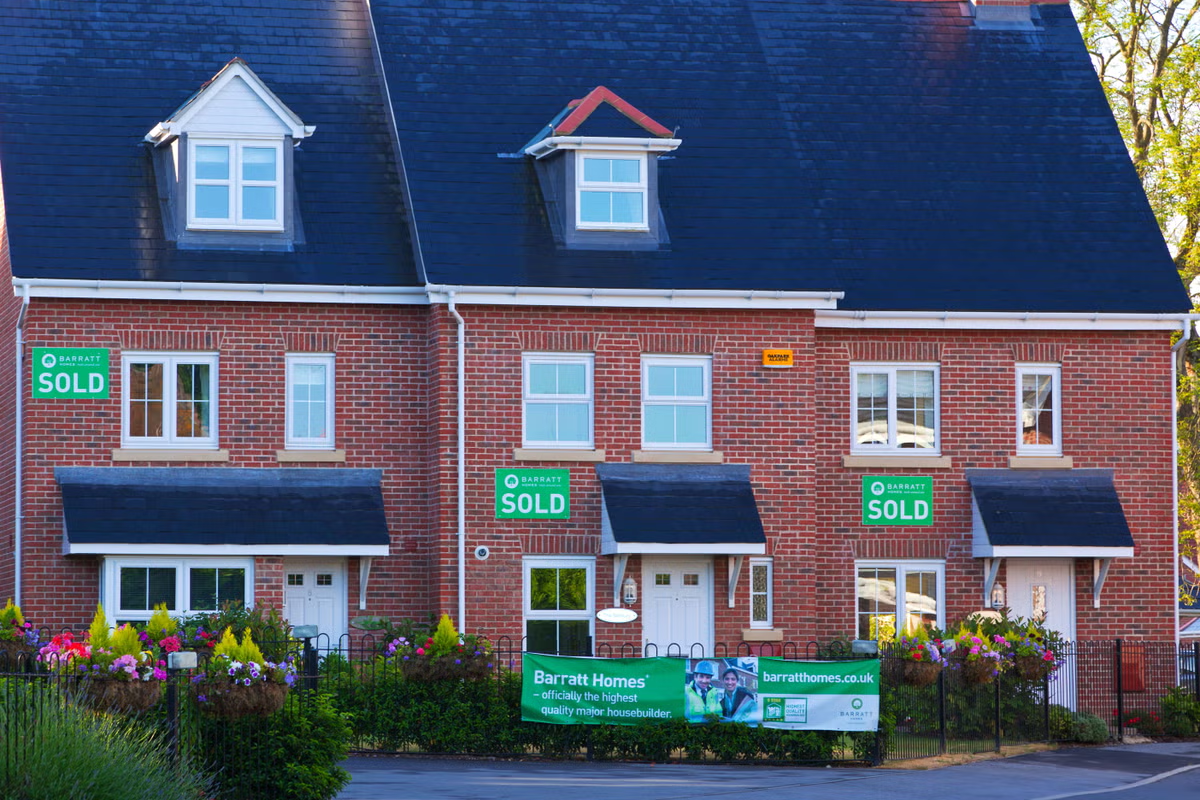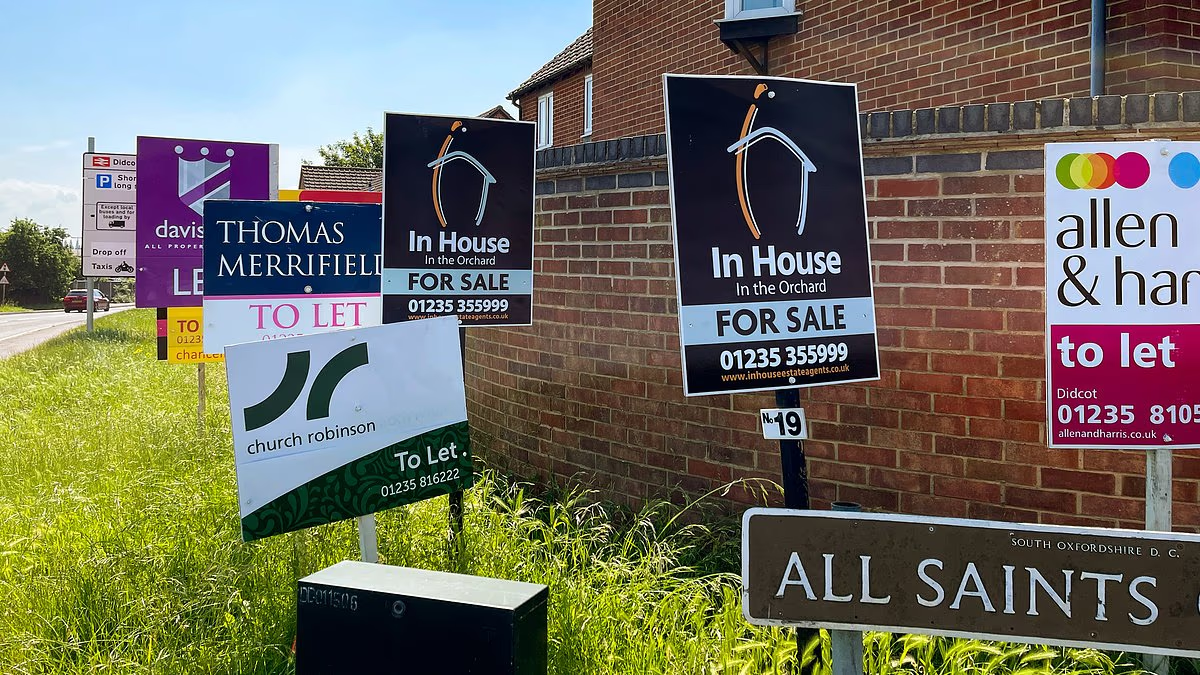
Fewer landlords are attempting to sell their properties, according to analysis by Hamptons, as failing to do so could risk their property being empty for a year.Nationally, only 9.2 per cent of homes listed for sale last month had previously been advertised for rent within the last five years - a drop from 11.3 per cent at the same time last year.This figure is also down from the levels seen earlier in 2026 before the Renters' Rights Act came into force on 1 May.In London, one in five homes listed for sale in June had previously been let within the last five years, at 20.3 per cent - but again this is on a downward trend. This suggests that while the Renters’ Rights Act may have prompted some landlords to sell earlier in the year it may now be having the exact opposite effect now that it is fully in force.As of 1 May 2026, landlords who serve a Ground 1A notice to sell - the new formal route used to regain possession of a rental property in order to sell it - face a mandatory 12-month ban on re-letting the property, even if they are unable to find a buyer.This means a failed sale now comes with a much higher cost. In an already cautious sales market, landlords risk being left with an empty property that cannot be re-let for a year. The share of homes listed for sale that were previously rented dropped to 9.2% nationally in June, down from 11.3% last year and below the 2021-2022 peakSelling a property in the current market is also proving harder than usual. This is also likely making landlords more cautious about serving notice to sell.Three in five homes listed for sale since January are yet to sell, according to property listing site Zoopla.The average time it takes to sell a property is at its highest since 2011, according to estate agent Hamptons.Hamptons’ analysis of homes listed for sale by landlords last year shows that 51 per cent failed to sell, rising to 60 per cent among flats. It says that had the new rules been in place last year, an estimated 80,000 to 100,000 unsold rental homes would have been legally barred from returning to the rental market for 12 months, reducing the number of homes available to rent. Aneisha Beveridge, head of research at Hamptons thinks the balance of risk has shifted for landlords. 'A tougher sales market and the introduction of a 12-month re-letting ban mean selling has become a more complicated proposition for landlords. 'For many, the prospect of being left with an empty property that can't easily return to the rental market has made holding on to an investment look more attractive.'Beveridge is expecting the decision to sit tight may start to pay off for landlords. 'Yields have improved over the last couple of years as rents have risen faster than house prices, giving investors more headroom to absorb higher borrowing costs,' she says.'At the same time, rental growth is picking up again, with rents on newly let homes rising at their fastest pace in more than a year. 'While challenges undoubtedly remain, conditions for landlords arguably look better than they did 12 months ago.'Across the whole rental market, including both new lets and ongoing tenancies, rents rose by 2.2 per cent year-on-year, according to Hamptons.It says the average rent on a newly let home reached £1,392 per month in June.The flats market is flooded with landlordsFlats were a popular buy-to-let investment. They were cheaper than houses, tended to offer slightly better yields and were often seen as a more hands-off investment.However, now the flats market is disproportionately exposed to landlord selling.Across the UK, 24.4 per cent of flats marketed for sale in June had previously been rented, compared with just 7.8 per cent of houses. Both investors and owner-occupiers have become more cautious towards flats amid rising service charges, according to Hamptons.The average leaseholder's service charge bill now ranges from £1,525 a year for the cheapest 10 per cent of buildings to £8,680 for the top 10 per cent, according to the latest research by the Property Institute (TPI). This is based on analysis of 2,137 buildings covering 117,052 homes across England and Wales. In June, the typical flat took almost a month longer to sell than a house. The average flat went under offer after 85 days, compared with 59 days for a house. Share of homes sold by landlords: Flats made up 51 per cent of rental homes listed for sale last year and remain disproportionately exposed to landlord sellingMany landlords have already sold The number of rental homes has remained broadly flat for the last 10 years. This is because while landlords have been selling up in greater numbers there have also been plenty of others buying.This has propped up the number of rental properties alongside accidental landlords - people who have held onto a property they previously lived in.People often become accidental landlords due to moving in with a partner or because they couldn't sell - perhaps due to cladding or some other issue.Tax changes from 2016 onwards, higher interest rates from 2022 and the implementation of the Renters’ Rights Act in 2026 mean many landlords looking to leave have already done so, according to Hamptons.While the scale of the landlord sell-off has often been overstated, the private rented sector has not grown in line with the wider housing market. The number of rental homes in England has remained broadly unchanged at 4.8m over the last decade, while the total number of homes has increased by around 2m. Most of that additional stock has instead gone into owner occupation.'The Renters' Rights Act has been a long time coming, and most landlords who wanted to leave the sector because of it have probably already done so,' said Aneisha Beveridge, head of research at Hamptons.'While the new rules may have encouraged some landlords to sell, the bigger shift has come from years of tax changes and higher mortgage costs, which have gradually reduced the number of landlords in the market.'Best mortgage rates and how to find them Mortgage rates have shot up again due to inflation triggered by the conflict with Iran reversing hopes that the Bank of England would cut rates. This means those remortgaging or buying a home face higher costs.That makes it even more important to search out the best possible rate for you and get good mortgage advice, whether you are a first-time buyer, home owner or buy-to-let landlord.This is Money's partner L&C can help you with its fee-free mortgage service.> Compare mortgage rates> Find the right mortgage for you To help our readers find the best mortgage, This is Money has partnered with the UK's leading fee-free broker L&C.This is Money and L&C's mortgage calculator can let you compare deals to see which ones suit your home's value and level of deposit.You can compare fixed rate lengths, from two-year fixes, to five-year fixes and ten-year fixes.If you’re ready to find your next mortgage, why not use This is Money and L&C’s online Mortgage Finder. It will search 1,000’s of deals from more than 90 different lenders to discover the best deal for you.> Find your best mortgage deal with This is Money and L&C Mortgage service provided by London & Country Mortgages (L&C), which is authorised and regulated by the Financial Conduct Authority (registered number: 143002). The FCA does not regulate most Buy to Let mortgages. Your home or property may be repossessed if you do not keep up repayments on your mortgage.
Landlords stop trying to sell to avoid 12-month re-letting ban
Fewer landlords are attempting to sell their properties, according to analysis by Hamptons, as failing to do so could risk their property being empty for a year.
1,265 words~6 min read