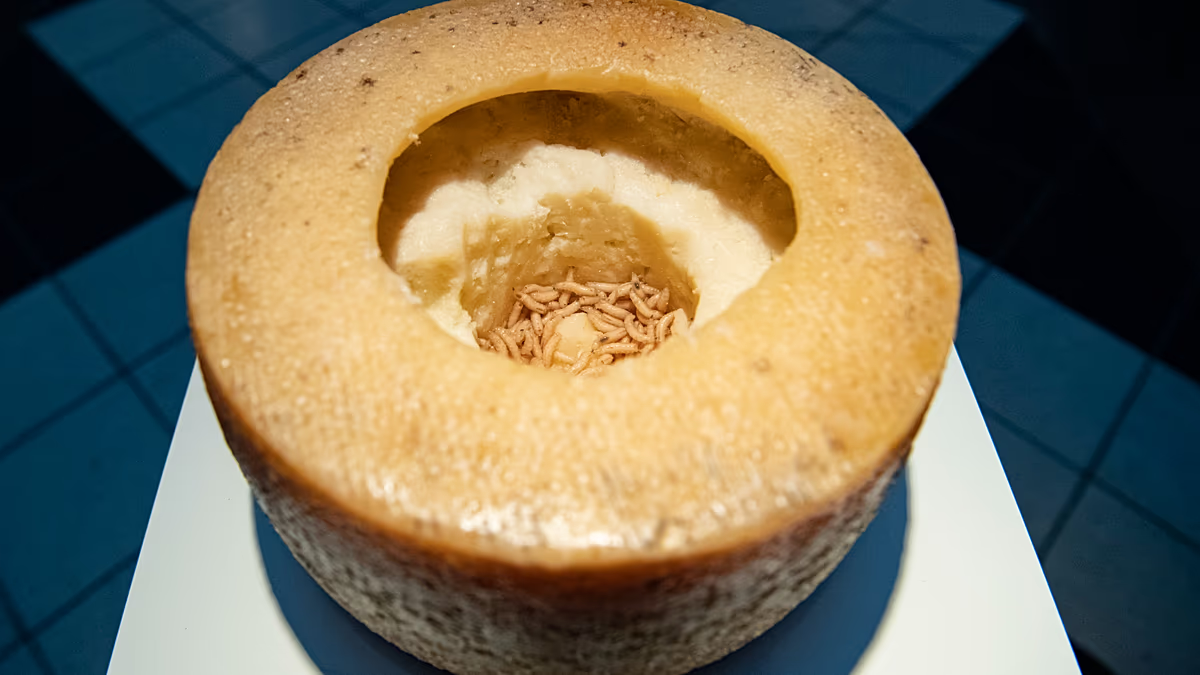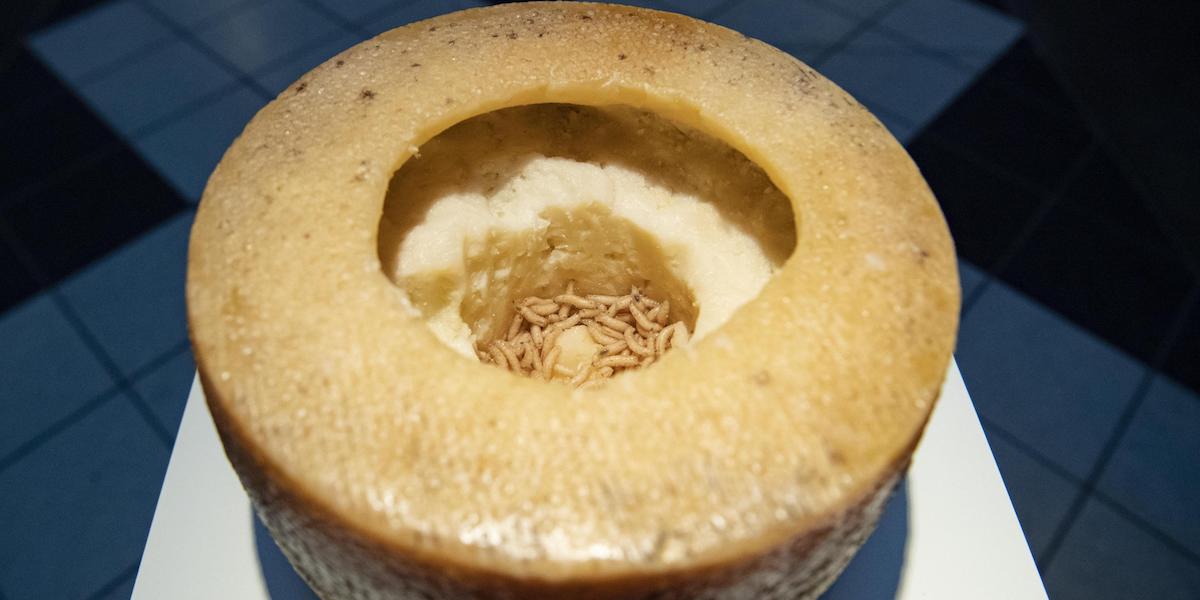
Fermented fish, cheese with maggots, black pudding or offal: across Europe’s kitchens there are specialities that can make even seasoned gourmets recoil at first. Yet disgust is subjective. What is seen as a time-honoured delicacy in one country raises eyebrows elsewhere – or even prompts a physical rejection. The Disgusting Food Museum in Berlin shows visitors just how narrow the line between disgust, curiosity and culinary tradition can be.
The concept originated in Malmö in Sweden; the museum has also been open in Berlin since 2021. The exhibition does not just aim to shock, but to explain why people react so differently to food.
“We want to show that disgust is something that affects all of us. And that it is culturally conditioned, but also rooted in evolutionary biology,” says museum director Alexandra Bernsteiner. “And we do that with something we ideally do three times a day: eating.” The museum therefore also sees itself as a place for a change of perspective. The aim is to dismantle prejudices and bring different cultures, but also different perspectives on food, closer together.
Disgust is culturally learned
Almost 100 unusual foodstuffs from around the world can be admired at the Disgusting Food Museum, where visitors are invited to confront their squeamishness.