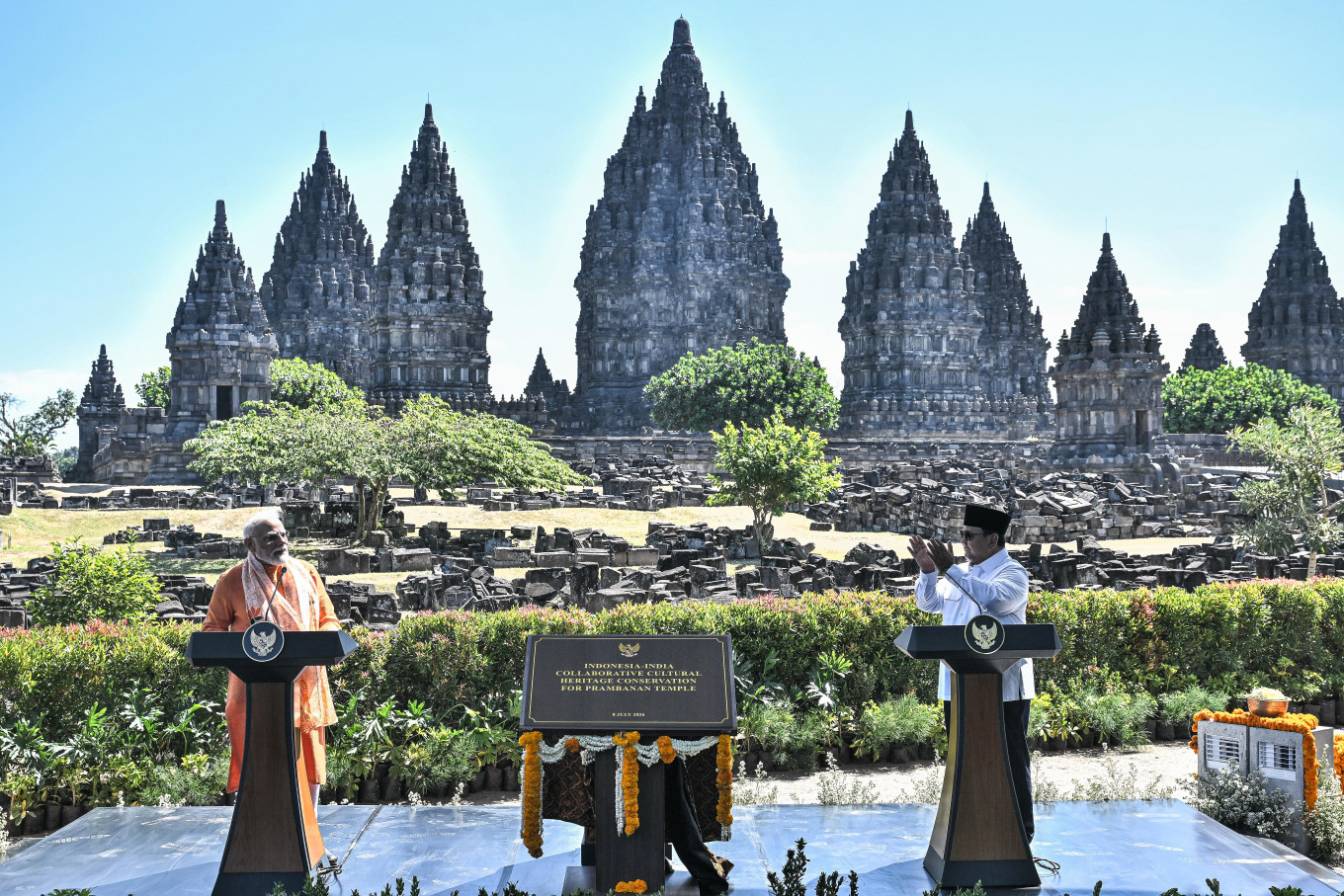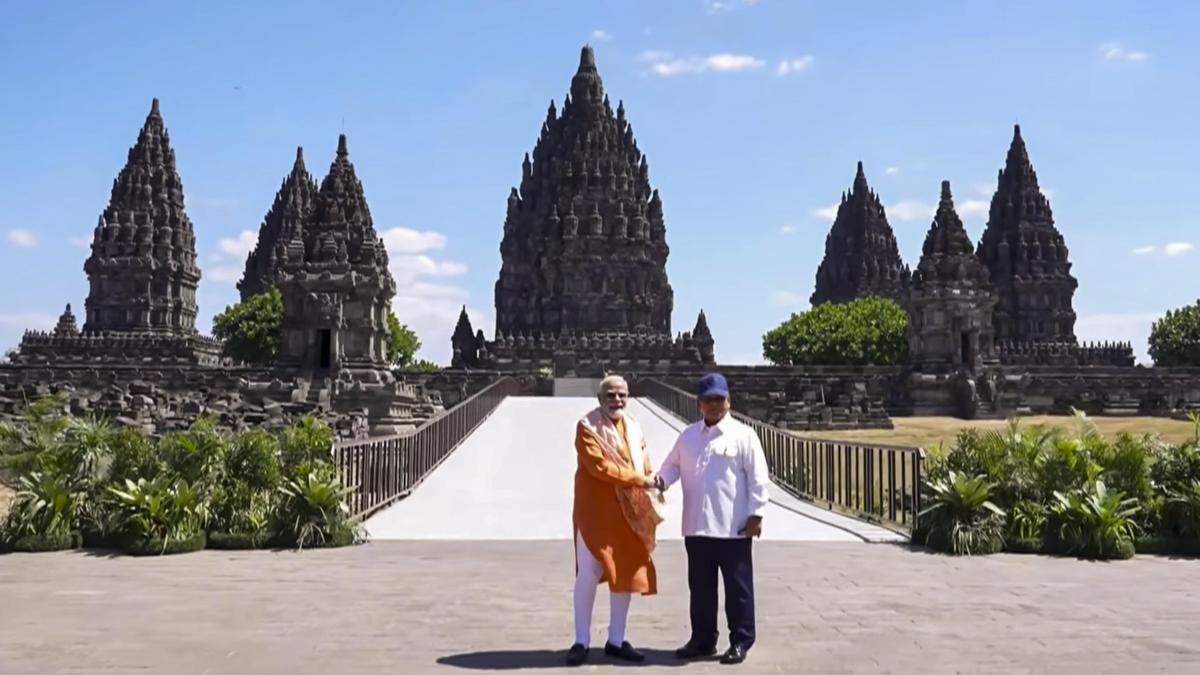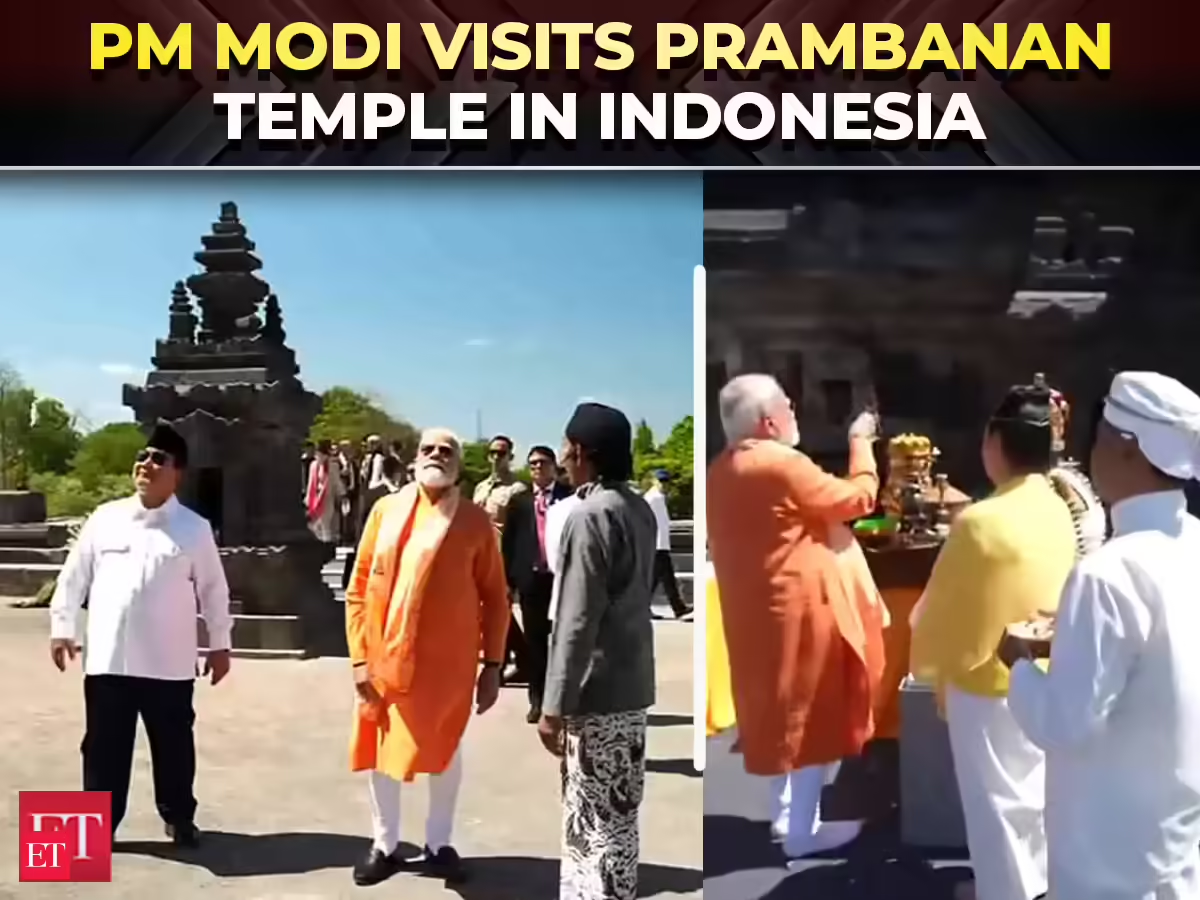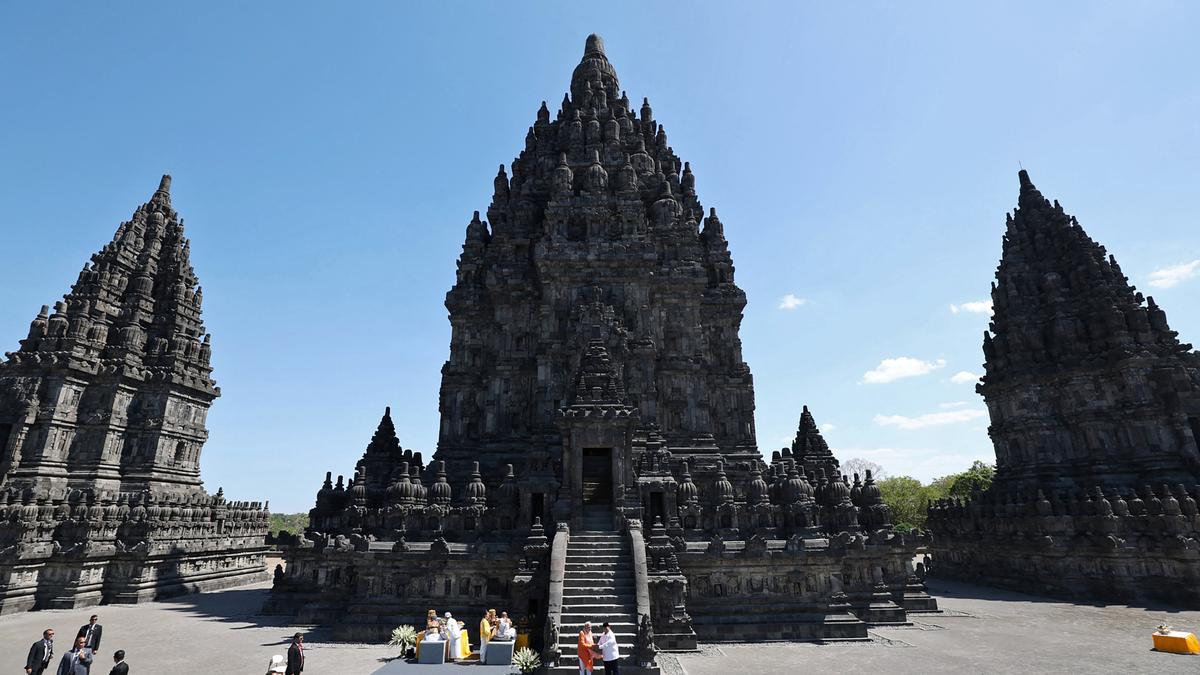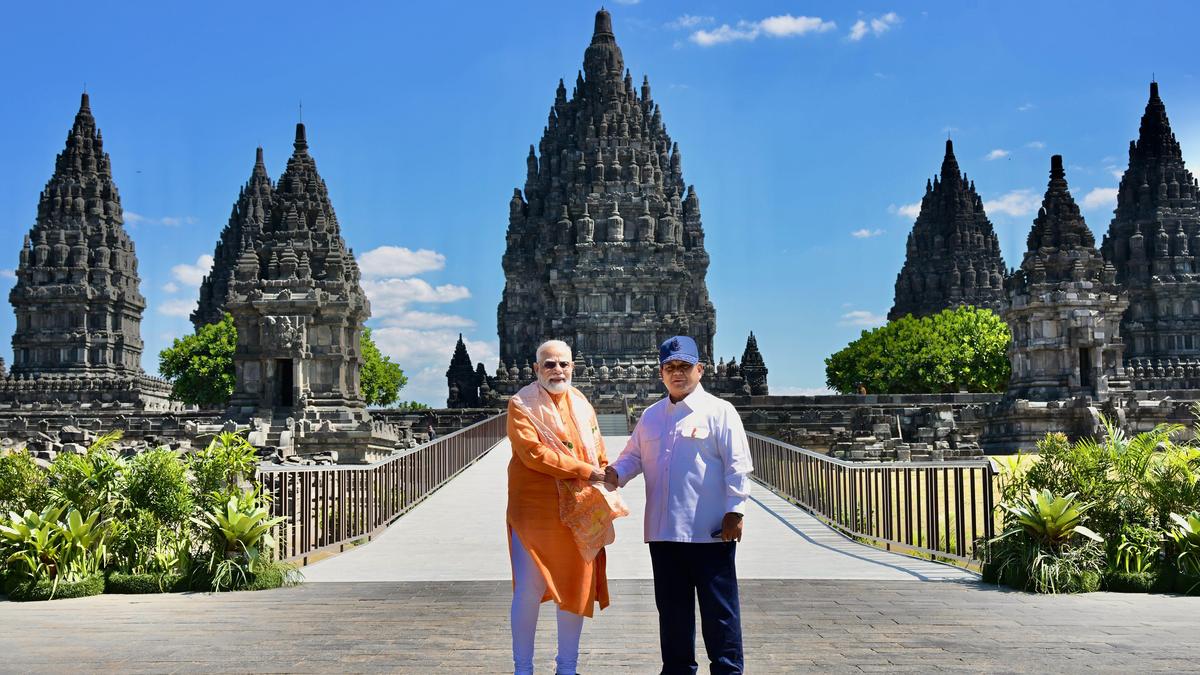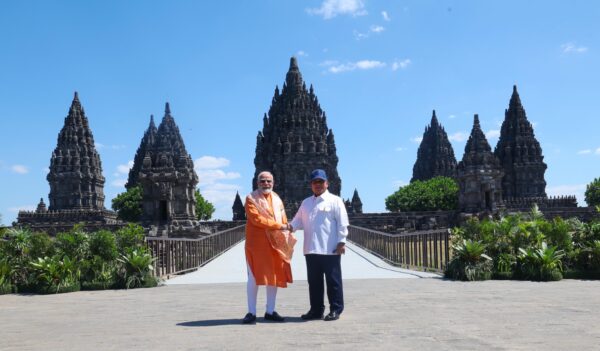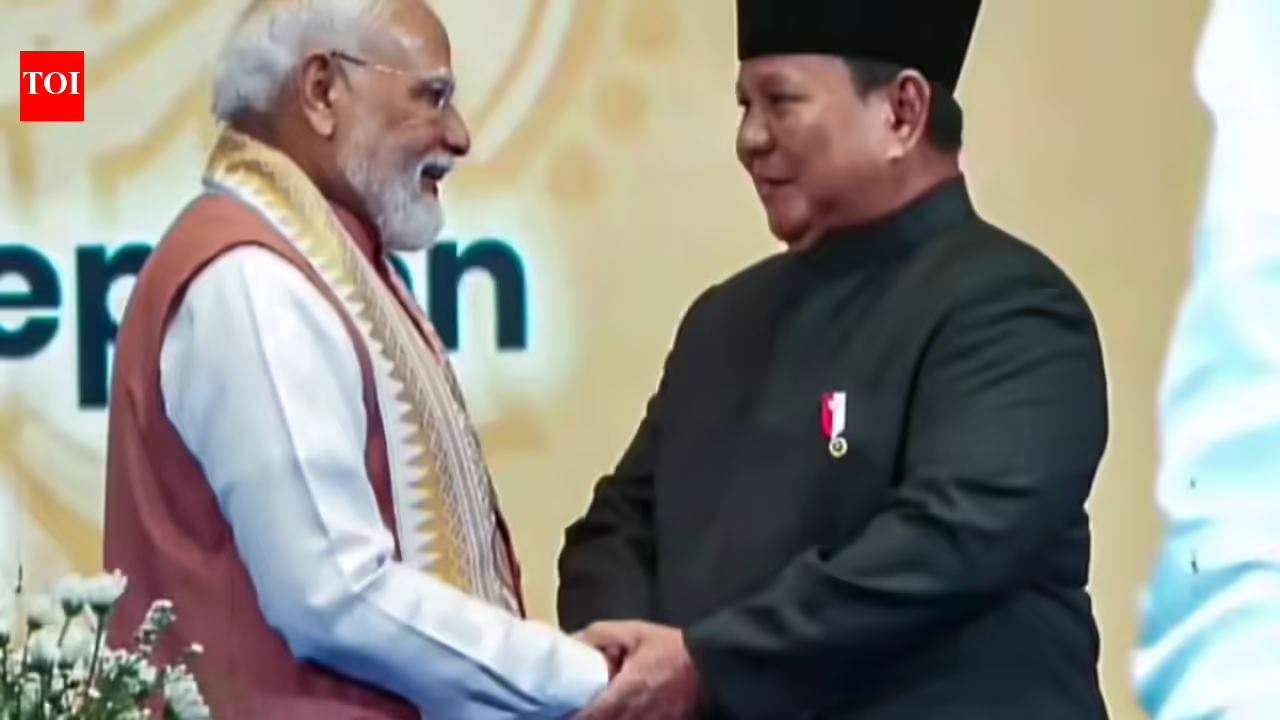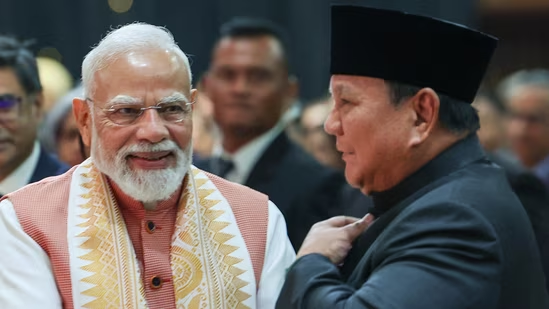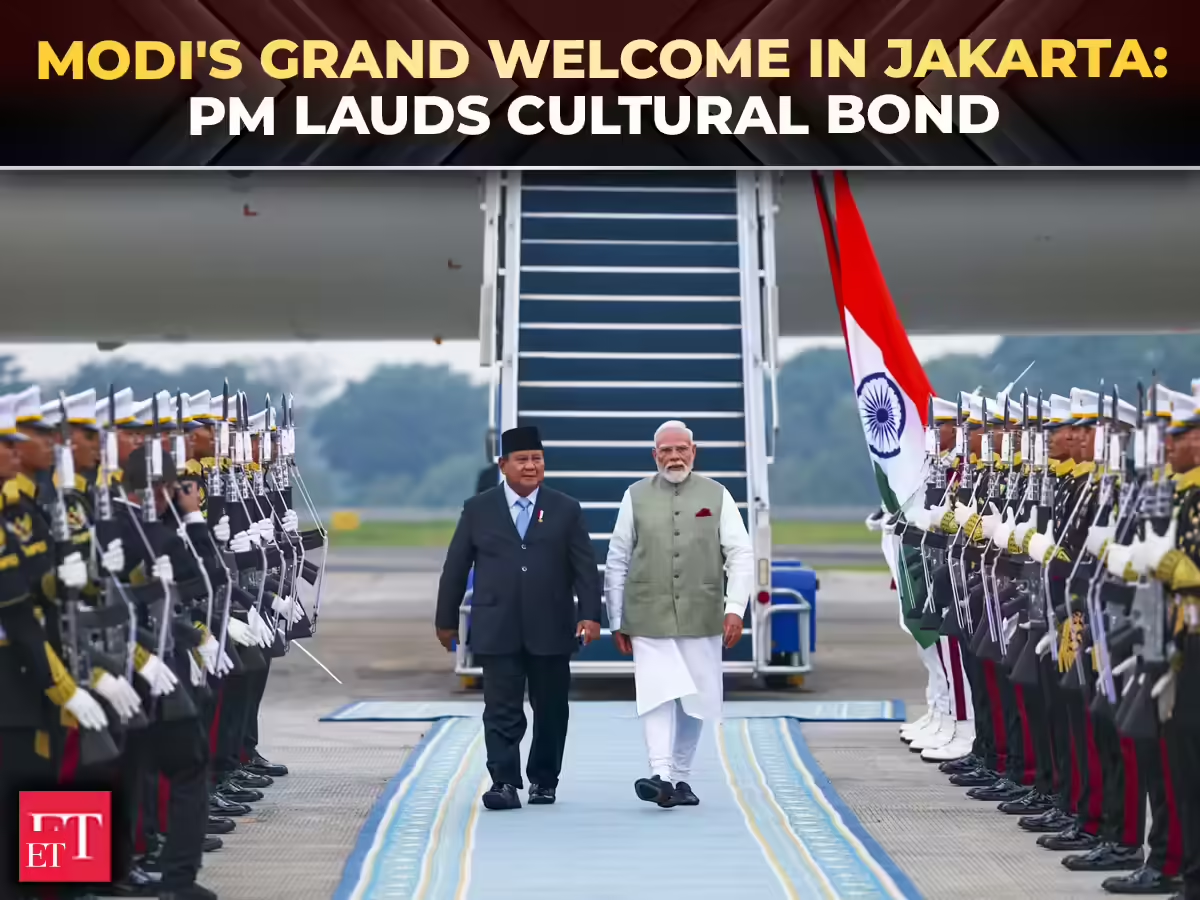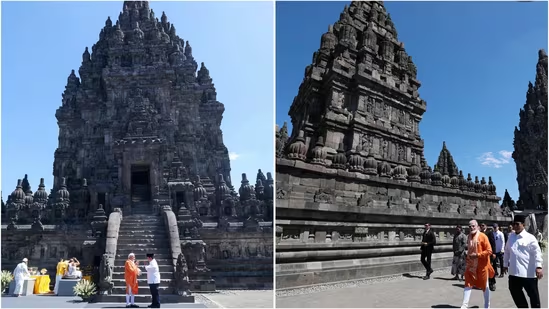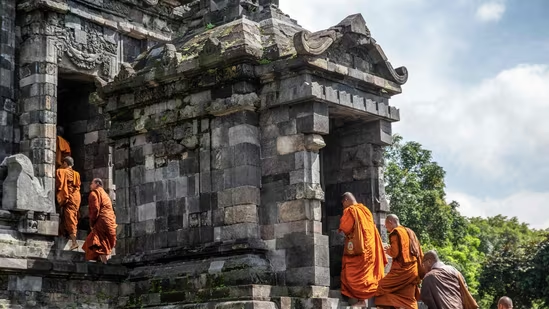
Prime Minister Narendra Modi visited the 10th-century Prambanan Temple dedicated to Hindu gods Brahma, Vishnu, and Shiva, on the last day of the Indonesian leg of his three-nation tour of the Indo-Pacific region. He called the temple a testament to the close cultural ties between India and Indonesia. A day earlier, Modi addressed the Indonesian parliament and said that the relationship between the two countries is rooted in local versions of the Hindu epics, Ramayana and Mahabharata, and monuments such as Borobudur, the world’s largest Buddhist temple, around 50 km from Prambanan. He referred to Indonesia’s national emblem, Garuda, which is Lord Vishnu’s mount in the Hindu tradition.The coexistence of Islam, democracy, and pluralism in Indonesia is based on concepts such as Ummatan Wasatan, a Quranic term. (AFP)Modi spoke about traders and Sufis from his home state of Gujarat, who brought the message and values of Islam to Indonesia, the world’s most populous Muslim nation and home to roughly one in eight Muslims worldwide. He highlighted aspects of Indonesia, the world’s third-largest democracy and Southeast Asia’s largest economy, that are not spoken about as much as they should be.Indonesia is among the most underestimated countries. Its inclusive nationhood stands out even as the idea is under threat globally with the rise of Right-wing populism. The idea has endured despite democratic backsliding and blasphemy laws, which the US Commission on International Religious Freedom has described as a religious freedom violation and prone to misuse against minority groups. It is based on sound foundational principles, Pancasila, such as humanitarianism, democracy, and social justice. Indonesia is a refutation of many Orientalist tropes and generalisations dominating the discourse around Islam.The coexistence of Islam, democracy, and pluralism in Indonesia is based on concepts such as Ummatan Wasatan. A Quranic term, Ummatan Wasatan, literally means the middle community of moderation and balance. Indonesia has embedded Wasatiyyah — Islamic moderation — in national identity, education, and governance. The concept is promoted through premarital counselling programmes, etc and is part of Islamic studies in Indonesia, with a special focus on critical thinking, mysticism, Islamic cultural history, and reform.Indonesian Muslim leaders have played a key role in popularising Wasatiyyah. In the 1940s, they accepted Pancasila’s compatibility with Islam after the first president, Sukarno, proposed it as an ideological basis for a pluralistic Indonesia, which now has almost as many Muslims as in the Islamic heartland of West Asia and North Africa combined.Pancasila has been likened to the modus vivendi the Prophet Muhammad established through the seventh-century Medina Charter, recognising all groups as one nation together with Muslims. American sociologist Robert N Bellah has called this effort depicting the early Muslim community as a type of egalitarian participant nationalism “by no means entirely an unhistorical ideological fabrication”. Indonesian intellectual Azyumardi Azra called Pancasila an expression of Indonesian Muslims drawing on the Medina model.Nahdlatul Ulama (Reawakening of the Islamic Scholars), or NU, the world’s biggest Islamic organisation, backed Indonesia as a pluralistic State, falling back upon ijtihad, the Islamic idea of independent reasoning. It reached a consensus on the nature of the State after a dialogue with secular scholars who shared a nationalist and anti-colonial vision. NU draws parallels between Pancasila and the Medina Charter.The 2002 Bali bombings, which coincided with the chaotic transition from the Suharto dictatorship to democracy, threatened Indonesia’s foundational idea. This, coupled with the rise of ISIS globally in the following decade, prompted NU and other Muslim organisations such as the Muhammadiyah to double down — in tandem with the State — to prevent extremism from taking root in society.NU leader and Muslim cleric Abdurrahman Wahid, who championed humanitarian Islam and played a key role in Indonesia’s democratic transition as the president after a 32-year Suharto dictatorship, believed all religions are essentially the same. A proponent of Islamic universalism, he emphasised the idea of Insaniyya (humaneness).Another NU figure, Yaqut Cholil Qoumas, was behind the initiative to allow regular religious rituals at the UNESCO World Heritage sites Prambanan and Borobudur as the Indonesian religious affairs minister in 2022.The two historic Hindu and Buddhist sites were previously largely closed to ritual worship. They are located in Qoumas’s native Java, Indonesia’s cultural heartland, where the Muslim majority has long emphasised Islam rahmatan li al-‘alamin (source of universal love and compassion).In September 2018, then-Indonesian President Joko Widodo — celebrating Indonesia’s multiculturalism as the inauguration of the world’s tallest Vishnu statue in Bali, a Hindu-majoirty area — underlined that Indonesian society had not only inherited masterpieces such as Borobudur and Prambanan from ancient civilisations but also built a civilisation on such foundations. In 1998, the Indonesian central bank released a 20,000-rupiah banknote featuring Lord Ganesha, symbolising wisdom and knowledge, and Ki Hadjar Dewantara, the country’s first education minister. The note was withdrawn in 2008.In 2013, Indonesia installed a statue of Sarasvati, the Hindu goddess of learning and wisdom, outside its embassy in Washington.Indonesia’s religious freedom, harmony, diversity, intercultural and interreligious dialogue offer a model for other countries. The Indonesian State facilitates inter-religious dialogue, sustaining the largest Muslim democracy and a country of over 240 ethnic groups and more than 300 languages.As many as 88% of the Indonesians are Muslims, 9% Protestants, and the remaining Catholics, Buddhists, and Hindus. The Forum Kerukunan Umat Beragama facilitates dialogue and resolves disputes among them. The Indonesian model is about synthesis and not a clash of civilisations, underscoring that there is more to the country than its pre-Islamic history, which many in India appear fixated on.Views expressed are personal
A highlight after PM Modi's visit: Indonesia’s model of inclusion is a lesson for all
Its inclusive nationhood stands out even as the idea is under threat globally with the rise of Right-wing populism.
912 words~4 min read