This content was published on
July 13, 2026 - 01:25
5 minutes
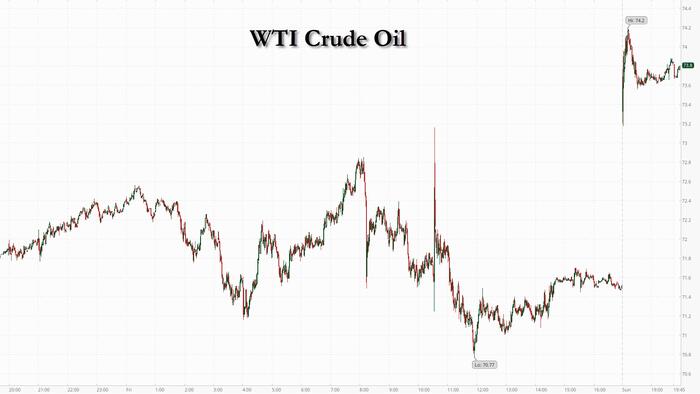
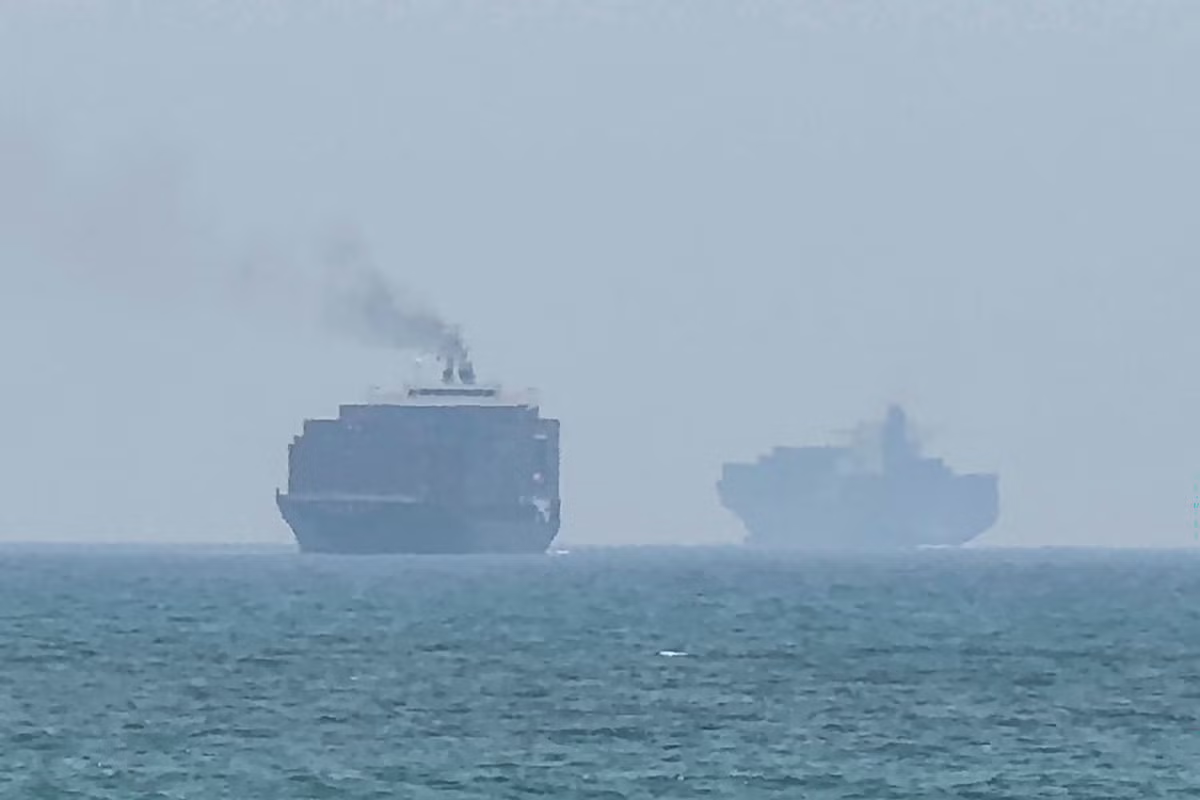
(Bloomberg) — Oil rose and US equity-index futures fell after the US launched another round of strikes against Iran, while conflicting claims over the status of the Strait of Hormuz heightened uncertainty.Brent crude climbed more than 3% to $78.40 a barrel on concerns over potential supply disruptions. Australian bonds dropped with Treasury futures, while the dollar strengthened against most of its Group-of-10 peers. Nasdaq 100 futures retreated 0.5%.Precious metals slid, with gold losing 1.2% to about $4,070 an ounce, while silver dropped 2%, as higher oil prices and inflation concerns boost the prospect for higher interest rates. Bitcoin fell 0.6% to trade around $63,800.“The latest developments over the weekend suggest markets may face a volatile start to trading which could test the glass half full mentality we have seen recently,” Nick Twidale, chief market analyst at AT Global Markets, wrote in a note to clients.Renewed tensions in the Middle East come at a pivotal time for markets as investors brace for the start of the earnings season, with Goldman Sachs Group Inc. and JPMorgan Chase & Co. due to report Tuesday. S&P 500 companies are expected to post a 24% jump in second-quarter profits, providing a key test of whether earnings can justify a rally fueled by optimism over artificial intelligence.Earlier, the US military launched strikes Sunday aimed at further weakening Iran’s ability to strike civilian vessels transiting the Strait of Hormuz, the US Central Command said. The latest action followed Iranian drone and missile attacks on US allies including Kuwait, Jordan and Qatar.What Bloomberg Strategists Say…US bonds are also vulnerable to more losses should oil prices stay firm as short positioning in Treasury futures is well below the extremes seen in August and September last year and within the range seen since early February. That suggests the oil-bonds-dollar nexus will continue to play out in the near term.— Mark Cranfield, MLIV. To read the full analysis, click here.Confusion over the status of the Strait of Hormuz added to the uncertainty, with Iran saying it had closed the waterway, while the US military and maritime authorities said shipping continued through its southern route.In Europe, Deutsche Bank strategists expect Stoxx 600 firms to report a 12% jump in second-quarter earnings, following a 7% rise in the first quarter. Profits for MSCI Asia Pacific constituents are estimated to rise 39%, up from 6.9% in the previous three months, data compiled by Bloomberg show.The outlook is being tested by persistent inflation, higher energy prices and growing expectations the Federal Reserve may resume raising interest rates, threatening profit margins. With US and global equities trading near record highs and valuations elevated, investors see little room for disappointing results.Investors will also closely gauge this week’s US inflation data, after oil’s biggest weekly gain since mid-May revived concerns that higher energy costs could further complicate the disinflation story. Consumer and producer price reports — the last inflation readings before the Fed meets later this month — will offer fresh clues on the path of interest rates.Traders have ramped up bets on further tightening, with swaps pricing almost 40 basis points of Fed hikes by December, up from about 15 basis points in early June. Economists surveyed by Bloomberg expect both headline and core inflation to have eased slightly in June, though both are forecast to remain well above the Fed’s 2% target.Fed Chair Kevin Warsh will also make his first congressional appearance since taking the helm after pledging to scale back forward guidance on the rate outlook.Elsewhere this week, Asian markets will look to China’s second quarter growth data for fresh signs of a slowing economy from sluggish domestic demand. Growth is estimated to have slowed to 4.5% year-on-year, dragging the year-to-date rate to 4.8%.Traders will also be watching the Bank of Korea’s policy decision on Thursday after Governor Shin Hyun Song warned that inflation, solid economic growth, a weak won and surging home prices all point to tighter monetary policy. All economists in a Bloomberg survey expect the BOK to lift its base rate to 2.75%.Corporate News:Nippon Paint Holdings Co. has made multiple offers for Akzo Nobel NV’s decorative paints business in the past month, according to people with knowledge of the matter. Regis Resources Ltd. has announced it will not submit a counterproposal to match the bid made by Genesis Minerals Ltd. for Vault Minerals Ltd. Some of the main moves in markets:StocksS&P 500 futures fell 0.3% as of 8:22 a.m. Tokyo time CurrenciesThe Bloomberg Dollar Spot Index rose 0.1% The euro fell 0.2% to $1.1398 The Japanese yen fell 0.2% to 161.98 per dollar The offshore yuan was little changed at 6.7848 per dollar CryptocurrenciesBitcoin fell 0.6% to $63,792.59 Ether fell 0.9% to $1,803.52 CommoditiesWest Texas Intermediate crude rose 3.2% to $73.66 a barrel Spot gold fell 1.2% to $4,071.82 an ounce This story was produced with the assistance of Bloomberg Automation.©2026 Bloomberg L.P.