Academia
The main constraint is not the lack of capital available to fund the projects; it is the regulation.
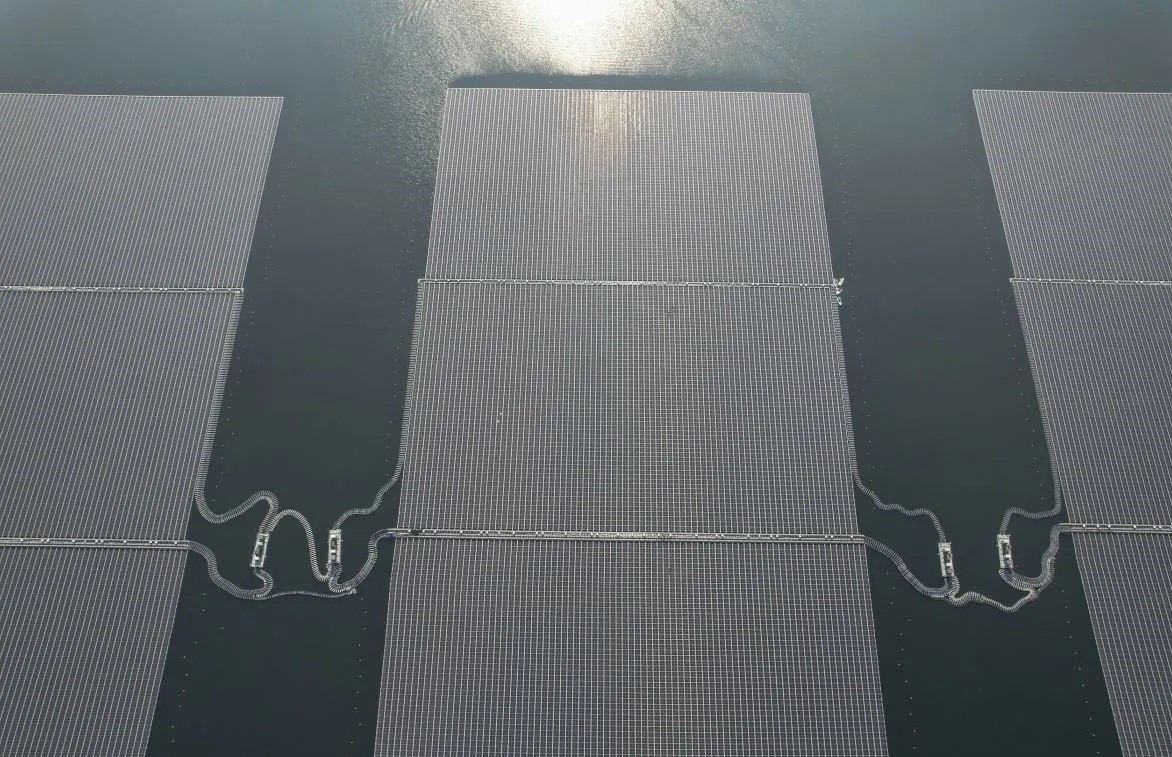
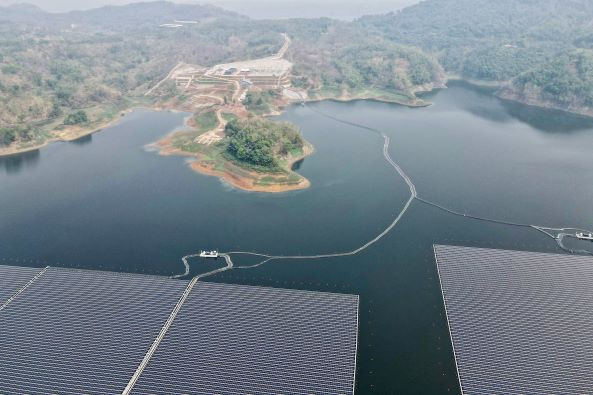
Hilly terrain forms a backdrop on Nov. 9, 2023 against the Cirata Floating Solar Power Plant at Cirata Reservoir in Purwakarta, West Java, the largest energy facility of its kind in Southeast Asia that was developed jointly by the Indonesian government and Abu Dhabi-owned renewable company Masdar of the United Arab Emirates. (AFP/Bay Ismoyo)
Since May, Indonesia has been rattled by a string of power outages across Java and Sumatra, exposing just how fragile its coal-dependent national energy security is. Earlier this year, President Prabowo Subianto announced a rather ambitious plan of developing 100 gigawatts of solar power capacity in an attempt to move away from fossil fuels, and particularly away from coal. The timing has made the announcement feel like an urgent response to a power system that has already been flawed.
But beyond energy security, this move also serves as an economic response to domestic and international pressures for cleaner energy in Indonesia. Global climate policies, such as the European Union’s Carbon Border Adjustment Mechanism (CBAM), which penalizes carbon-intensive exports, are making renewable energy power a decisive competitive factor for Indonesia’s export value.