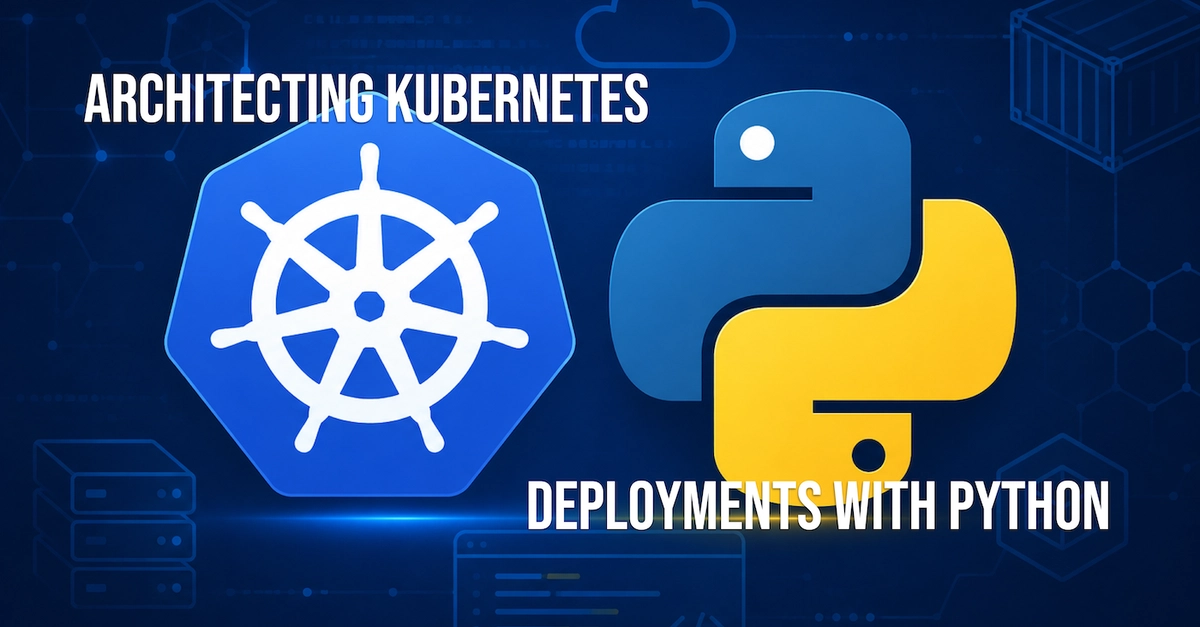
Python is an excellent language for automating cloud infrastructure, but the official Kubernetes Python client leaves developers with an important architectural decision:
Where should Kubernetes manifests live?
Should they be constructed directly with Python objects? Embedded as multiline strings? Or stored as external files and rendered at runtime?
Each approach works, but they have very different implications for readability, maintainability, and long-term operational cost.
The key is recognizing that deployment logic and platform configuration evolve on different lifecycles. Your deployment code, the part that authenticates to Kubernetes, renders templates, and applies resources, may remain unchanged for months. Your manifests, however, often change weekly as applications evolve, resource limits are tuned, cloud-provider annotations are added, or networking requirements change.