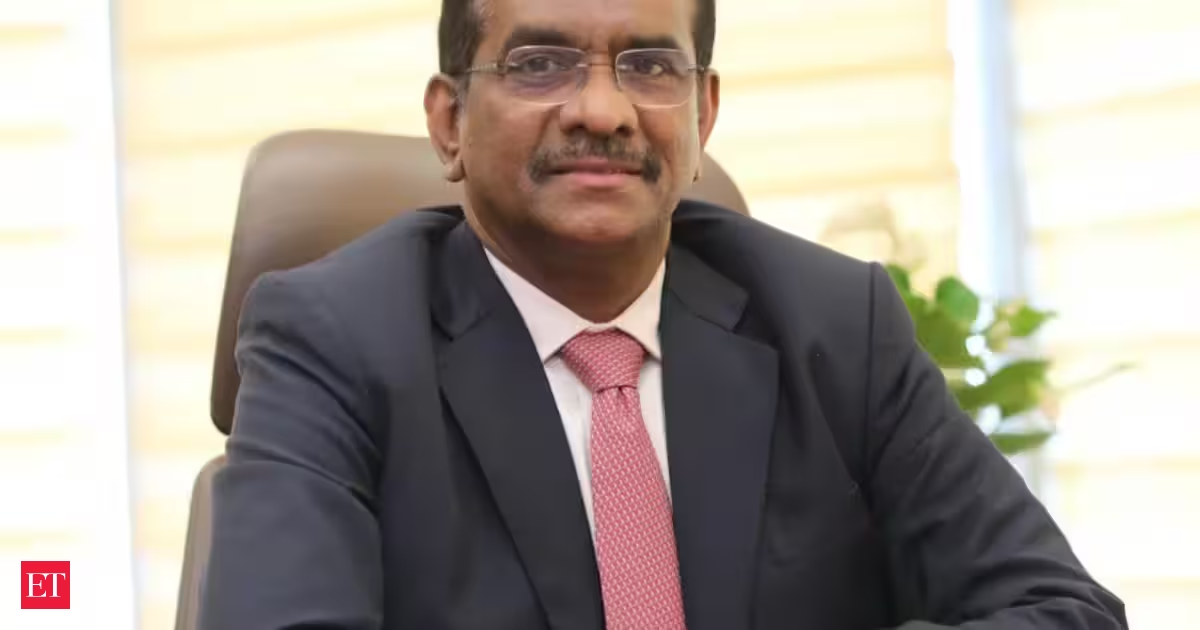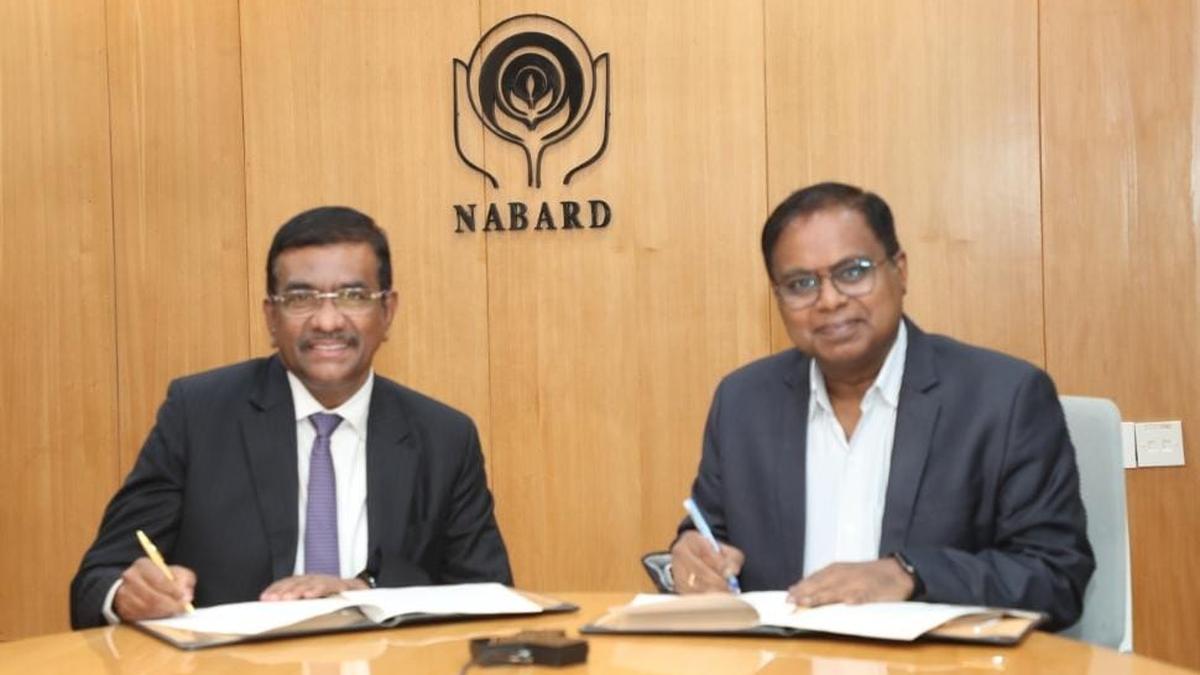
India's infrastructure push will require not only long-term financing but also a bigger pool of companies capable of executing large-scale projects, Rajkiran Rai, managing director and chief executive of National Bank for Financing Infrastructure and Development (NaBFID), said. In an interview with ET’s Joel Rebello and Sangita Mehta, Rai discusses challenges related to land acquisition, project preparation, transmission infrastructure and aggressive bidding, while outlining NaBFID's role in financing sectors that are critical to India's infrastructure development. Edited excerpts:RBI steps up scrutiny of Corporate India's foreign investmentsQ: How is the infrastructure financing market in India evolving?A: India requires infrastructure investments of nearly Rs 770 lakh crore over the next 20 years. This requirement cannot be met through budgetary resources alone; private capital will need to play a larger role. We see private sector participation where concession agreements are clearly defined. Renewable energy and roads are attracting private investment. We recently financed and later down-sold two large road projects—the Guwahati Ring Road and the Agra-Gwalior highway—each valued at over Rs 5,000 crore, reflecting strong investor appetite. Energy storage, transmission infrastructure, multimodal logistics, ports, shipbuilding, urban infrastructure and tourism-related projects are among the other sectors likely to see significant investment.Q: Which of these sectors offers the biggest opportunities?A: Urban infrastructure offers the largest opportunity. Of the Rs 770 lakh crore investment required over the next 20 years, nearly Rs 370 lakh crore will be needed for urban infrastructure alone. However, most urban local bodies lack the capacity to finance and execute projects at that scale. NaBFID is addressing this through its transaction advisory platform, support for municipal bond issuances, and efforts to help municipalities build stronger project pipelines and financial capacity.Q: As one of the most active infrastructure financiers, what are the key challenges you face?A: One of the biggest challenges is the quality of detailed project reports (DPRs). Since DPRs form the basis for tenders and bid evaluation, inadequacies at this stage often lead to delays during execution. Under RBI norms, project delays can become credit events, resulting in higher capital requirements. Land acquisition remains another major hurdle. In the energy sector, transmission infrastructure is critical because power needs to be evacuated efficiently after generation.Q: Is there a need for larger companies to execute these big-ticket projects?A: Yes, we need a much larger pool of execution-focused companies. India needs several companies like L&T. While L&T has an order book of about Rs 5 lakh crore, the next tier of construction companies has order books of just Rs 30,000 crore to Rs 40,000 crore. India needs more companies with the scale and capability to execute large infrastructure projects. Aggressive bidding is another concern, as it often results in margin erosion and weakens project economics over time.Q: You have built an outstanding book of Rs 1.15 lakh crore in a short time. Can you give us a lowdown on the portfolio?A: Our sanctioned book stands at about Rs 3.5 lakh crore. Disbursements happen over time, so not all sanctioned amounts are reflected immediately in the outstanding book. Some exposures are also down-sold. Over time, around 70-75% of the sanctioned book is expected to translate into outstanding assets. Our committed book is currently Rs 1.8 lakh crore, where documentation has been completed, and borrowers can draw funds as required.Monsoon activity subdued in large parts of India, Uttarakhand on red alertQ: What is the composition of NaBFID’s loan book?A: We aim to maintain a 50:50 mix between greenfield and brownfield projects. Greenfield projects currently account for about 42% of the portfolio and are gradually increasing. Around 65% of the book is concentrated in two broad sectors—transport, which includes roads and logistics, and energy, with renewables forming the largest component. We are present across 27 infrastructure sectors, and nearly 70% of our portfolio has a tenure exceeding 15 years. We expect to add at least Rs 1 lakh crore to our outstanding book annually.Q: How much can you grow the outstanding book with the current capital base?A: With the current capital base, we believe we can scale the outstanding book to around Rs 4.5 lakh crore to Rs 5 lakh crore. We also plan to strengthen capital through retained earnings and raise at least Rs 7,500 crore of AT1 capital over the next three to four years, including about Rs 1,000 crore from the domestic market this year, subject to market conditions.Q: We have seen development finance institutions struggle in the past. Why do you believe NaBFID will be different?A: Earlier development finance institutions such as ICICI, IDBI and IDFC benefited from low-cost funding and regulatory support. Over time, as policymakers believed commercial banks could handle long-term project finance, many of those advantages were withdrawn, leading these institutions to transition into commercial banking models. The banking sector's stress cycle later highlighted the challenges of funding long-term infrastructure with short-term liabilities, reviving the need for a specialised infrastructure financier. NaBFID has been created as a long-term development institution focused on India's infrastructure needs, with a model built on lessons learned from past cycles.Q: What are your guardrails to avoid repeating past mistakes?A: Our model is built on market-based funding, disciplined pricing and high operating efficiency, with a target cost-to-income ratio below 10%. We focus on strong credit underwriting, rigorous project appraisal and diversified funding sources. Infrastructure financing today is also far more disciplined, with sector-wide defaults at about 0.39%, lower than those in housing loans. Our goal is to build a resilient institution that can sustain a 2% NIM while maintaining high asset quality and supporting long-term infrastructure development.
Private capital should play a much larger role in India's infrastructure development: Rajkiran Rai, MD & CEO, NaBFID
India requires infrastructure investments of nearly Rs 770 lakh crore over the next 20 years. This requirement cannot be met through budgetary resources alone; private capital will need to play a larger role, says Rajkiran Rai, managing director and chief executive of National Bank for Financing Infrastructure and Development (NaBFID).
921 words~4 min read