Firmware updates are one of the places where an embedded prototype either becomes maintainable or becomes expensive to support. The hard part is not moving a binary from a laptop to a board. The hard part is making the whole path controlled, observable and recoverable when the device is in the field.
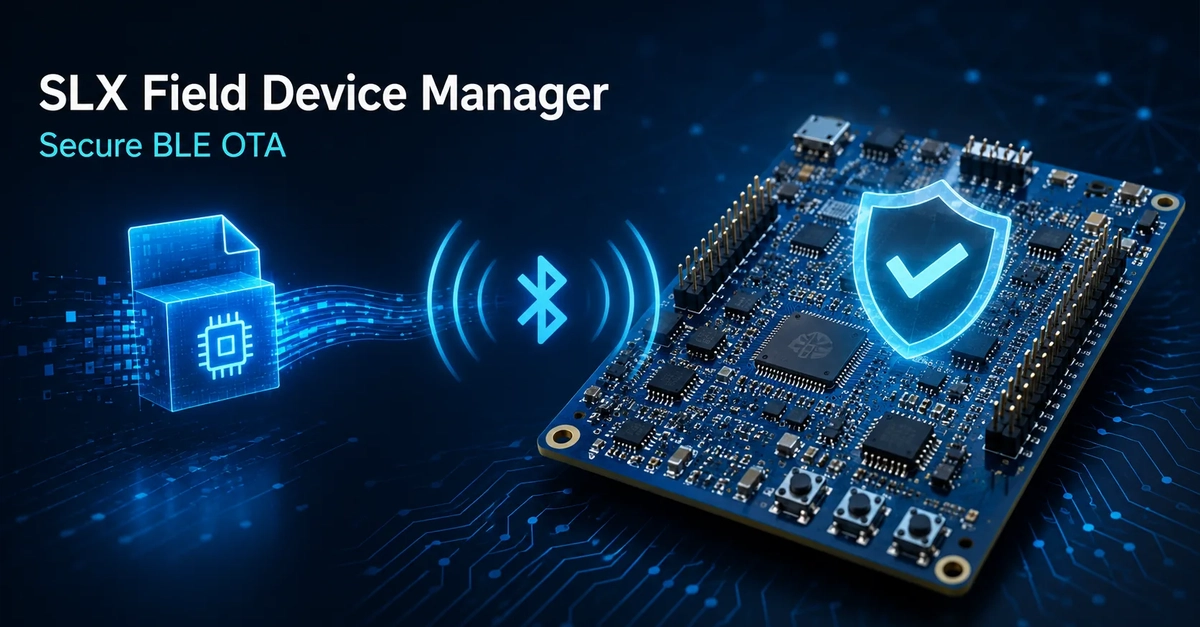
This internal R&D project explores that path on a Nordic nRF5340-DK. It uses Bluetooth Low Energy for a local maintenance connection, Zephyr and the nRF Connect SDK for the firmware base, MCUmgr SMP for management transport and MCUboot for verified boot and recovery.
Why use BLE for an OTA workflow?
Many embedded products are installed where permanent Internet access is not available, desirable or reliable. A technician may still be able to stand next to the device with a laptop or phone. BLE provides a practical local channel for commissioning, diagnostics and controlled updates without adding a cloud dependency simply for maintenance.
For that to be useful, the update flow needs more than a file picker. Before the upload, the operator should be able to identify the device and inspect its current firmware and diagnostic state. During the upload, the target should enforce its own policy. After reboot, the system must know whether the new image is actually healthy.