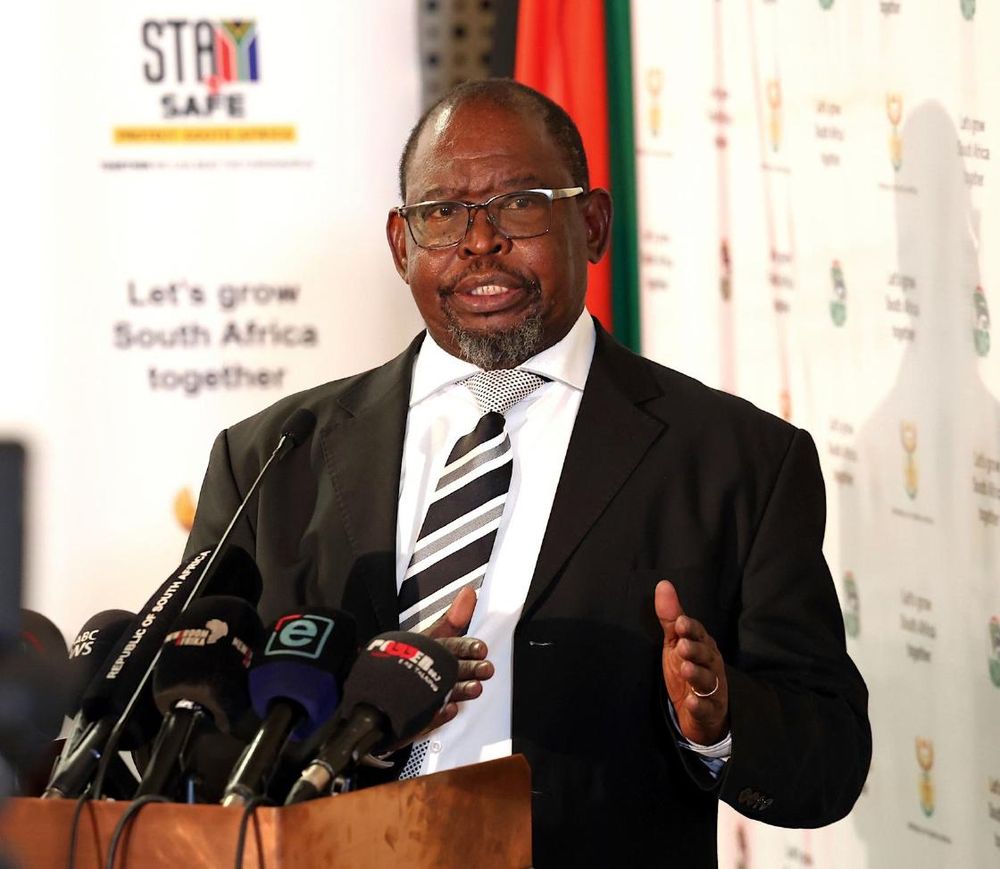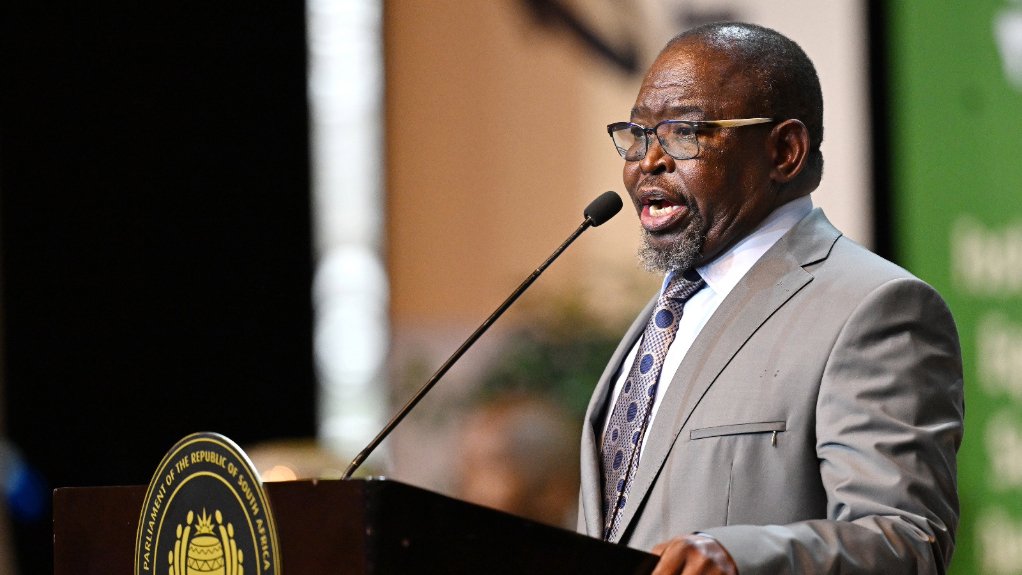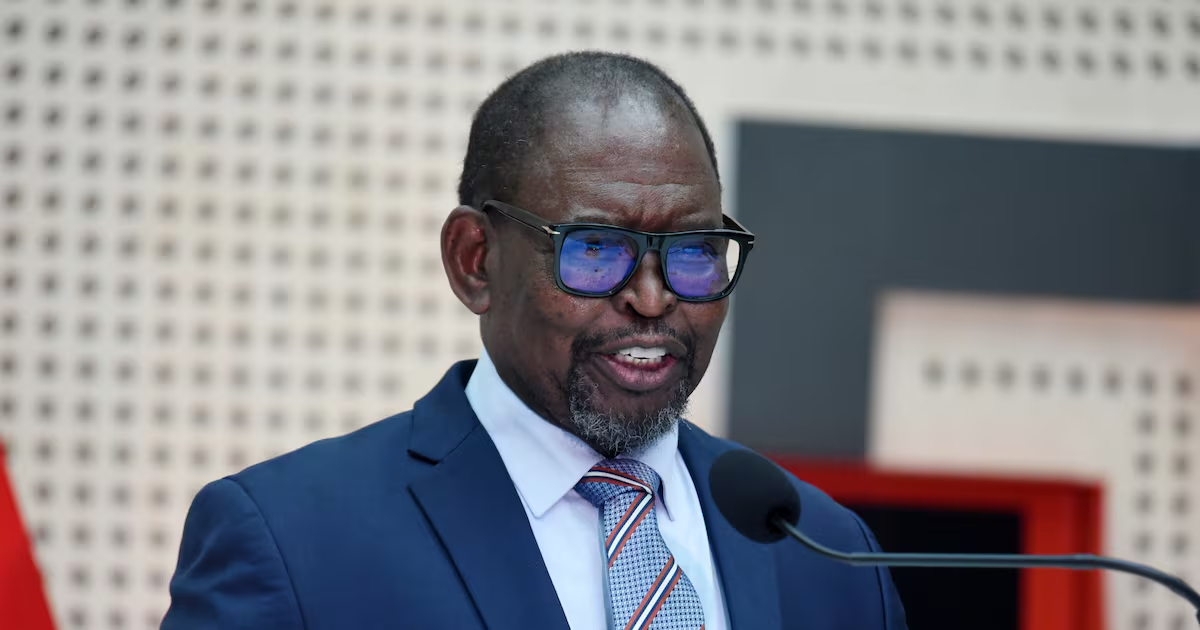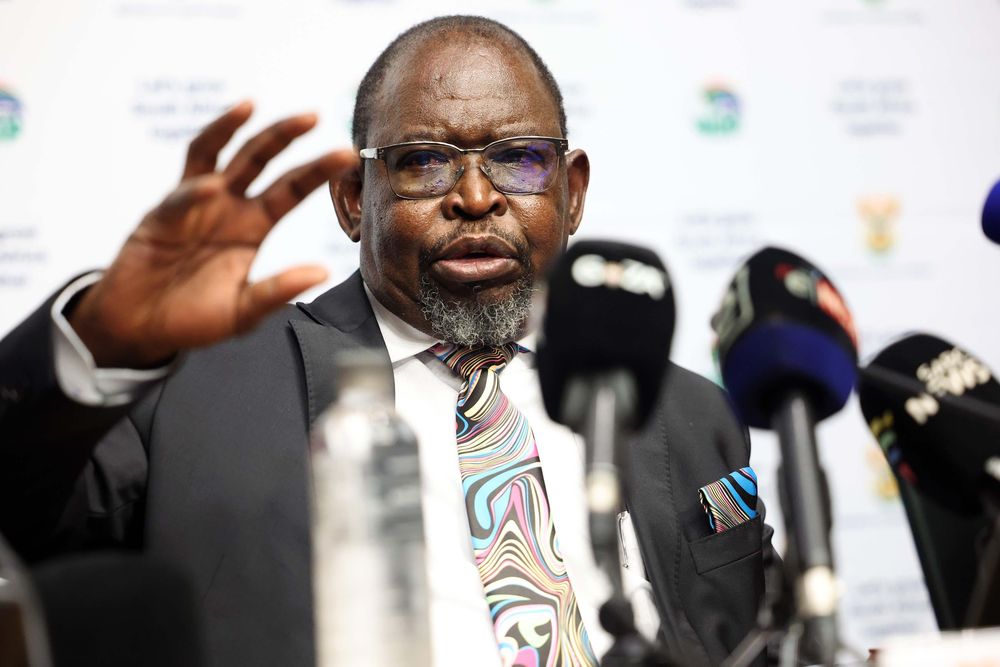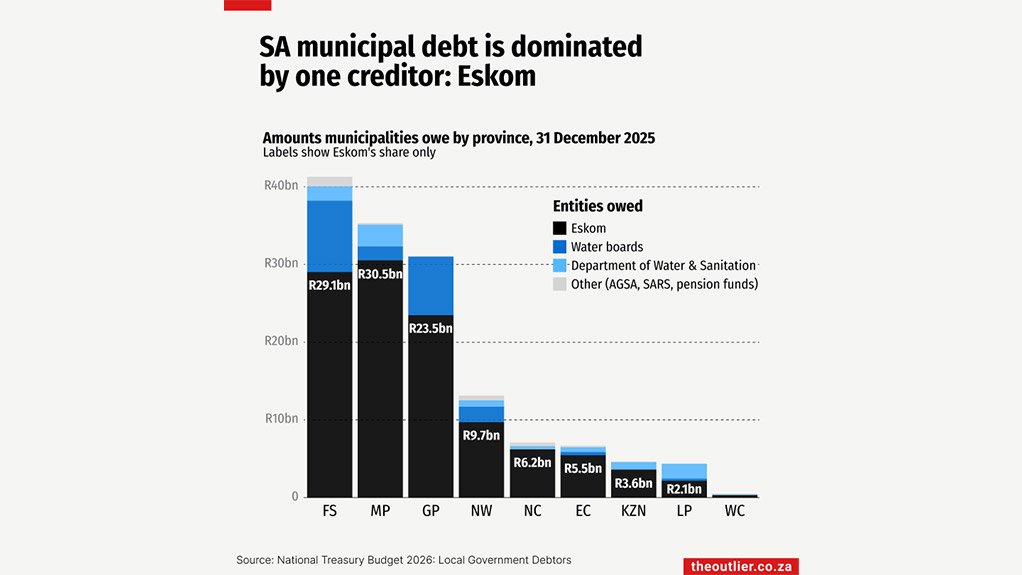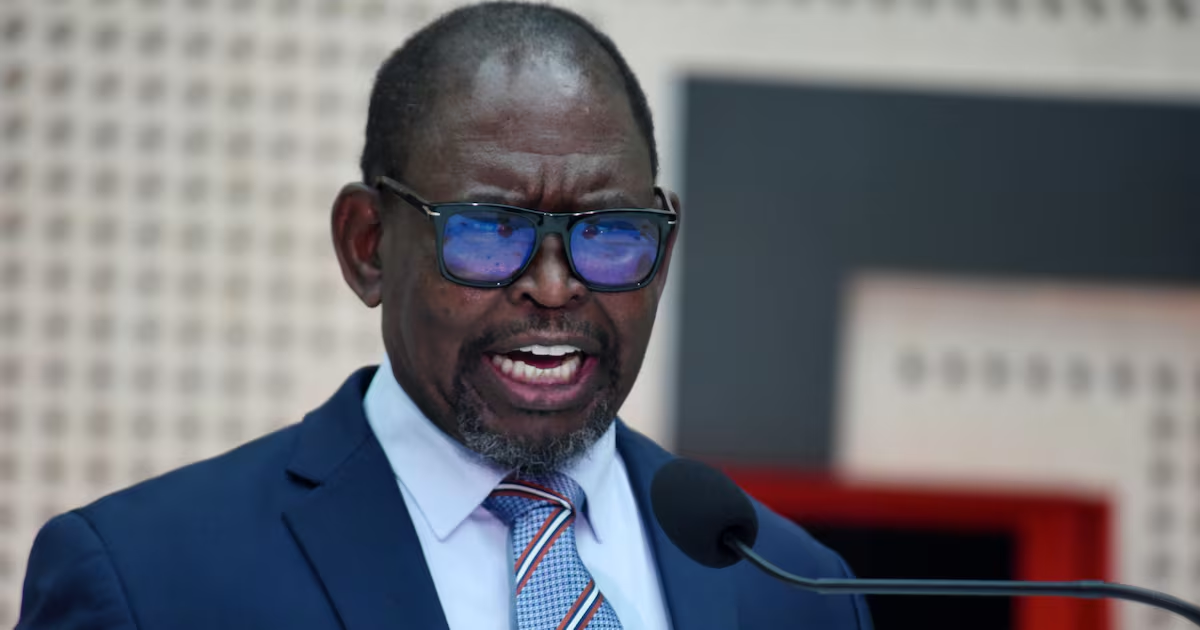
Finance minister Enoch Godongwana has rallied behind the National Treasury’s decision to withhold R13.5bn from 69 municipalities around South Africa, saying the move was not punitive but corrective. Godongwana said the Treasury had taken a decision for funds to be redirected in tranches directly to Eskom, water boards, and statutory bodies to safeguard electricity, water, and pensions. Municipalities that demonstrated compliance would see their transfers reinstated.The R13.5bn was part of the July tranche of the Treasury’s equitable share transfers to local government. The municipalities, spanning all nine provinces and including major metros such as Buffalo City, Nelson Mandela Bay, Mangaung and Johannesburg — which has had R3.6bn withheld — were informed of the decision in advance and given an opportunity to explain why their transfers should not be withheld before the Treasury acted. In a media briefing on Friday, Godongwana said municipalities were entrusted with delivering civic, social, and economic infrastructure services: water, electricity, sanitation, housing, and roads. “They are the custodians of community welfare, the engines of local economies, and the guardians of social stability, and as such, the financial conduct of municipalities has far-reaching socioeconomic importance,” he said. “While public expectations rise, the fragility of municipal finances and services has been exposed. The mismatch between municipal revenue authority and expenditure responsibilities has become a worrying factor, and the consequences are felt daily by households and businesses through service delivery challenges.” They are the custodians of community welfare, the engines of local economies, and the guardians of social stability, and as such, the financial conduct of municipalities has far-reaching socioeconomic importance— Enoch Godongwana The fragility was not solely the result of external socioeconomic pressures such as rising bulk service costs, consumer debt, or weak local economies. “A significant portion relates to the internal organisation of municipal finance itself. Many councils continue to adopt unfunded budgets, fail to process unauthorised, irregular, fruitless and wasteful expenditure (UIFWE) through their municipal public accounts committees (MPACs), and neglect consequence management,” the finance minister said. “These internal weaknesses, poor governance structures, lack of accountability, and ineffective financial oversight compound external challenges and directly undermine service delivery. It is against this backdrop that the National Treasury has taken the extraordinary but necessary step of temporarily withholding the July equitable share transfers to 69 municipalities.“This decision, taken under section 216(2) of the constitution and the Municipal Finance Management Act, is not punitive. It is corrective. It is designed to instil fiscal discipline, protect public money, and ensure that municipalities comply with the law.” Godongwana said despite years of support, guidance and training, many municipalities continue to: Adopt unfunded budgets;Accumulate UIFWE; and Fail to meet statutory obligations to Eskom, water boards, the South African Revenue Service, the auditor-general and pension funds.He said the numbers were sobering: Since 2021–2022, municipalities have incurred R24.12bn in fruitless and wasteful expenditure.They have accumulated R145.21bn in irregular expenditure, with R40.14bn in 2024–2025 alone. They have disclosed R118.13bn in unauthorised expenditure, more than half of which was on non-cash budget items. Budget credibility has deteriorated: in 2024–2025, 116 municipalities — nearly half — adopted unfunded budgets. By year-end, municipalities owed R3.4bn in interest to Eskom and R1.21bn to water boards, while 48 municipalities had overdue third-party deductions. Godongwana said the Treasury had taken a decision for funds to be redirected in tranches directly to Eskom, water boards, and statutory bodies to safeguard electricity, water, and pensions.“Municipalities that demonstrate compliance will see their transfers reinstated.” Last Wednesday, Johannesburg mayor Dada Morero said the city would transfer R160m to bulk water supplier Rand Water and R1.4bn to Eskom by mid-July. Transfers will resume once municipalities meet the required conditions and submit proof, Godongwana said.“Compliance will be monitored rigorously. Municipal councils must process UIFWE through their MPACs, recover losses, and implement consequence management.” He called on political and administrative leaders to fulfil their fiduciary duties. “The National Treasury will continue to work with municipalities, provincial treasuries, Cogta and other co-operative governance structures to strengthen sound financial management. This is not a one-off intervention. It is part of a broader effort to restore credibility, accountability, and sustainability in local government,” Godongwana said. Morero said the National Treasury has confirmed the metro’s R97.1bn budget for 2026/2027 is funded, adding South Africa’s economic and financial hub had regularised nearly R2bn flagged under unauthorised, irregular, and wasteful expenditure, with a further R6.4bn currently before the city entities’ boards for consideration.Business Day
Godongwana bypasses non-compliant municipalities with direct payments to creditors
Finance minister says funds to go in tranches directly to Eskom, water boards and statutory bodies to safeguard electricity, water and pensions
731 words~3 min read