Engineering prompts inside your source code is a recipe for deployment fatigue.
If you've spent any time moving an AI feature from a prototype to production, you know the specific frustration of 'prompt drift.' You make a subtle tweak to a system instruction—perhaps changing how the model handles edge cases in JSON formatting—and suddenly you're forced into a full CI/CD cycle. A PR, a review, a build, and a deployment, all because of three words changed in a long string constant.
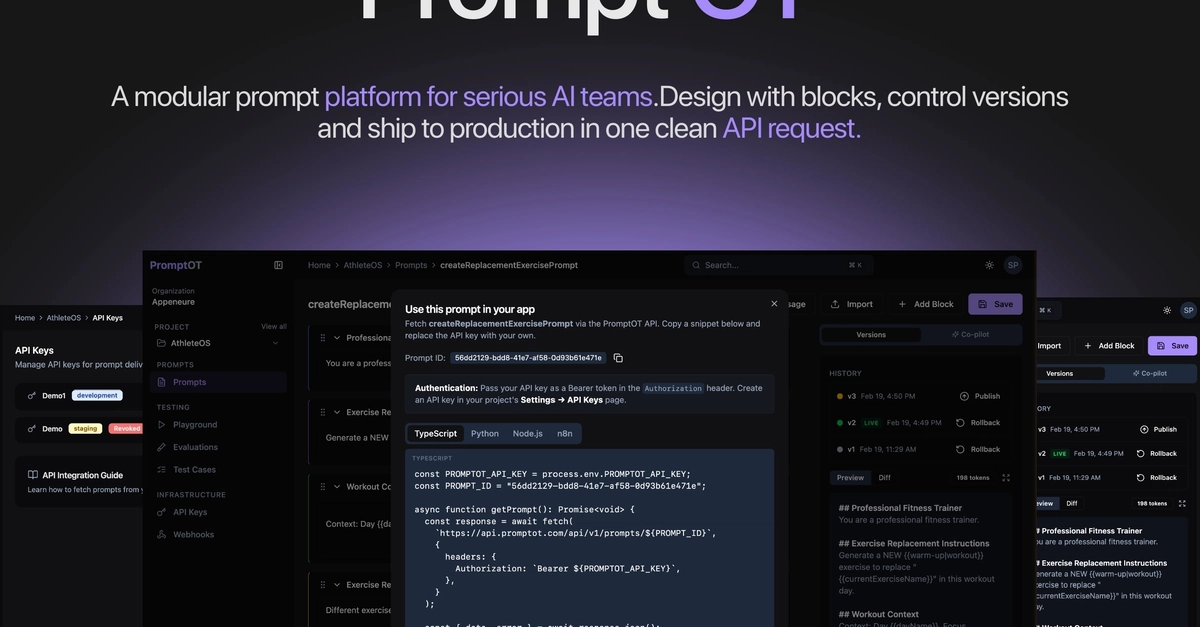
In a mature engineering organization, your application logic should be decoupled from your prompt instructions. The code handles the orchestration, the plumbing, and the security; the prompts represent the dynamic configuration. This is what LLMOps aims to achieve, but until recently, there was a massive friction gap between managing these prompts in a dashboard and actually using them inside an agentic workflow.
This is where the Humanloop MCP server changes the interaction model entirely. It's not just about having a central repository for strings; it's about bringing those strings into your execution context—your IDE, your Claude instance, or your Cursor agent—as actionable tools.
The Architecture of Prompt-as-a-Service