If you build accounting, ERP, shop or billing software and sell into Europe, e-invoicing has probably landed on your roadmap whether you wanted it or not. Germany's B2B mandate, Austria's e-Rechnung, and the EU-wide Peppol push all point the same way: structured e-invoices are becoming the default, and PDFs-by-email are on the way out.
The confusing part isn't the concept. It's that "e-invoice" means four or five different things depending on the country and the day. This post is the map I wish I'd had.
What "e-invoice" actually means
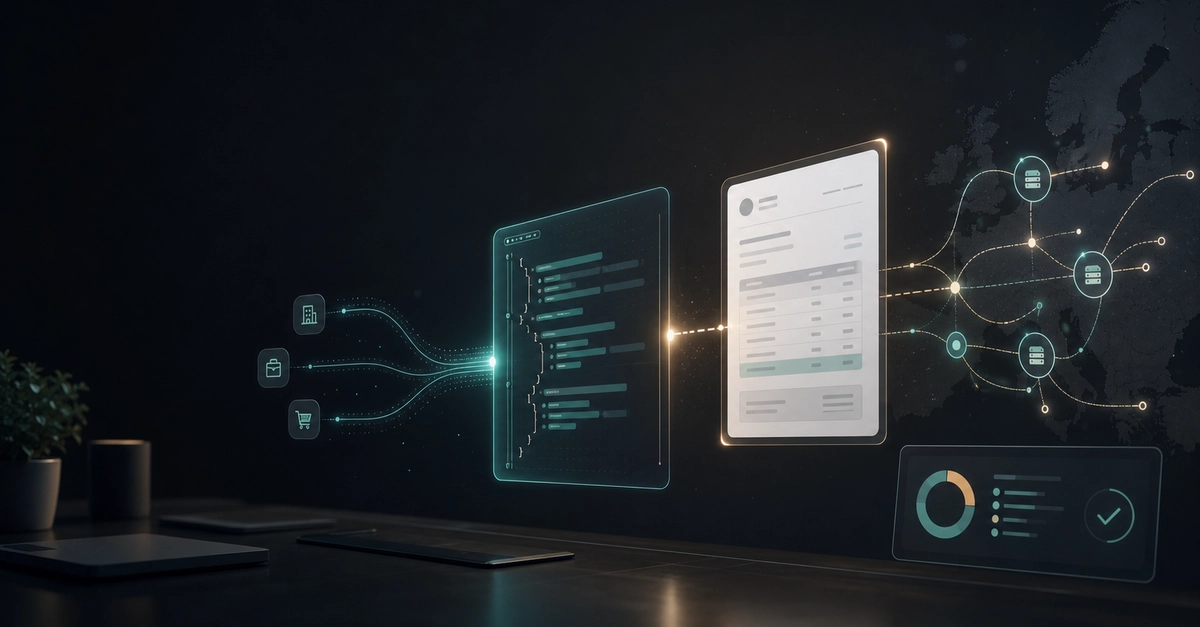
An e-invoice is not a PDF. A PDF is a picture of an invoice for humans. An e-invoice is structured data a machine can read without OCR or guesswork. That distinction is the whole point of the regulation: automated processing, fewer errors, less fraud.
The good news: underneath all the acronyms there is one shared model — the European standard EN 16931. It defines the semantics: what fields an invoice must contain (seller, buyer, invoice number, dates, line items, VAT breakdown, totals) and business rules between them (e.g. grand total = net + tax). Everything below is a flavour of the same core.