If your SaaS already does B2B billing for customers in Europe, sooner or later one of them will ask: "Can you send my invoices through Peppol?"
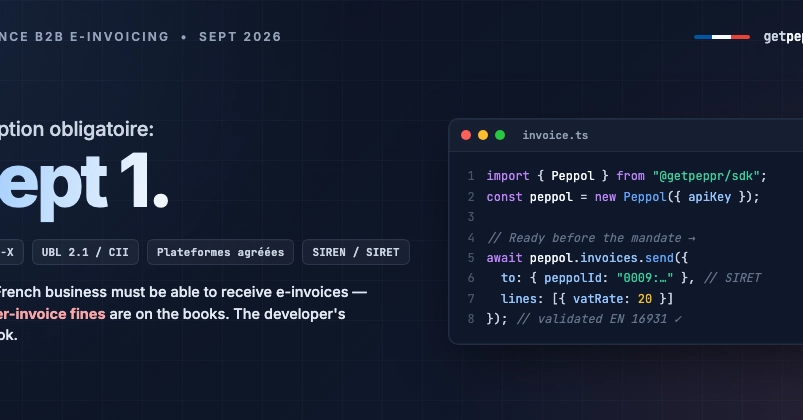
Belgium has required structured domestic B2B e-invoicing since 1 January 2026. Germany has required businesses to be able to receive e-invoices since 1 January 2025, with issuing obligations phased in from 2027 to 2028. France starts its B2B e-invoicing rollout from 1 September 2026 through approved platforms. The EU ViDA package brings digital reporting for intra-EU B2B transactions from 1 July 2030.
The exact rails differ by country. Belgium is Peppol-first. Germany and France are not simply "Peppol only". But the direction is clear: structured e-invoicing is becoming part of the default B2B stack.
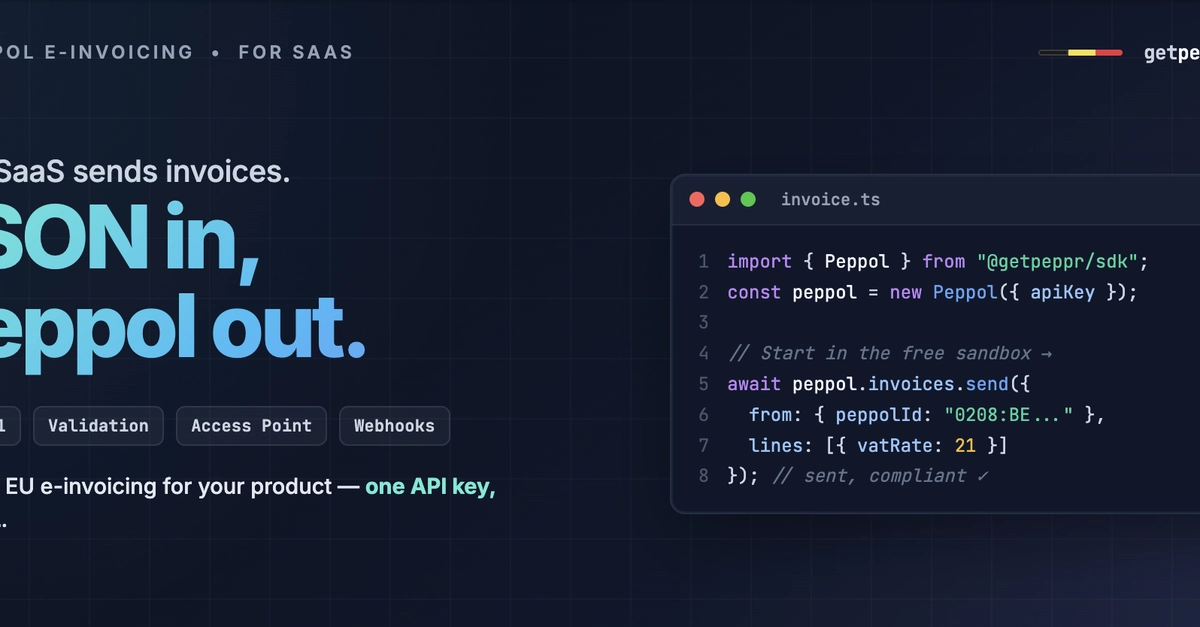
Your team has two options. Build it yourself — UBL templates, country variants, Peppol Access Point integration, retry semantics, status webhooks, compliance drift, the works. Or treat Peppol as infrastructure you call out to, the way you treat your card processor or your transactional email.
This is the second path: how to add Peppol to a SaaS product so that your devs stay focused on your product and Peppol becomes an API integration plus a webhook handler.