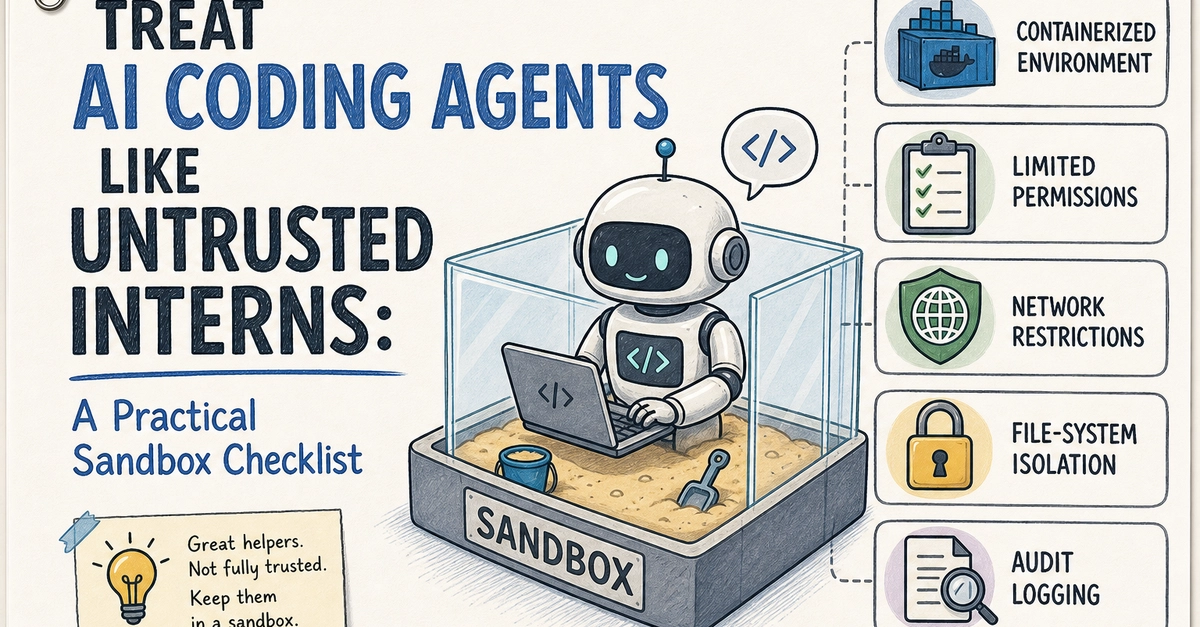
Coding agents now run with your shell. They read your files and run your build. They push commits under your name. That is the point of them. It also means every plaintext secret on your disk is readable by the agent, and by every backup or synced folder that copies your working directory. A token in a text file was a small risk when only you could read it. It is a larger one the moment something else is holding the keyboard.
This is the question an agent-readiness audit asks about your product, turned inward. If you care how a third party exposes data to an agent, your own machine is the first place to get it right.
Here is the posture I would defend, the reasoning behind it, and one Windows trap that cost me an afternoon.
Keep secrets out of plaintext files
The old habit is a token in a dotfile, a key in .npmrc, an unencrypted service account JSON sitting next to the code. It works because the file is only yours. An agent breaks that assumption. So does a leaked backup, a synced folder, or someone watching a screen-share.