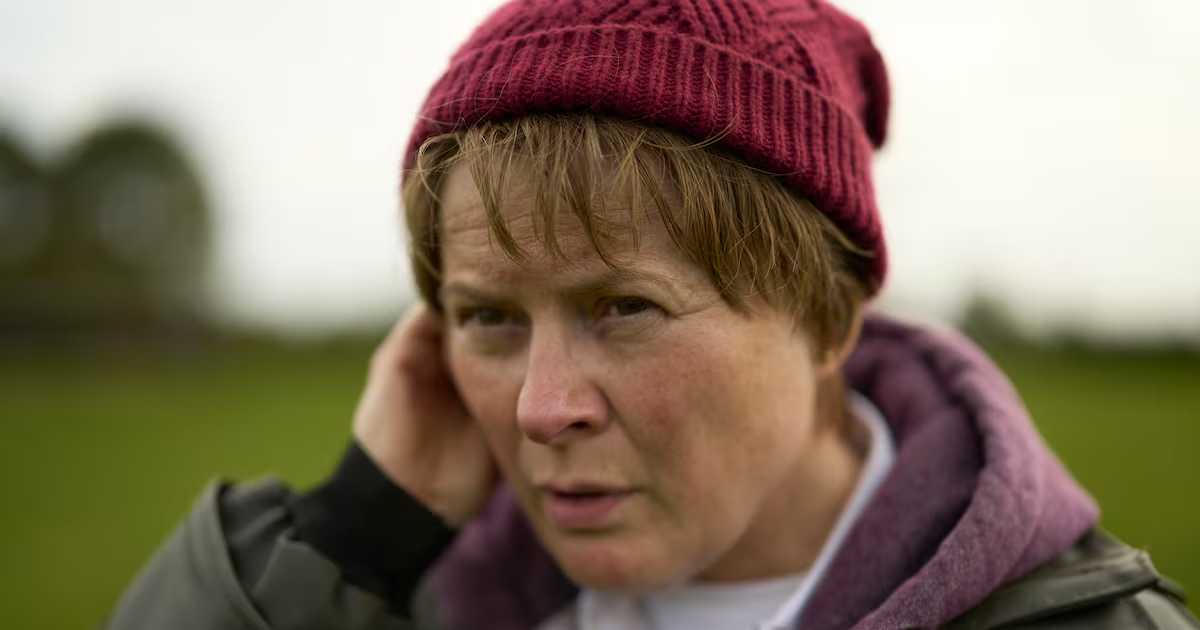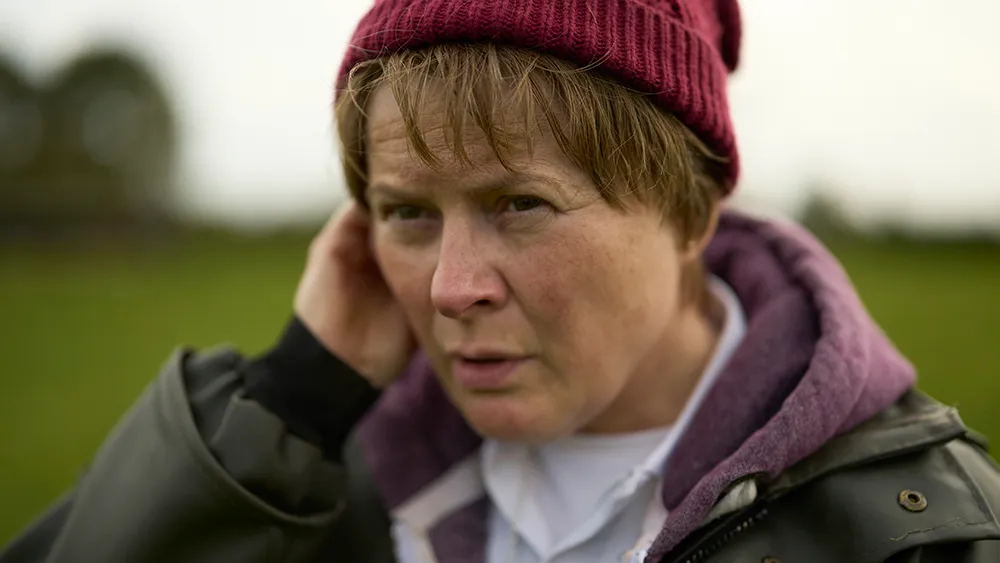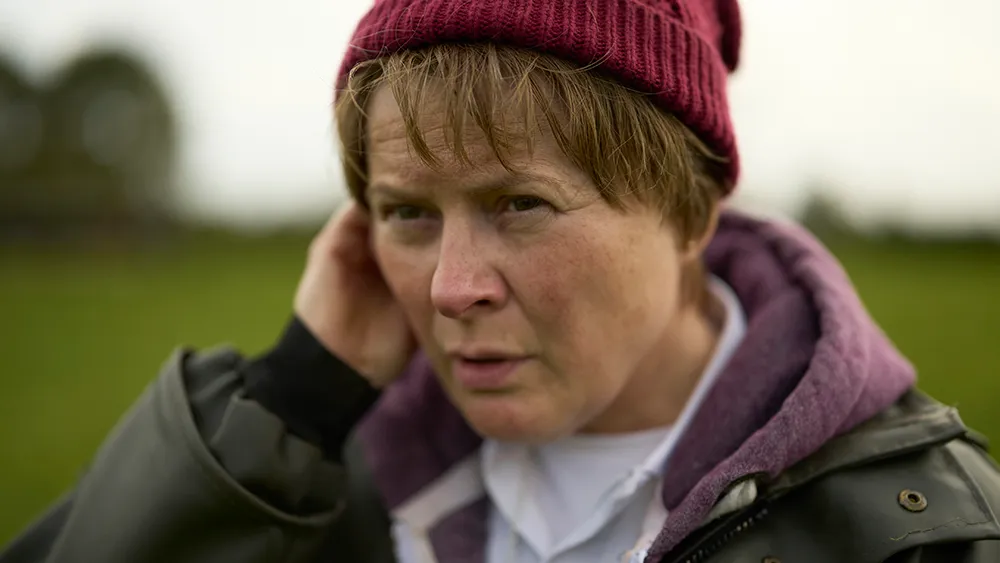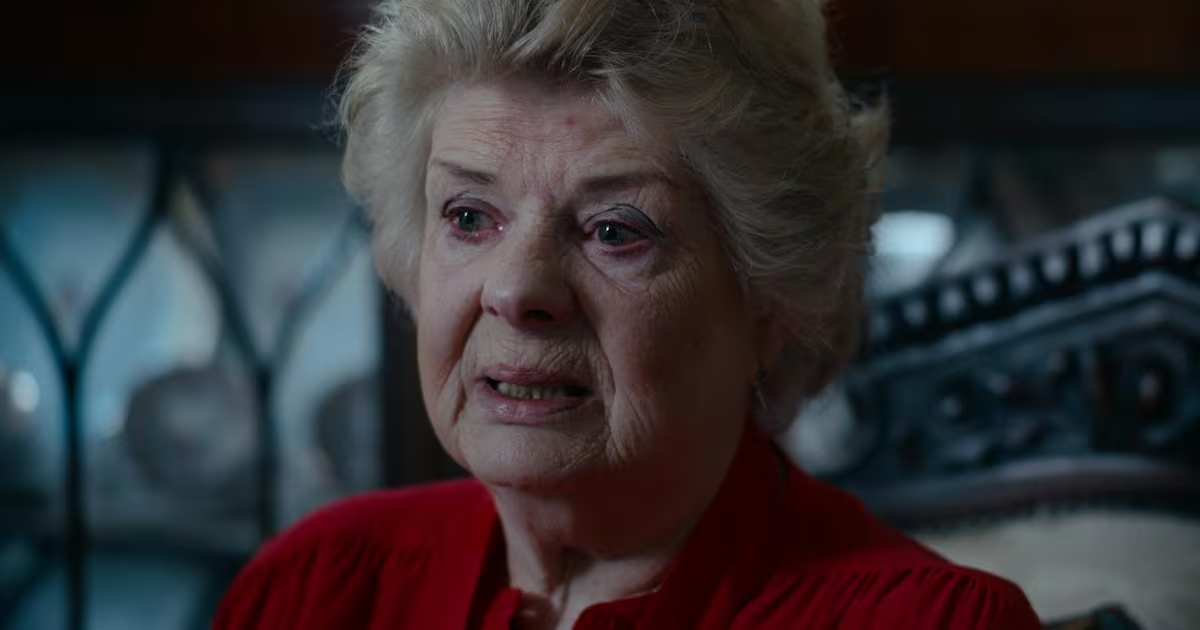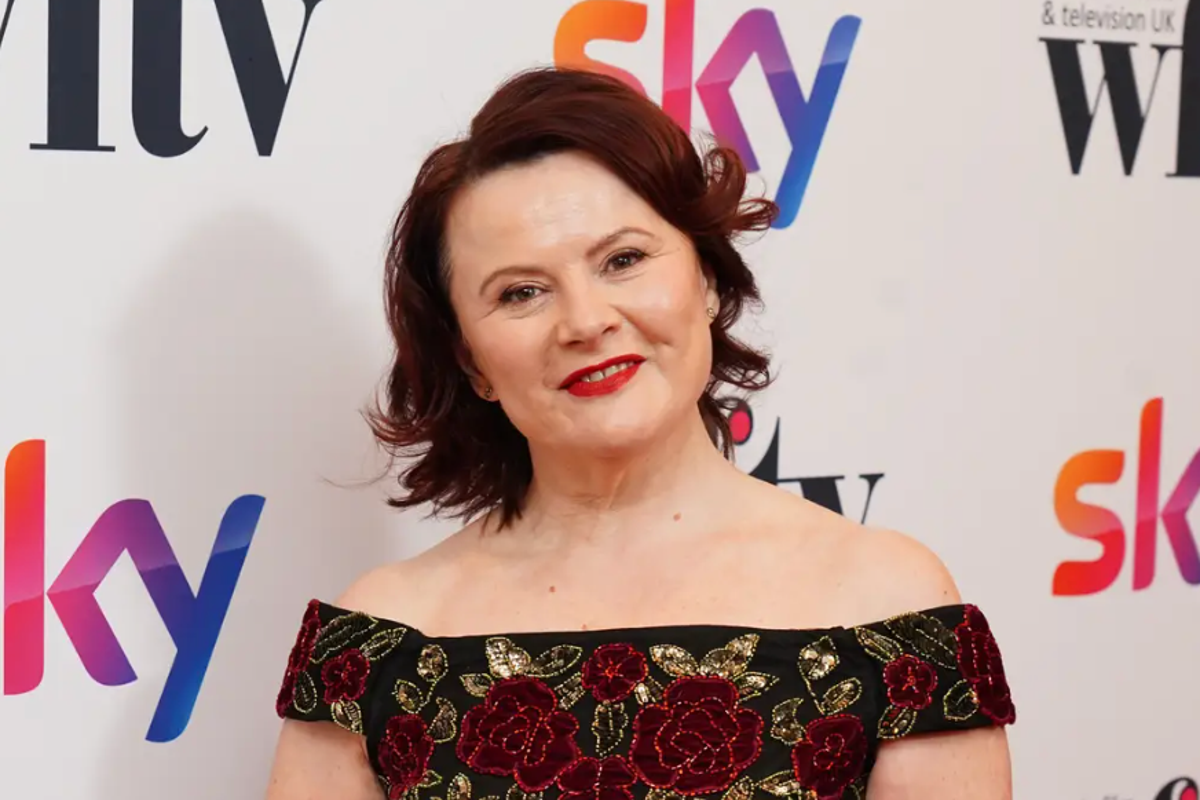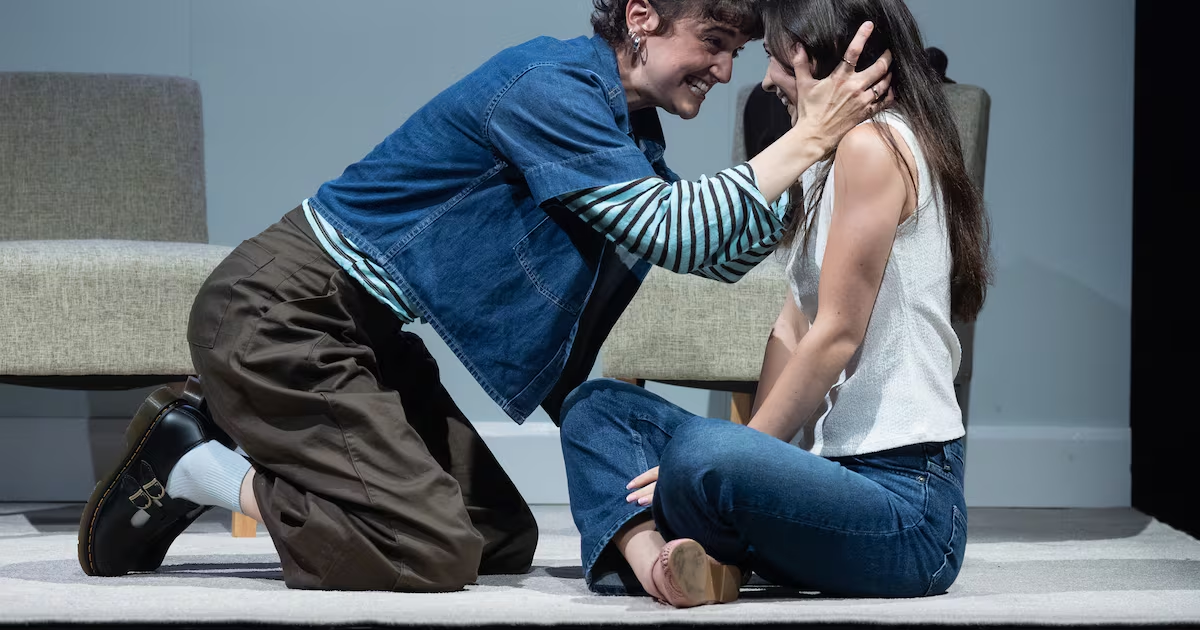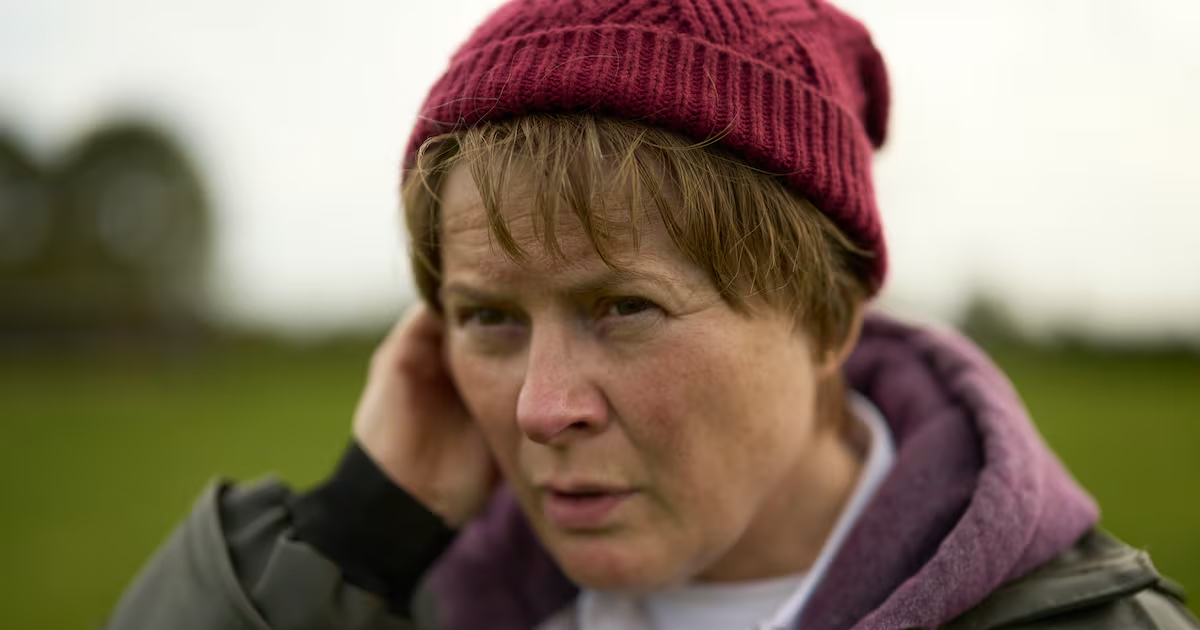
Frank Berry’s The Lost Children of Tuam, a dramatised account of the investigations by the amateur historian Catherine Corless into deaths at the town’s former mother-and-baby home, has premiered to a loud and emotional response at the 38th Galway Film Fleadh.Corless joined Berry and the Yorkshire-born actor Monica Dolan, who plays her in the film, onstage at the Town Hall Theatre to savour a lengthy standing ovation. Liam Neeson, who produced the film, was not in the auditorium, but Corless made sure to mention his contribution. The Ballymena-born star began the process by securing the rights to an article about the case by Dan Barry for The New York Times.“Dan rang me and said, ‘Would you believe I got a call from Liam Neeson?’” she said. “Dan is a bit of a joker. He’ll say something and you’ll wonder if he’s joking. I said, ‘Yeah, right. I’m sure you did.’“It transpired that Liam Neeson had contacted Dan, and he wanted to buy the story from The New York Times. Then he said, ‘Liam Neeson might like to meet you some time.’ He said he might want to ring. I said, ‘Call me. Because I am a huge fan of Liam Neeson.’”Berry’s film, a mood piece that builds from small suspicions to an international story, follows Corless as, while working on an essay about local history, locates an apparent anomaly concerning the Bon Secours mother-and-baby home: the deaths of hundreds of infants have been recorded, but no corresponding evidence of burial presents itself. It eventually emerged that as many as 796 children may have been buried in unmarked graves.Speaking at the Town Hall Theatre, Berry, the director of such fine social-realist dramas as Michael Inside and Aisha, noted that, though he usually originates his own projects from the ground up, he was won over by Corless’s story and by Rebecca Lenkiewicz’s screenplay. Absurd though it may seem, there are touches of All the President’s Men in the film, not least during one scene when a sympathetic official warns Corless that she may not want the enormous wads of records she has requested. Undaunted, she cross-checks her way towards an almost unimaginable outrage.[ Catherine Corless: ‘I was told more often than not that I was giving Tuam a bad name’Opens in new window ]It is a largely linear tale that injects no contrived reversals into the investigation. But, assisted by Kate McCullough’s damp cinematography and an often eerie score from Hannah Peel, Berry builds the sombre atmosphere with great skill. The cunning sound design injects an insistent wind that reminds us there are, about this place, secrets eager to remain undiscovered.Speaking in a convincing Galway accent, Dolan, whose parents are both Irish, gets both the stubborn doggedness and the fractured sensitivity of Corless. Late on it is revealed that she has suffered from depression. But Lenkiewicz’s screenplay also finds unlikely humour in the piece. “They’re hoping I’ll let it go,” she says as the investigation deepens. “Then they don’t know who they are dealing with,” Andrew Bennett, unshakeable as her supportive husband, Aidan, remarks. It’s an impressive portrait, aware of her humility but awake to her sharp intelligence.The producers made a wise choice in staging the world premiere just 30km or so from the site of Corless’s research. This fine, restrained film would have gone down a storm anywhere, but the home crowd made the debut particularly memorable. A number of survivors from the mother-and-baby homes were in the Town Hall Theatre to acknowledge the amateur historian’s efforts.“As a survivor, and on behalf of the survivors in the audience, we would like to thank Catherine Corless,” one said at the close. “Without her we wouldn’t have the strength and the courage to stand up and tell our stories.”Corless seems impressively unshaken by the reception.“It was a fight and a struggle. People say, ‘How come you didn’t give up?’ she said. “There was no such thing as giving up. I couldn’t. Because the people in authority knew about it and they were covering up. That was enough to drive me, and I could see Monica had that same drive.”The fleadh, which opened on July 7th with Peter Young’s thriller Our House, ended with another packed weekend of Irish features. Sinéad O’Shea’s fine documentary All About the Money, touching down after a premiere at Sundance Film Festival in January, told the astonishing story of Fergie Chambers, scion of a hugely wealthy American family who directs his inherited wealth towards those seeking to disrupt the capitalist system. This is a deeply fascinating, properly divided film from the director of Blue Road: The Edna O’Brien Story that remains at a proper distance from its often bizarre subject.Also premiering was Rebekah Fortune’s sincere family drama Learning to Breathe Under Water. Arriving just days after its world premiere at Karlovy Vary festival in the Czech Republic, the film stars Rory Kinnear as a father failing to accommodate himself to the death of his wife while raising a son. This agreeable, subtly acted Irish feature made cunning reference to the shark that the sculptor John Buckley embedded in the roof of a terraced house in Oxford 40 years ago.The 38th Galway Film Fleadh concludes with its annual awards ceremony on Sunday evening.
‘Would you believe I got a call from Liam Neeson?’: Catherine Corless film premieres in Galway
The Lost Children of Tuam, featuring Monica Dolan as the mother and baby home historian, gets an emotional response at Galway Film Fleadh
873 words~4 min read