Day 2/30: LLM Tool Calls
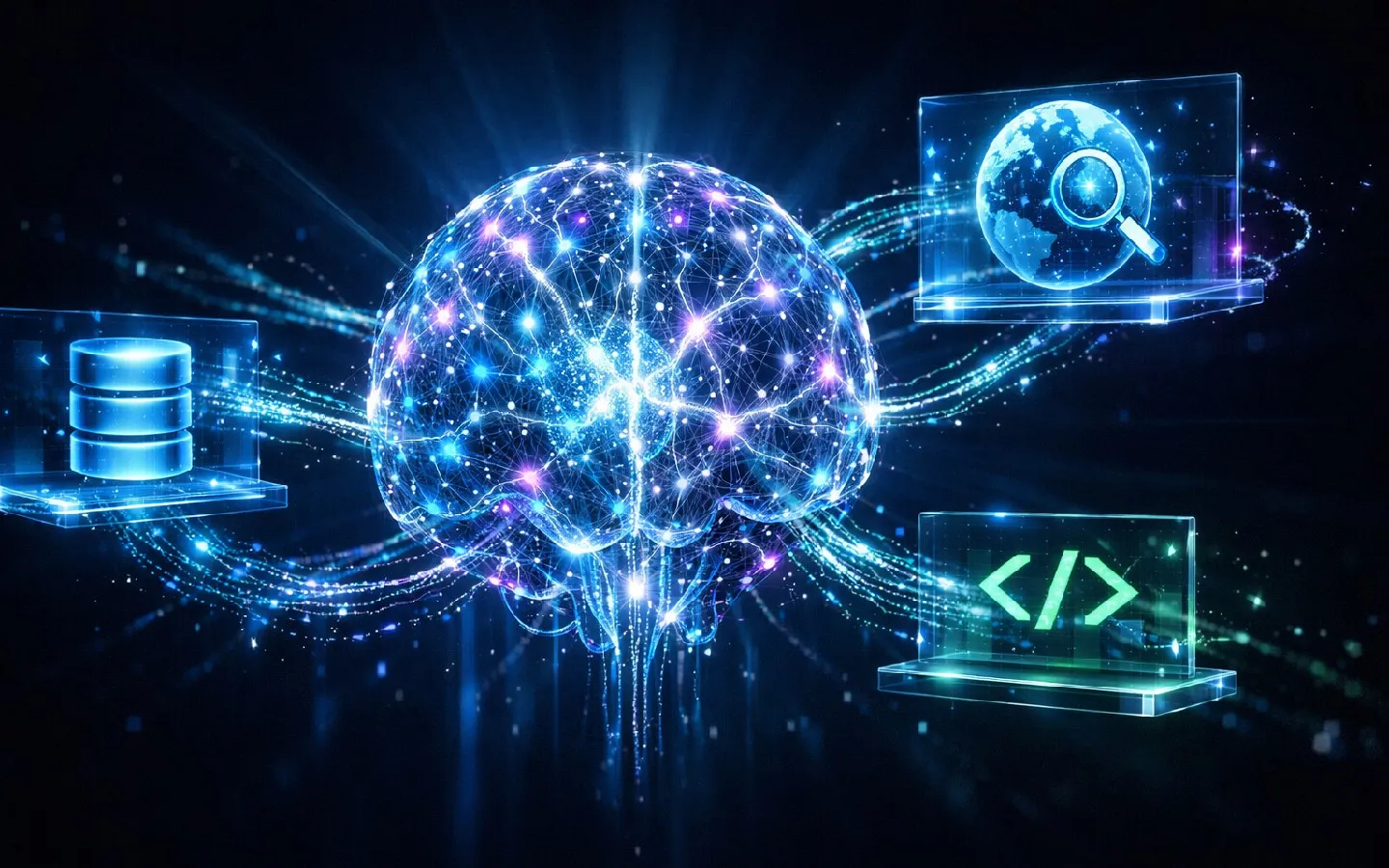
I still remember the frustration of trying to integrate a large language model (LLM) into our support bot. The model could understand natural language, generate human-like responses, and even learn from feedback. However, it lacked the ability to interact with external tools and services, making it feel like a disembodied brain - incredibly smart, but unable to act on its knowledge. Our bot would often respond with phrases like "I can help you with that," but then fail to actually perform the task. It was as if the LLM had no "hands" to manipulate the world.
The problem was that our LLM was not designed to make tool calls from scratch. It relied on pre-existing frameworks and libraries to interact with external services, which limited its flexibility and autonomy. We needed a way to give our LLM the ability to call tools and services without relying on these frameworks, essentially giving it "hands" to manipulate the world.
To solve this problem, we turned to the Model Context Protocol (MCP) and LangGraph. MCP provides a standardized way to represent and interact with external tools and services, while LangGraph allows us to model complex workflows and decision-making processes. By combining these two technologies, we could create a system that enables our LLM to make tool calls from scratch, without relying on pre-existing frameworks.