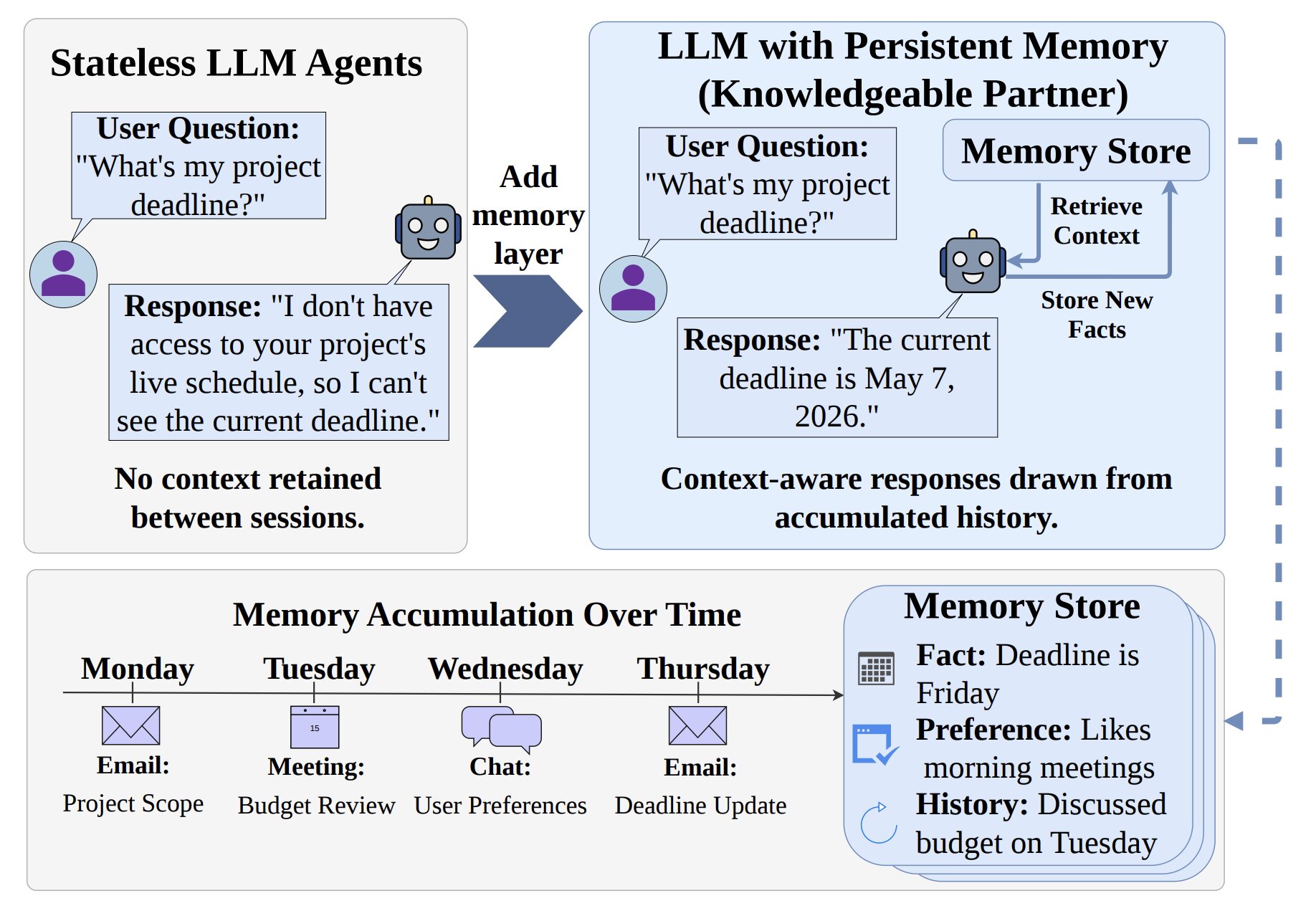
AI agents, and the large language models (LLMs) that power them, have short memories. That’s by design. There is only so much conversation that can be encoded into tokens and accessed reliably by the LLM. Retrieval-augmented generation, or RAG, can be used to give agents and LLMs memories larger than their context windows. But how agents use RAG, or other mechanisms for retaining the details of a conversation, can make all the difference.
With the rise of AI agents, there has been a corresponding rise in complementary software tools that give both agents and LLMs expanded memory capabilities. Most of the time, this means giving an agent or model persistent memory across sessions, so that previous context can be restored automatically. But, again, how that’s done can vary tremendously with each tool.
Here are some of the major projects in the AI agent memory space, each with their own particular spins, strengths, and orientations.
Graphiti
Graphiti is billed as “the open-source temporal knowledge graph framework.” The project is available on GitHub, or as the underpinning of the Zep ageny memory service. “Temporal” means information stored in Graphiti is re-evaluated over time to keep its context properly framed, and “graph framework” means the data is stored as a set of graphs. The other solutions profiled here use graph storage as part of their approach, but Graphiti makes that a front-and-center part of its design.