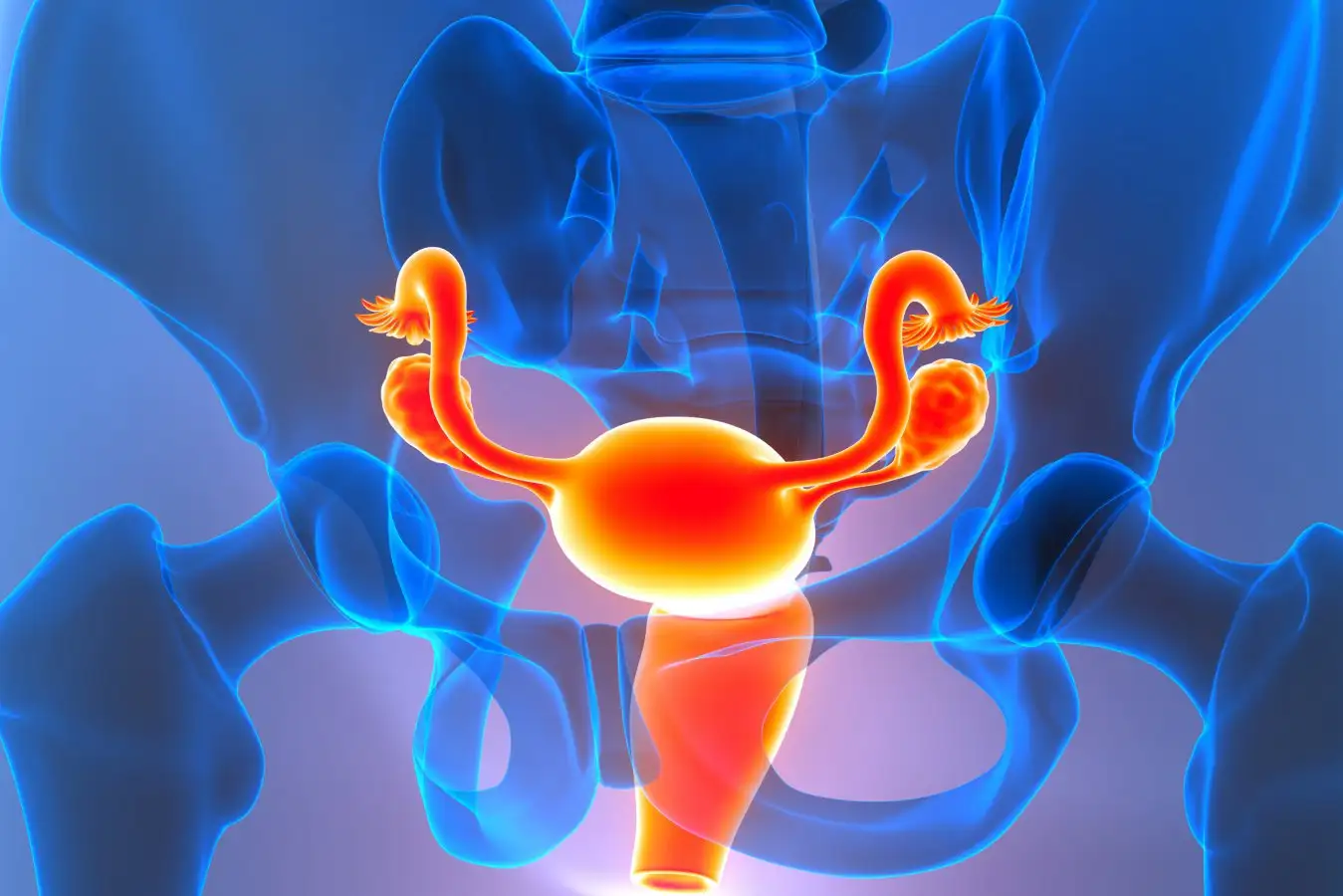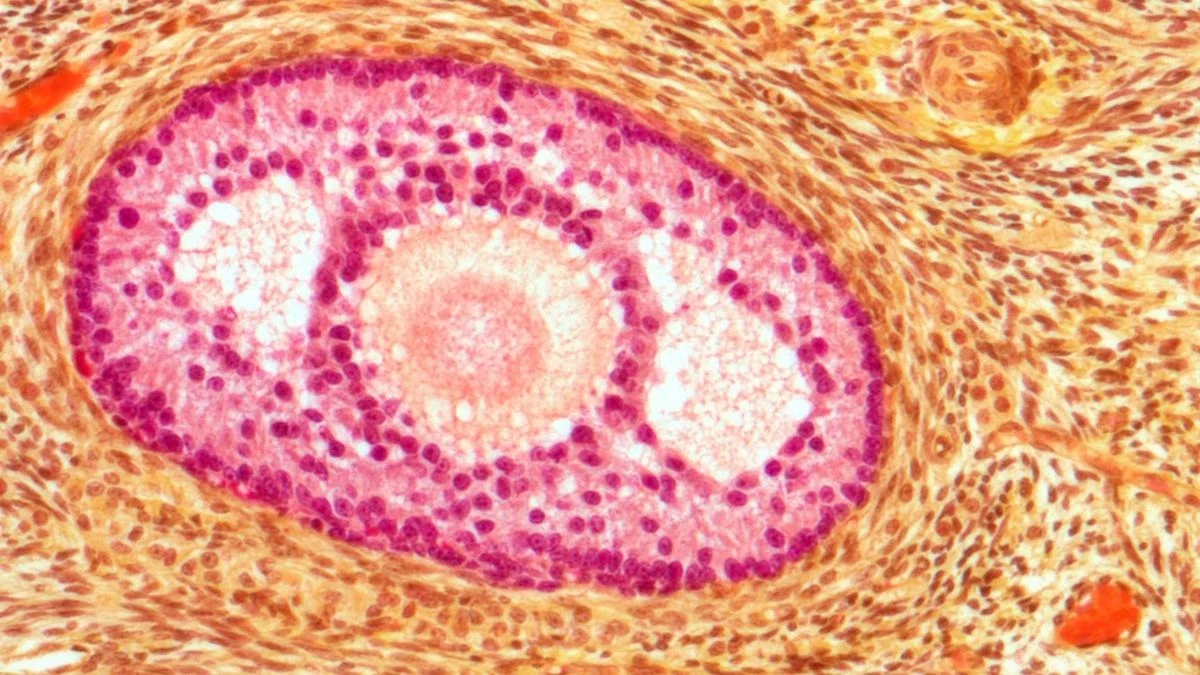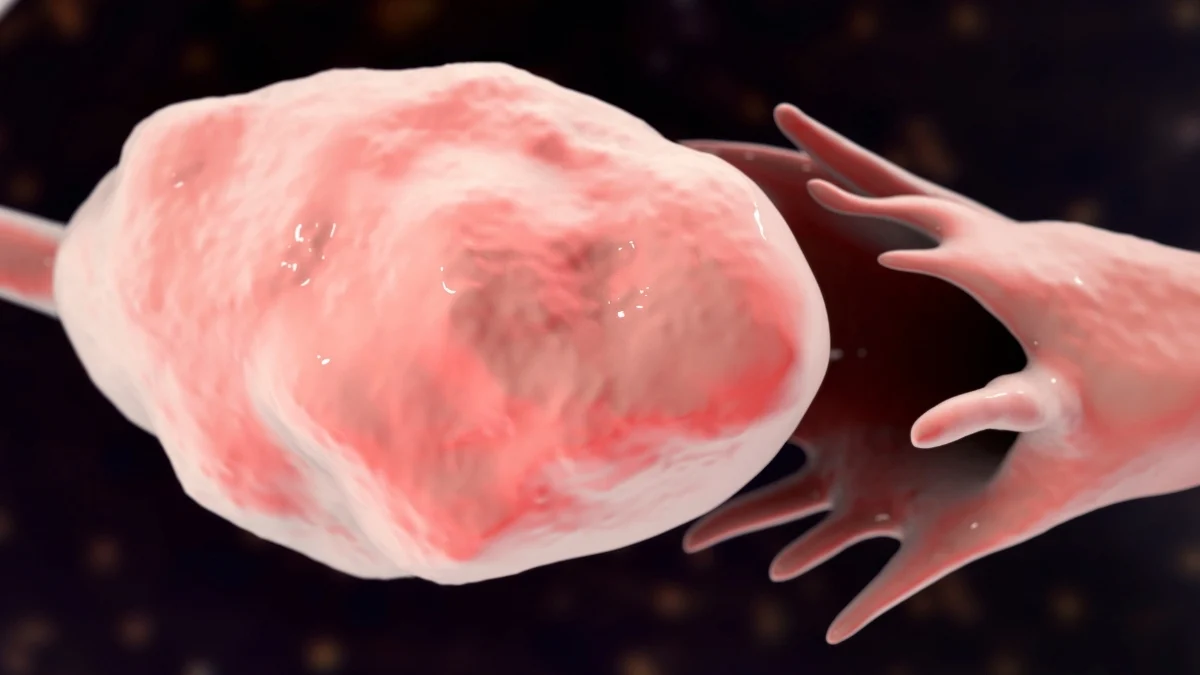
A scientific illustration of a human ovary and fallopian tube. (Kateryna Kon/Science Photo Library/Getty Images)
From day one of its very first menstrual cycle, an ovary works hard to develop follicles that produce and release the very best eggs for reproduction.But that's not all an ovary does. "It has so many important endocrine functions beyond just reproduction," says cardiovascular researcher Hattie Chung.In humans, the ovaries produce hormones such as estrogen, progesterone, inhibin, and testosterone, all of which have far-reaching effects on the body.Chung, who works at The Broad Institute of MIT and Harvard, is the senior author of a new study recently published in Nature Aging.She and her team have found evidence that the long-understudied female reproductive organ undergoes major age-related changes long before menopause arrives – in mice, at least."At the menopause transition, humans typically still have about 1,000 eggs remaining," says Chung. "That suggests it's not just the eggs themselves, but also the surrounding ecosystem that changes with age."While mouse studies obviously can't tell us exactly what the equivalent human organs might do, as mammals, we share a similar evolutionary history, so they can offer hints.By profiling 22 mouse ovaries harvested across a range of ages and stages of the reproductive cycle, the researchers began to see patterns in the way ovarian tissue changes across time.