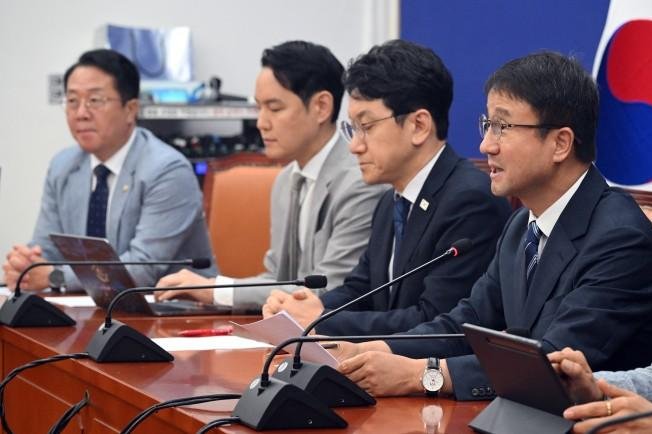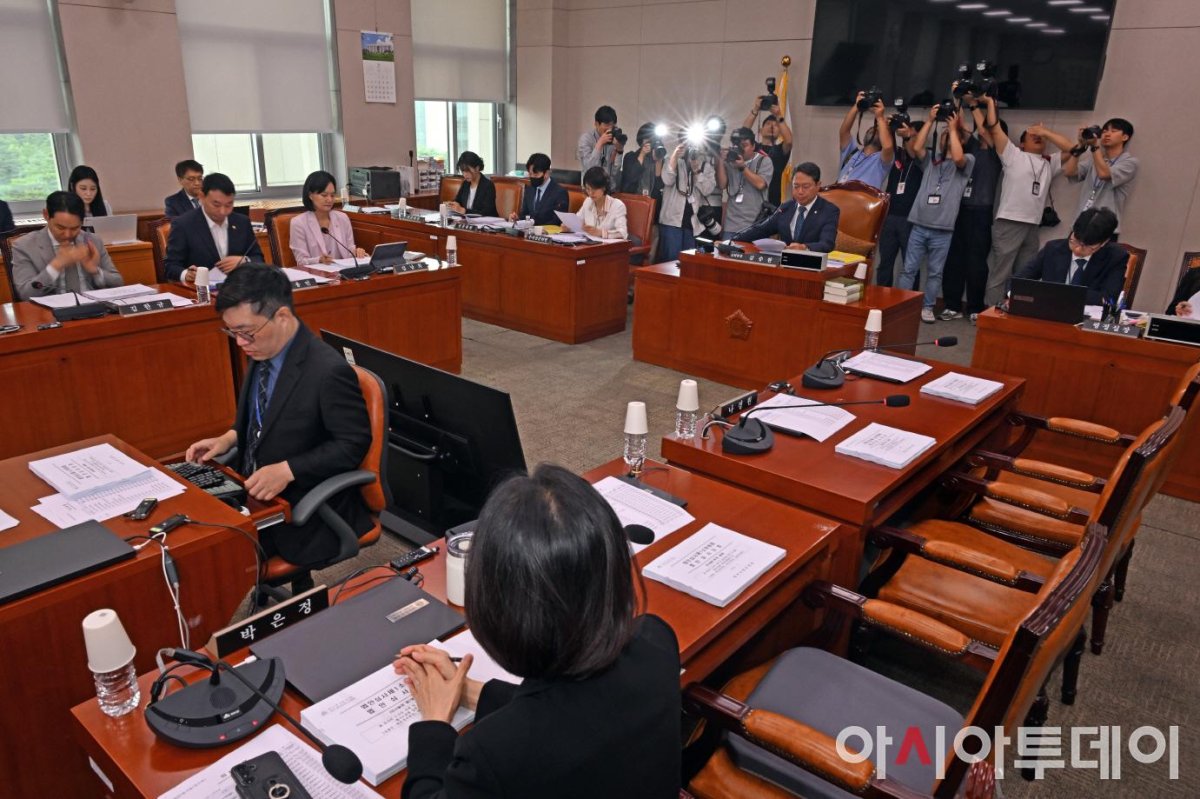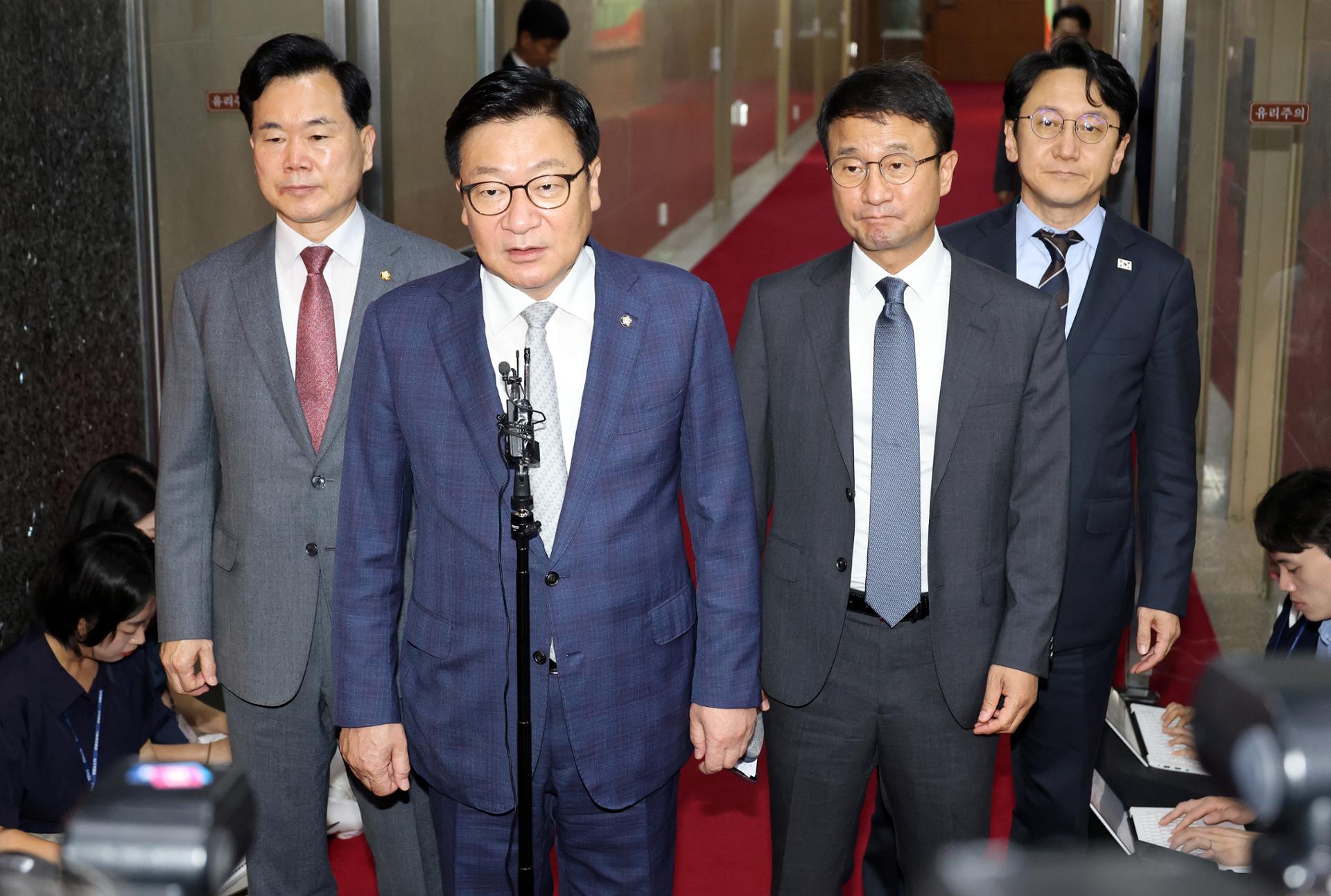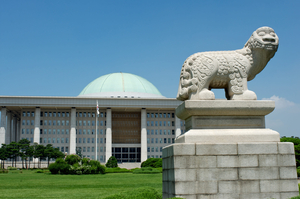
The National Assembly building in Seoul (123rf) The standoff between the two main parties continues, leaving little room for normalizing parliamentary operations.The main opposition People Power Party continues its boycott of the second half of the 22nd National Assembly and its new speaker, Rep. Cho Jeong-sik, remains in place. Cho has since set a new deadline for bipartisan compromise on committee assignments, the latest of which falls on Friday, which is also Constitution Day in South Korea.However, it appears unlikely that the main opposition party and the ruling Democratic Party of Korea will reach a compromise. Both parties have insisted on chairing the Legislation and Judiciary Committee, which is considered one of the most powerful out of 17 standing committees.But the National Assembly, with its ruling party majority, elected four-term Democratic Party lawmaker Rep. Seo Young-kyo as the committee's chair last month. Seo was one of 11 Democratic Party lawmakers elected as chairs of 10 standing committees and the Special Committee on Budget and Accounts.The committee has since begun to review a controversial bill that would strip the prosecution of the power to request supplementary investigations in criminal cases. Seo on Friday promised the process of legislating the bill would be "speedy."The bill sits at the center of heated political debate in South Korea, alongside another bill that would allow a new special counsel to cancel President Lee Jae Myung's criminal indictment, as part of what appears to be the ruling party's push to weaken the prosecution's power and brand past indictments of liberal politicians as political persecution.Rep. Choi Soo-jin, senior floor spokesperson of the People Power Party, told reporters Friday that compromise could not be reached by the suggested deadline in the face of the ruling party's "strong stance," as it would maintain that the special counsel with the power to cancel criminal indictments should be abolished.All eyes are on whether the People Power Party will yield to the liberal rival and allow its lawmakers to fill the seven remaining standing committee chair posts, without winning back the Legislation and Judiciary Committee chair position.The Democratic Party has the legislative power to end parliamentary paralysis by filling the seven remaining posts with its own lawmakers. The liberal party last did so in 2020 by winning all 17 committee chairs, breaking the unwritten rule of assigning committee chairs according to the number of lawmakers each bloc had in the National Assembly.People Power Party lawmakers are expected to hold an assembly on Monday to decide the future of the boycott. Despite unifying for the boycott, the People Power Party is struggling to steer clear of its infighting.Recent rebound in the People Power Party's popularity ratings has evaporated as a weekslong internal clash ensued over whether chair Rep. Jang Dong-hyeok should step down after the June election loss, or whether Jang's archrival and estranged former chair Rep. Han Dong-hoon should return to the party.According to Gallup Korea's opinion poll released Friday, those who approved of the People Power Party's performance hit 24 percent for the second week of July, down 2 percentage points from the previous week.It was down from a month before, as the popularity rating for the People Power Party climbed 7 percentage points to 29 percent in the second week of June, in the wake of the ballot shortage scandal in the June local election.Over the past month, Jang has effectively refused to accept calls for resignation after the June election loss. Instead, Jang chose to appear at protests over the botched election management.Also, under Jang's leadership, the party is looking to review disciplinary actions against "pro-Han" politicians who are believed to be calling for Han's return to the party. Han was elected as an independent lawmaker in the June parliamentary by-election.Jang's two-year term is set to expire in August 2027.
National Assembly paralysis lingers on
The standoff between the two main parties continues, leaving little room for normalizing parliamentary operations. The main opposition People Power Party contin
632 words~3 min read