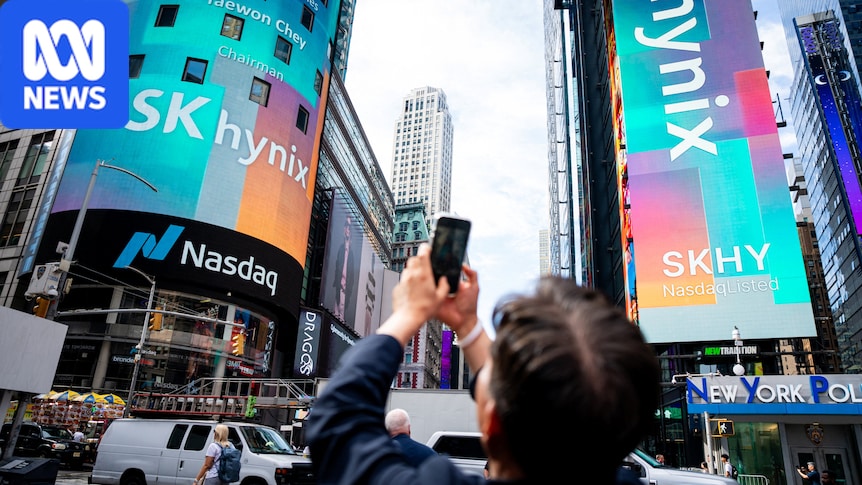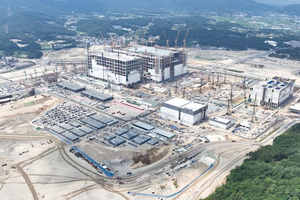
Supply, not demand, will define next memory cycle, analysts say A construction site at the Yongin Semiconductor Cluster industrial complex in Yongin, Gyeonggi Province (Yonhap) Samsung Electronics, SK hynix and Micron Technology, the world's three largest memory chipmakers, are racing to expand production capacity as demand for artificial intelligence infrastructure continues to outpace supply.According to World Semiconductor Trade Statistics, the global semiconductor market is expected to grow 90 percent this year to $1.51 trillion. The memory market alone is forecast to surge 250 percent to $803.9 billion.The three rivals are accelerating investment in new fabrication plants, advanced packaging and chipmaking equipment to secure capacity before additional supply comes online. Despite concerns that the AI boom may be nearing a peak, industry executives and analysts expect supplies of high-bandwidth memory and conventional DRAM to remain tight for years."We announced that we would double our production capacity within five years, but every customer says that will not be enough," SK Group Chairman Chey Tae-won said in interviews in the US last week after SK hynix's Nasdaq debut on Friday.Combined industry investment this year is expected to reach about 200 trillion won ($129 billion), led by the top three memory makers.Samsung is expanding its memory production footprint through projects in Pyeongtaek and Yongin in Gyeonggi Province, as well as in the southwestern integrated Gwangju-South Jeolla special city. Construction is underway at its P5 complex in Pyeongtaek, while the company is seeking to bring forward the start of operations at its first Yongin fab to the second half of 2029, one to two years earlier than previously planned.The company has also announced plans to invest 400 trillion won in two memory fabs in the proposed Gwangju semiconductor cluster. The facilities are expected to increase production of advanced DRAM and other memory products for AI servers.SK hynix plans to use the $26.5 billion raised through its Nasdaq listing to expand wafer production and advanced packaging capacity. The proceeds will fund its first fab at the Yongin semiconductor cluster, the P&T7 advanced packaging plant in Cheongju and additional extreme ultraviolet lithography equipment. The company has also unveiled plans to invest about 400 trillion won in two memory fabs in the proposed Gwangju cluster.Micron is also ramping up investment as Washington pushes to bring more semiconductor manufacturing onshore. The company plans to invest more than $250 billion in the United States through 2035, including new memory fabs in New York and Idaho and an expansion of its Virginia plant. It aims to increase the share of its DRAM produced in the US to 40 percent from the current single digits.Micron has also budgeted $11 billion for capital spending this year, up 120 percent from a year earlier, and is expected to receive up to $20 billion in US subsidies and tax incentives. Separately, it is investing about 14 trillion won in Hiroshima, Japan, to expand production of next-generation DRAM and HBM.Despite the investment surge, meaningful new capacity is not expected to come online until the second half of 2027, likely keeping memory prices elevated in the meantime.The supply constraints are also creating an opening for China's ChangXin Memory Technologies, or CXMT. According to Counterpoint Research, the company's global DRAM market share rose to 8 percent in the first quarter from 3 percent a year earlier, while Apple has reportedly considered using its chips in devices sold in China to lower component costs.CXMT also plans to raise 29.5 billion yuan ($4.1 billion) through a listing on Shanghai's STAR Market to expand its 12-inch wafer production lines in Hefei and Beijing.Analysts say the outlook for memory makers will depend less on short-term pricing than on how quickly they can add capacity."Supply matters more than demand in commodity memory," said Park Seung-young, head of portfolio strategy at Hanwha Investment & Securities, on 3PROTV. "The key question is how fast capacity can grow."Park said higher production could remain positive even if prices soften, while prolonged high prices could encourage new entrants."Investors should watch supply growth and production capacity, not prices alone," he said.
Memory giants race to expand AI chip capacity
Samsung Electronics, SK hynix and Micron Technology, the world's three largest memory chipmakers, are racing to expand production capacity as demand for artific
673 words~3 min read