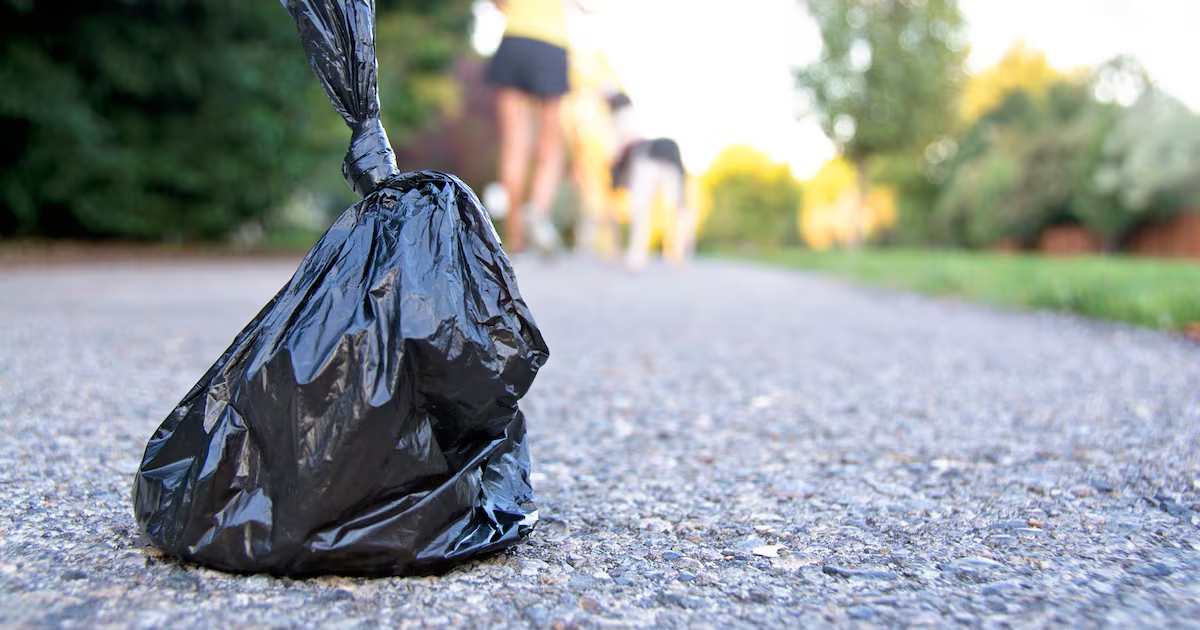
A local authority that failed to issue any fines for dog fouling over a five-year period has claimed it is “impossible to catch anyone not picking up” after their pet. The comment came from Cavan County Council, which was among six councils that issued no dog fouling fines between 2021 and last year. The Kilkenny, Tipperary, Carlow, Leitrim and Cork City local authorities also issued no such fines, records released to The Irish Times under the Freedom of Information Act show.The highest number of fines (76) was issued by Kerry County Council, meaning an annual average of just 15 over the period. Fines for failing to clean up after a dog, and littering in general, have stood at €150 for almost 20 years, but they are due to rise to €250 from September 1st.[ Dog faeces the most ‘potent’ polluter of Dublin’s coastal bathing waterOpens in new window ]The Department of the Environment says dog fouling “continues to be an issue in many areas and continued awareness and education remain important”. A spokeswoman said the department understands that dog fouling has a range of environmental, public health and amenity impacts.Cavan County Council put its failure to issue any fines down to it being “impossible to catch anyone not picking up fouling”. It said wardens patrol areas where dog fouling is “commonplace” from 7am, “and still haven’t been able to issue a fine”. Cork City Council said its wardens have undertaken overtime on weekends, while out of uniform, and focused on dog walking areas “to catch culprits”. However, it said fouling fines are the most difficult to issue, as this requires “being close enough to observe the owner not cleaning up” after their dog.Longford County Council said it does not maintain separate records for dog fouling fines, with the offences recorded under general litter penalties. However, it said its litter wardens confirmed that no dog fouling fines were issued last year “to the best of their knowledge”.Kerry County Council issued 12 fines last year, up from just two in 2024. It issued its highest number (27) in 2022.At 42, Cork County Council issued the second highest number of fines in the five-year period. Fingal County Council was next with 31, Kildare County Council had 20 and Louth County Council 18.[ Diarmaid Ferriter: Shaming is needed to stop dog fouling in public Opens in new window ]Kildare County Council fined 10 people in 2021, saying the Covid-19 pandemic had an impact on the numbers, as more people were at home working and out walking dogs. It also said community wardens, who carry out “regular litter patrols”, can find it “difficult to witness an offence directly and to formally identify the person responsible in order to issue a fine”.Enforcement often depends on information from members of the public, who may need to provide evidence, and the council said “where a complainant is willing to provide evidence identifying the offender, the council can take action”.Twelve local authorities issued five fines or fewer across the five-year period, with councils in Donegal, Monaghan, Wexford, Westmeath, Mayo and Meath issuing just one each.Dublin City Council, where eight fines were issued and only two were paid, said the issuing of dog fouling fines can be “extremely problematic at times” and often requires the assistance of An Garda Síochána in attendance.It noted that this is not “always possible and indeed rarely available for obvious reasons, as the Garda are extremely busy”.[ Minister’s bark worse than his bite when it comes to dog foulingOpens in new window ]“Targeted dog fining days with a Garda presence on site for short periods have been organised in the past, with very little return or gain for the effort,” it said. A Department of the Environment spokeswoman said “the number of fines issued is only one measure of enforcement activity and does not necessarily reflect the overall level of enforcement”.She said local authorities use a range of approaches to combat the problem, such as patrols by litter wardens, education and awareness campaigns, signage, the provision of dog waste bins and bag dispensers, and engagement with communities.Departmental officials are examining the outcomes of international trials assessing the use of DNA testing to identify dog owners who fail to clean up after their pets, she added. They are assessing whether taking a similar approach could offer benefits in the State, any legislative changes that would be required, and the potential costs and practical implications.
Dog fouling: Council claims it is ‘impossible’ to catch people not picking up after pets
Six local authorities failed to issue any penalties for dog fouling over a five-year period
738 words~3 min read