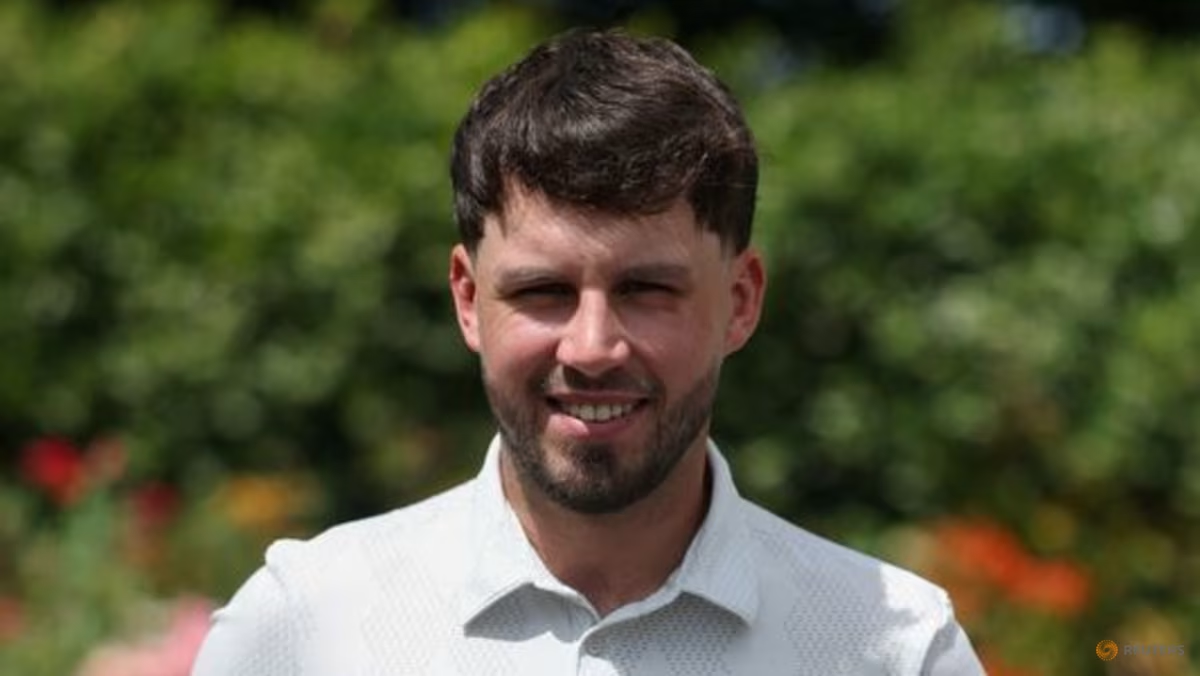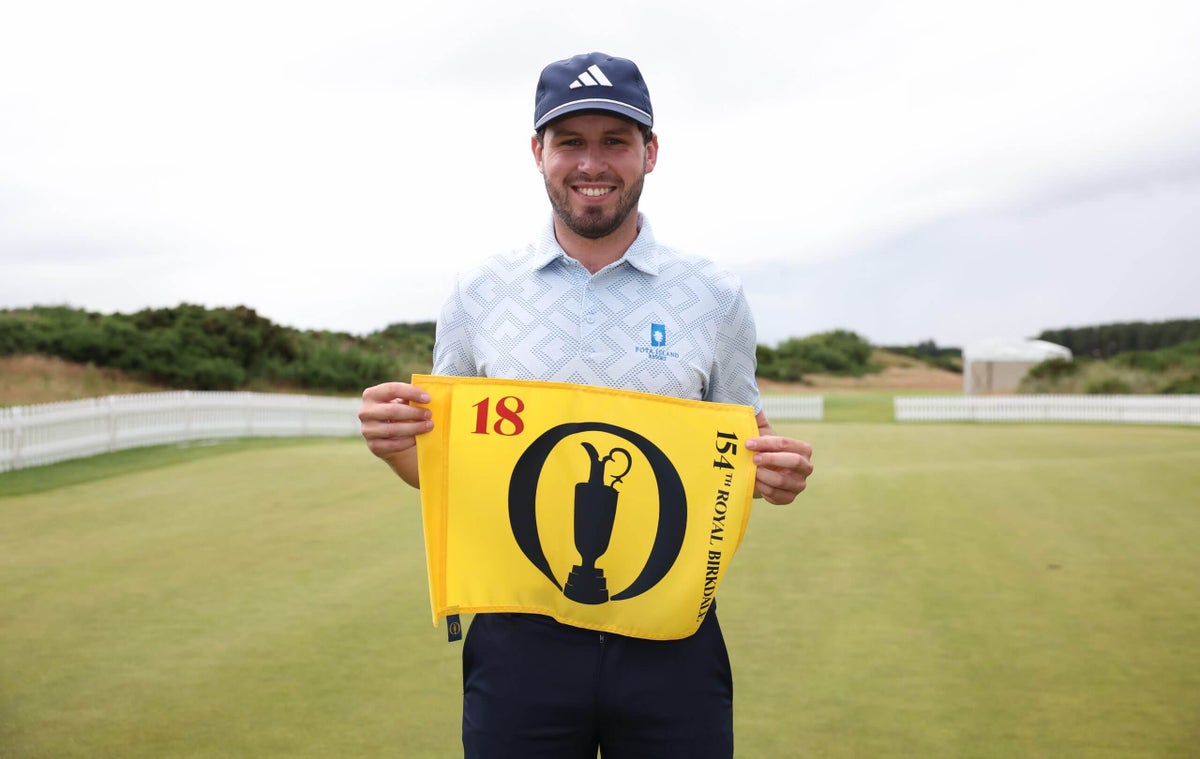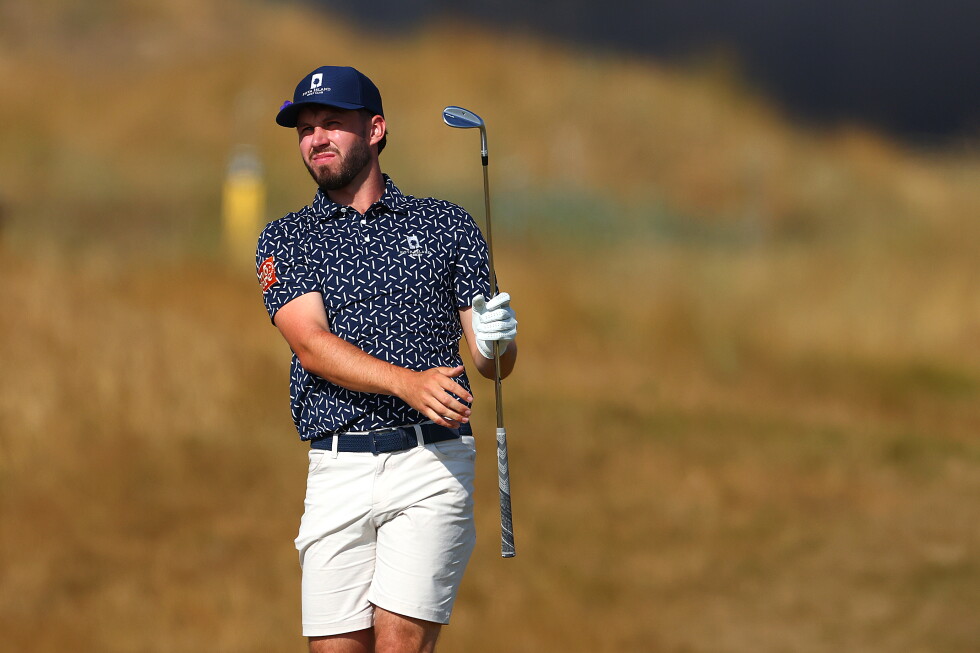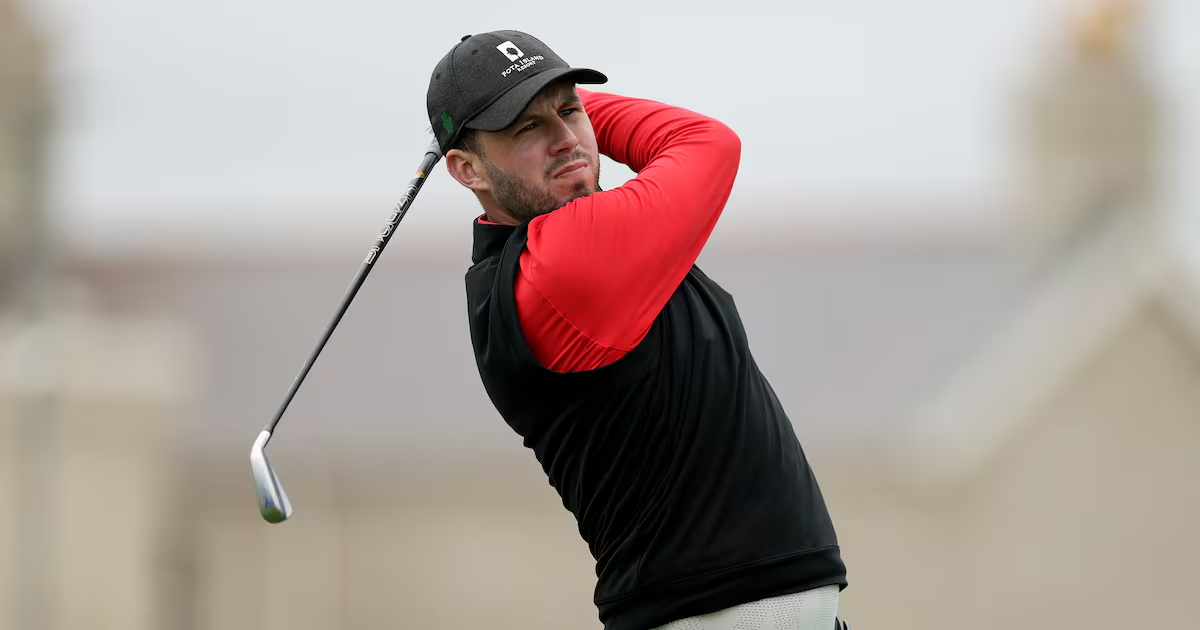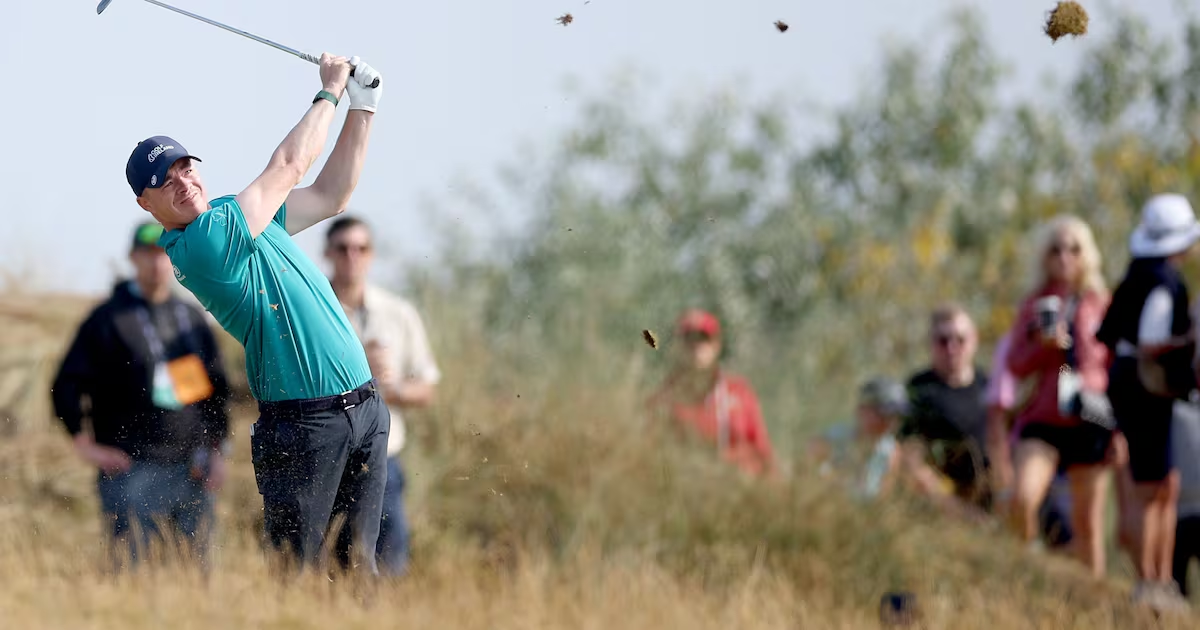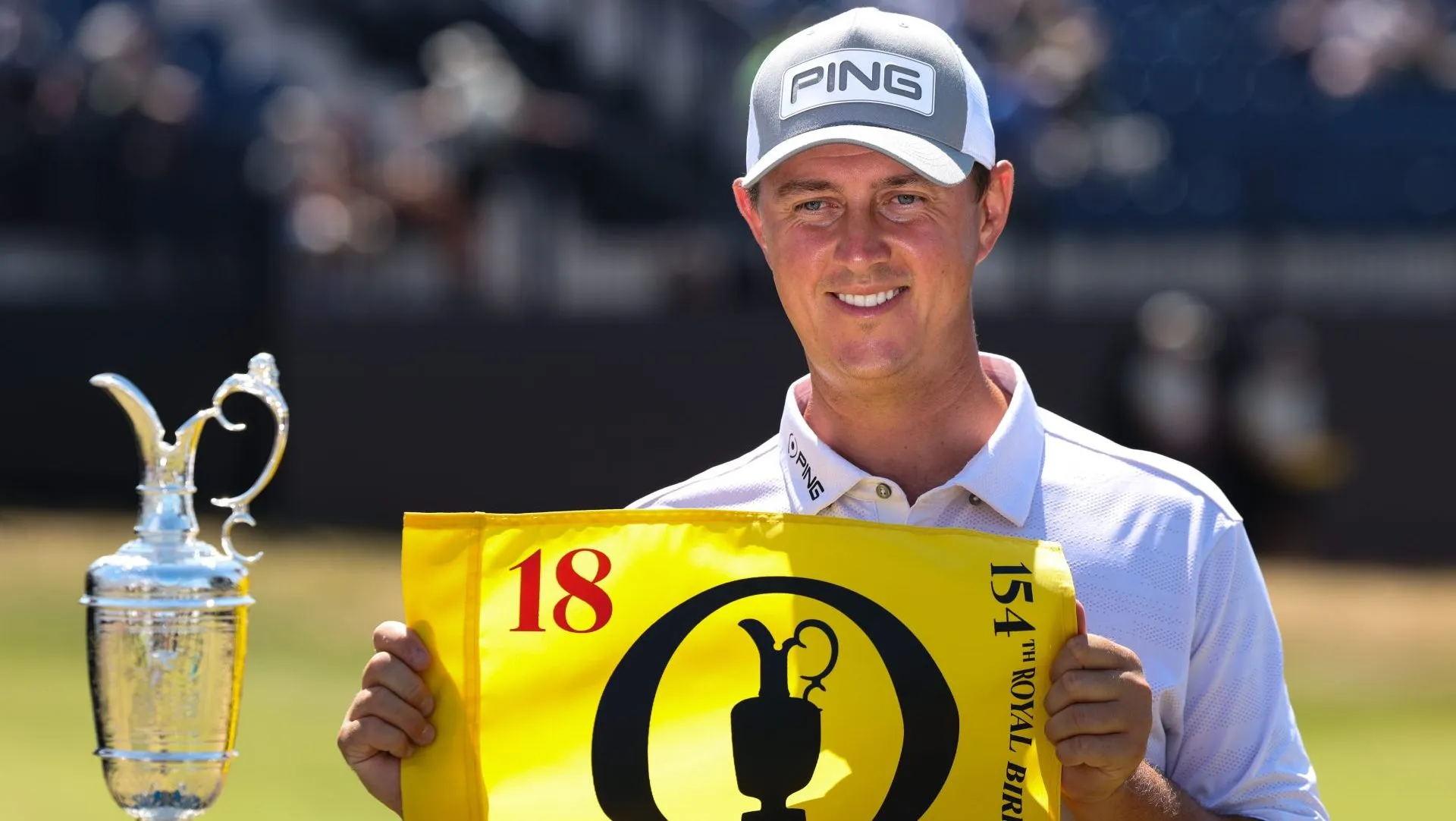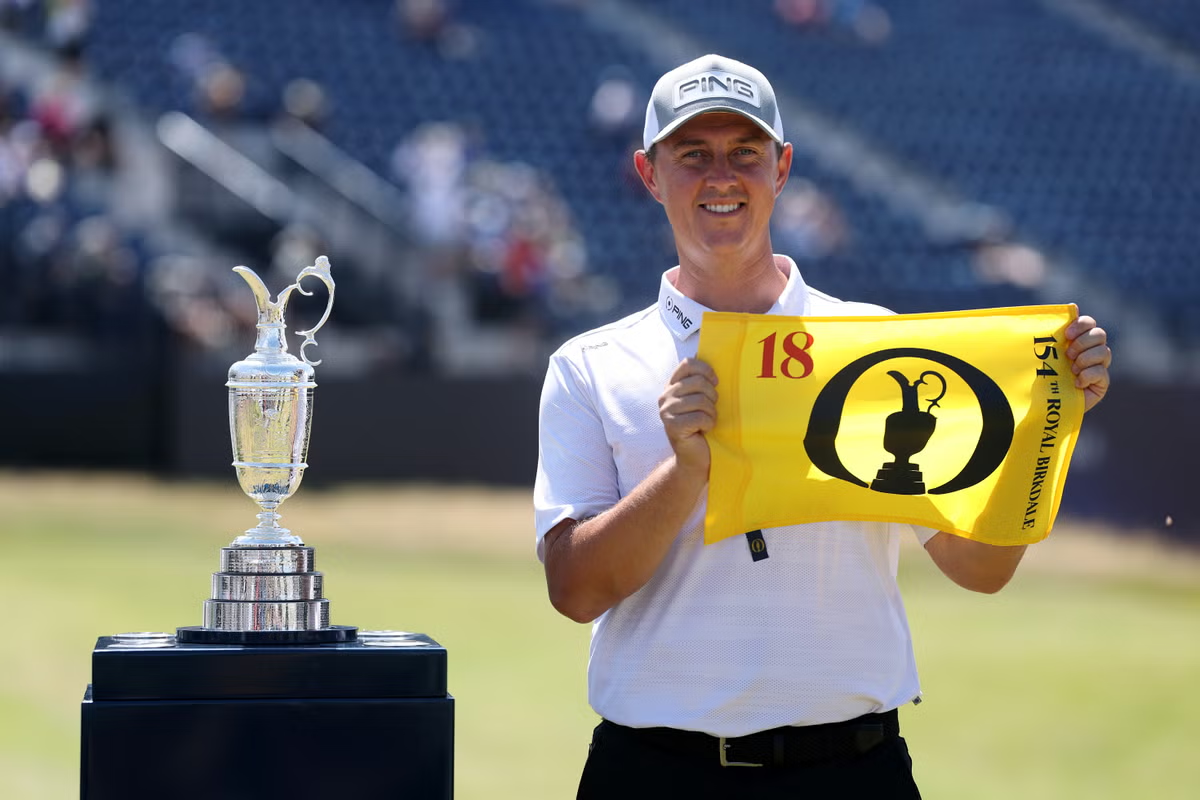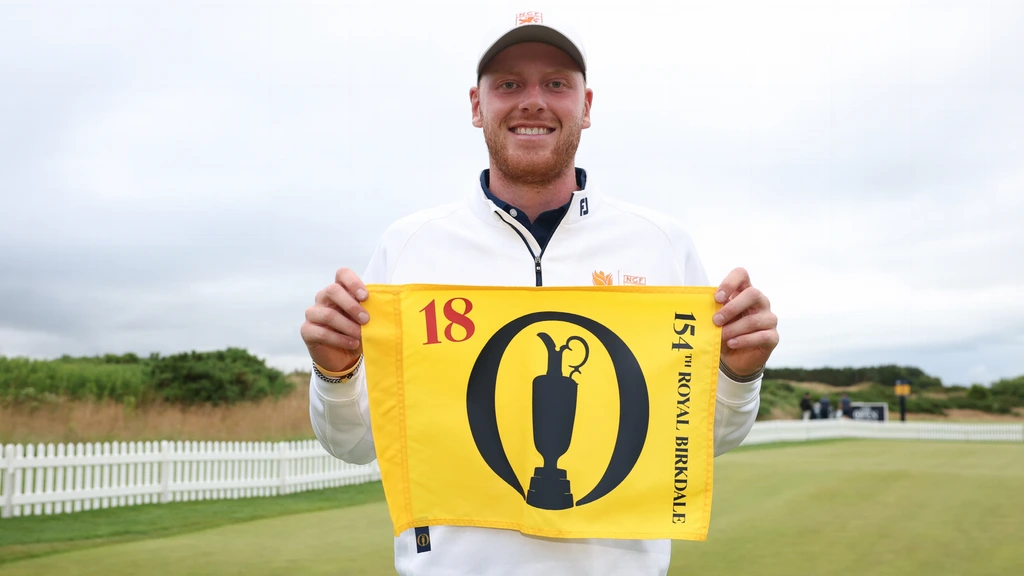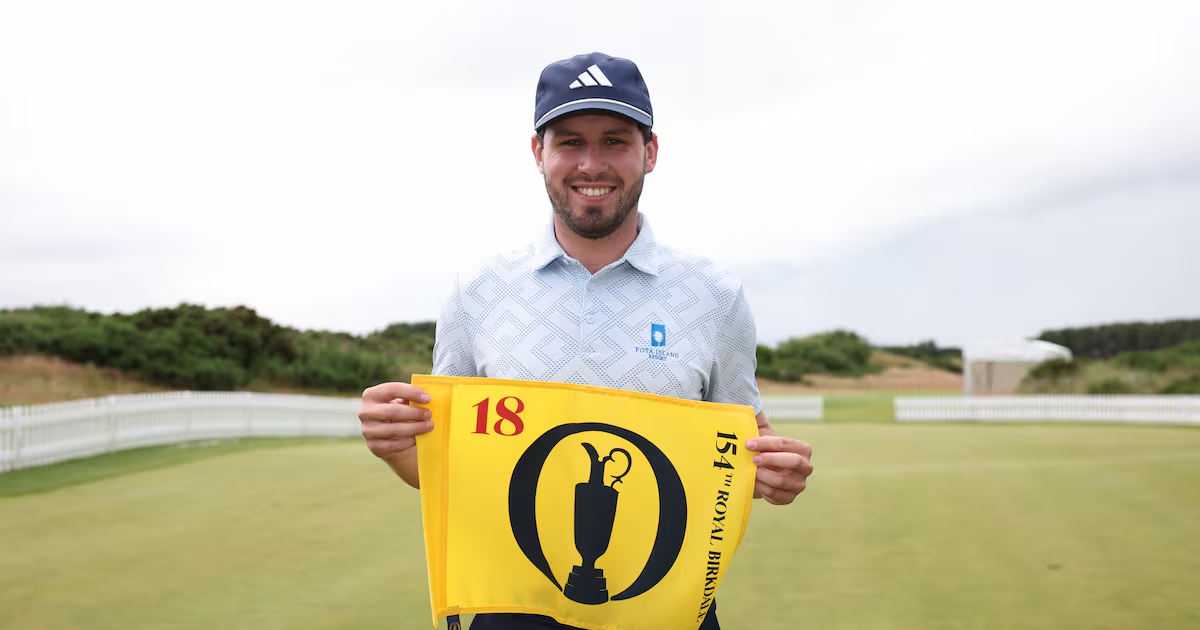
Cork’s David Howard qualified for next week’s Open Championship as the 1,456th ranked amateur golfer in the world but the number doesn’t remotely tell the story. For one, he didn’t always expect to be alive to do this.Howard has cystic fibrosis (CF), a genetic condition that causes mucus to build and clog in multiple organs. It leads to severe and dangerous lung infection and limits the function of the pancreas, meaning the body struggles to absorb nutrients from food. Ireland has the highest incidence rate of cystic fibrosis in the world. A few years after he was diagnosed, Howard Googled his life expectancy and read that he might die in his mid-20s. That he is now 27 and about to compete with the world’s best golfers at Royal Birkdale next week adds a few bespoke sporting braids to an improbable yarn. “It’s mad to say I’m going to the Open,” he says. “It still doesn’t feel right saying it.” Howard takes between 25 and 30 tablets every day, which include the modulators that have changed his daily life. These modulators emerged about 2019, and help to thin the mucus in his lungs. Because his pancreas doesn’t work, Howard takes digestive enzymes with every meal to allow him to break down food and absorb its nutrients. These tablets will be packed in his golf bag at Birkdale to allow him to snack during his round. David Howard playing in the East of Ireland Men's Amateur Open. Photograph: Laszlo Geczo/Inpho The cystic fibrosis team at Cork University Hospital also help him with his golf prep. A nutritionist helps to ensure Howard is taking in enough salt, as those with cystic fibrosis lose much more salt in their sweat than the average person. A physiotherapist, Eoin O’Donovan – whom Howard now considers a member of the family – often travels with him to tournaments. He is on hand to perform chest physio if the mucus build-up in his lungs is particularly high. O’Donovan also helps him to manage a long-standing back problem, which Howard thinks he suffered as a child while hunched over during the violent coughing fits caused by his condition. He can also rely on conventional support: his swing coach is Kevin Morris, director of golf at Fota Island, Howard’s club. Cystic fibrosis is ordinarily identified at birth but Howard wasn’t diagnosed until he was seven. His mother Eithne, having already raised two boys, knew something wasn’t right with David, but a succession of doctors and specialists assured her he was a healthy boy, perhaps suffering from asthma. She eventually found the answer she was looking for, and Howard remembers lying on a hospital bed and crying having been dealt the news. There was also a slight and odd sense of relief at finally discovering the truth. He credits his parents for refusing to wrap him up in cotton wool and allowing him to have as normal a childhood as he could. Still, he missed vast tranches of school time, as whenever he got sick he would often face two-week hospital stays to be administered antibiotics intravenously. Constant, rolling hospital stays were his reality until the emergence of modulator therapies. Howard first got access to the internet before these therapies existed, and recalls searching when he was 12 or 13 for more information about his condition and for how much longer he could expect to live. The worst-case scenario suggested he may not survive past his mid-20s. “I went down a dark path of alcohol and drinking,” he says. The drinking started around second year in secondary school. “A few people had started drinking, I’d go out and I didn’t have the mindset of ‘I don’t care any more’, but I think I nearly used it as an excuse. If I got caught drinking I would run away or say ‘Sure it doesn’t matter, I won’t be here much longer’. It was tough for my parents to see that stuff.” His parents persuaded him to begin counselling, which he says lit a path away from drink’s dark road. David Howard on the 7th green at Louth Golf Club during the East of Ireland Men's Amateur Open. Photograph: Bryan Keane/Inpho He found his sporting outlet too. Some of the sports traditional to an Irish childhood were off-limits to him for insurance reasons, but he was able to spend his summers playing pitch and putt at his local club in Raffeen, near Ringaskiddy. His talent bloomed, captaining Cork at under-16 level before graduating to playing golf. The sport suits his condition, he explains, especially in Ireland, where playing links courses means breathing clean, sea air. Howard finished school and got on with the business of conventional living. He started an apprenticeship as a mechanic with Audi Cork in 2018, but continued to play golf off a plus-five handicap at weekends and occasionally during the week. Howard played casually but his talent kept confronting him. In 2019 he won the Muskerry Junior Scratch Cup, beating his father John in the matchplay final. “Some people say he let me win,” laughs Howard, “but I don’t know about that”. And then came Covid and the most difficult year of his life. Knowing his condition made him vulnerable to the virus, Howard locked himself in his bedroom. “I was afraid to be close to even my family,” says Howard. “They were trying to live their lives and were working, and I was worried they would bring something home. I was completely isolated, and I ended up having a manic episode and psychosis.” Howard stopped eating and didn’t sleep for 10 days. “I lost touch with reality,” he says, explaining he felt on a kind of manic, exuberant high and was interpreting the world as a series of signs from God. He remembers once visiting his aunt and wading through the stagnant water of a flooded field nearby, staring at the sun. He became convinced he would become the world’s richest man, looking through online catalogues of superyachts. One day, Howard believed he knew that night’s winning Lotto numbers, and so he bought a ticket and then stopped at the side of the road to give it to a passerby, insisting to him it was about to win. Howard’s parents, his girlfriend Gabbi and the cystic fibrosis team at Cork University Hospital eventually convinced him to come into hospital. “I thought I was going in for research to show everyone how amazing everything was,” he says.He stayed in hospital for three weeks while his parents were told he may not recover to be himself again. “I couldn’t have any visitors,” says Howard. “I was taken off medication so I got a bit sick, and I had to go on antipsychotic medication to bring me down from the high. That was the hardest bit: going from the highest high to the lowest low. I couldn’t get out of bed for a few months. It was a tough few months, and that my parents were told I might never be the same again was hard to hear after I got back to myself.” And yet he did get back to himself. “In a way, it was grand for me but it was really hard on my family and girlfriend,” he says. “The year or so coming down from that and getting back on track was probably the hardest part of my life, to be honest. The support of friends and family helped me get through it, and the unit in the hospital was a massive help.” His employers were supportive too, allowing him to ease back into work, initially one day a week. David Howard celebrates winning the East of Ireland Mens Amateur Open. Photograph: Bryan Keane/Inpho Howard completed his apprenticeship and also went back to playing golf. He lowered his handicap to plus-two and pressed his nose against the glass of Ireland’s amateur championships. He couldn’t get a spot at the East of Ireland or the Irish Amateur Championship or even the Munster Strokeplay in 2023, but did make it through qualifying for the West of Ireland. He decided to hit pause with Audi Cork and play golf full-time. “I thought, ‘What would happen if I gave this more time?’, and after the incident during Covid, I didn’t want to regret anything. So I packed in the job at start of 2024 and gave it a go fully since then.” His breakthrough moment came last year, with victory at the East of Ireland at a wind-buffeted Baltray. He followed that up by finishing second at this year’s Irish Amateur Open. A tied-eighth finish at the Island earned Howard a spot as a reserve at the final qualifier event held at Dundonald at the end of June, where he opened with a round of 69 and hit the gas with five birdies on the back nine of his second and final round. He took a look at the leaderboard with five holes to go and saw that he was within the top five and therefore in the qualifying spots. He promptly missed birdie chances on 14 and 15 and then winged a drive right on his way to a double-bogey on 16. He steadied himself to sign for a 71, and it was on the final green that his father dropped the golf bag he had been carrying for the day and embraced him to tell him he had done enough to qualify for the Open Championship. A representative of the R&A quickly confirmed the news by scurrying up to him to present him with a flag. “All these memories we are making, it’s great to do that and will be great to look back on it in a few years’ time,” says Howard. “I only realised the magnitude of it afterwards. It’s nuts.”Howard has never been to an Open Championship before, and nor has he really been to Birkdale. He and his father passed the course a few weeks ago while competing at the British Amateur Championship at nearby Hoylake, and when they saw the towering grandstands, decided to pull their campervan into the carpark to catch another glance. Soon they’ll pull up in a much more exclusive carpark and step straight inside the ropes, with John set to be on the bag next week. Howard still goes to hospital every couple of months to get his bloods taken, and his latest check-up showed his lung function is at 99 per cent. With more drugs in development and coming on stream, he says life is improving for those with cystic fibrosis in Ireland. He is an ambassador with CF Ireland, with whom he has been doing some happy work: anticipating and addressing some of the novel challenges of living longer that people with cystic fibrosis face. Asked if he still thinks about life expectancy, he says: “I am not worrying at the moment. The mindset is to keep on trying to do what I am doing, and have no regrets down the line.”
‘It’s mad’: The amateur making his Open debut, despite not always expecting to be alive at 27
The Cork golfer with cystic fibrosis has to take 30 tablets daily and will have a physiotherapist on stand-by at next week’s tournament
1,834 words~8 min read