(Image credit: Future)
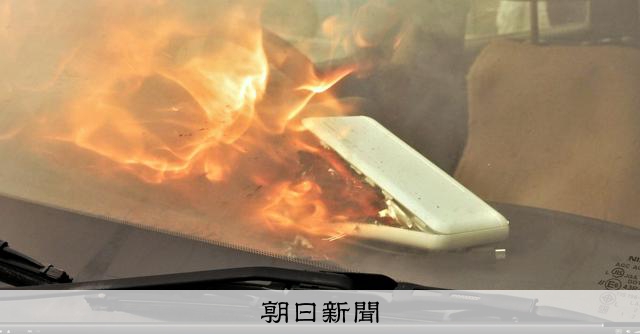
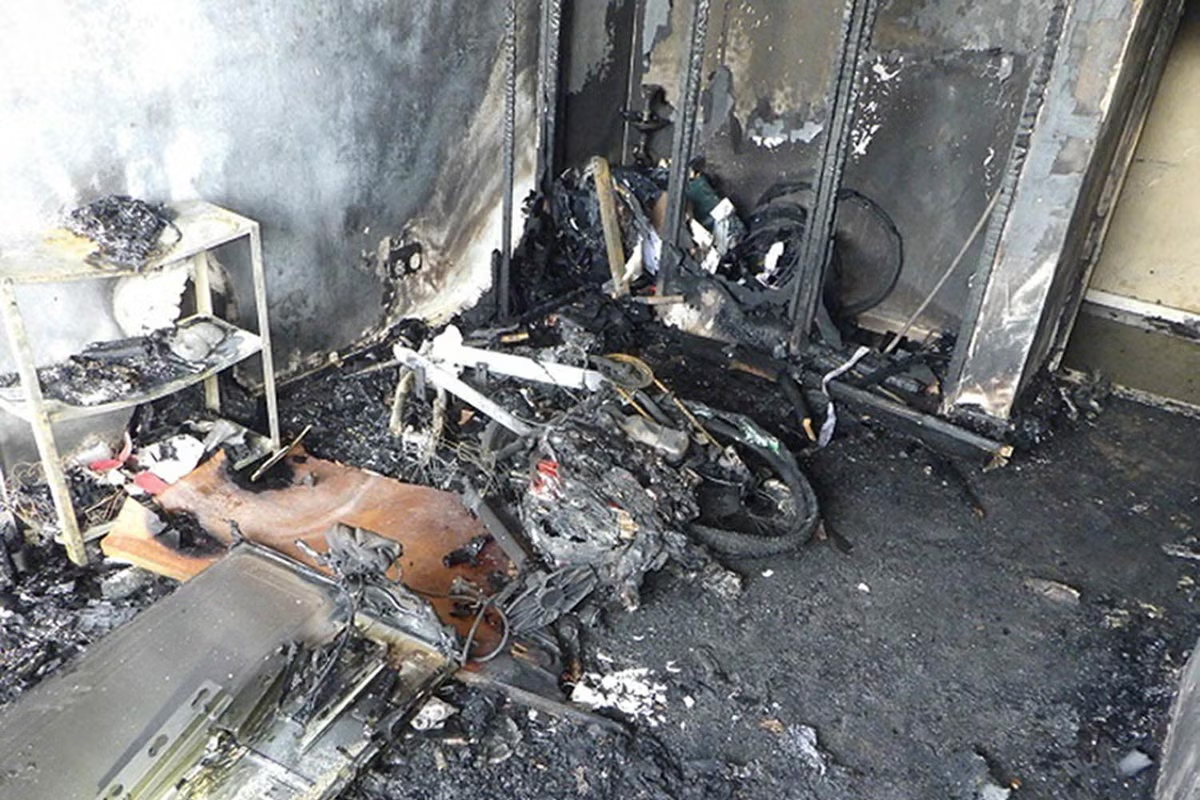
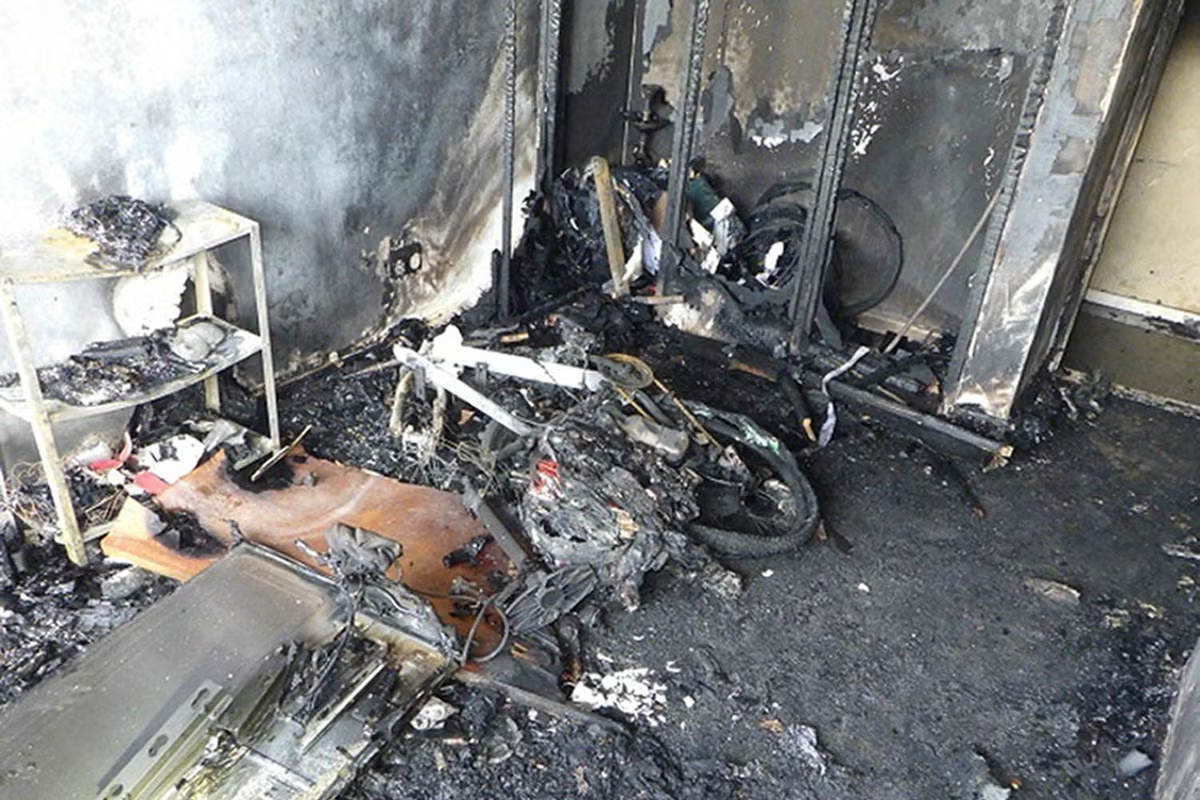
Even before gas prices hit all-time highs, the best electric bikes and electric scooters have become increasingly popular ways of getting around. But, their increased presence has brought with it an increased danger of fires, both from uncertified batteries and from improper charging and storage.In New York City, for instance, there were 18 deaths as a result of fires from lithium-ion batteries, which prompted the city to implement stricter regulations on the sale of e-bikes — and specifically, their batteries. As a result, the number of e-bike fatalities from fires in the city dropped to just one in 2025.But, there are dozens upon dozens of ebikes and electric scooters for sale on Amazon and other online retailers, so how do you know which bikes are safe, and which pose a potential hazard? And, once you buy an e-bike, how to you properly store and recharge its battery?To find out, I talked to Dr. Robert Slone, the Senior Vice President and Chief Scientist for UL Solutions, which regularly tests and certifies thousands of products each year to make sure they’re safe for consumers.Rob leads UL Solutions’ innovation in safety, security and sustainability science. As senior vice president and chief scientist, guides UL Solutions in advancing scientific innovation and technical expertise across sustainability, safety and security. What should shoppers look for when buying an e-bike?We can only speak to our certification, but what they can look for in terms of a UL-certified e-bike [UL 2849] is the UL mark, the U and the L in the circle. For e-bikes, we've gone a step further. We apply a holographic label, which is much more difficult to fake or to counterfeit. And that is typically placed either, and or I guess, on the battery pack and or the bike frame. So it's visible and it's pretty easy to see.What are some of the tests that you put a battery through? Is my e-bike certified?If your ebike or scooter has been certified by UL Solutions, it should have a sticker on it somewhere. However, you can also look up products at UL Solutions database.We do a full range of tests in terms of overcharging. We test the battery management system, which is like the software system of the battery. We address environmental concerns in terms of hot and cold conditions, water exposure.I live in the New York City area and the streets are not always the smoothest, to say the least. So vibration testing, drop testing, shock testing, those sorts of things are also part of what we do, both for the battery and then also for the bike itself, for the frame and the motor and those sorts of components.We look at aging and cycling of the battery. Is it showing signs prematurely of overheating or aging and danger signs like that? And then electrical elements like overcharging the battery also play a role.Get instant access to breaking news, the hottest reviews, great deals and helpful tips.And then basics on the design manufacturing. What's the quality of the manufacturing? Do you see metal bars and sharp edges, whether on the frame in the bike or in the battery itself?