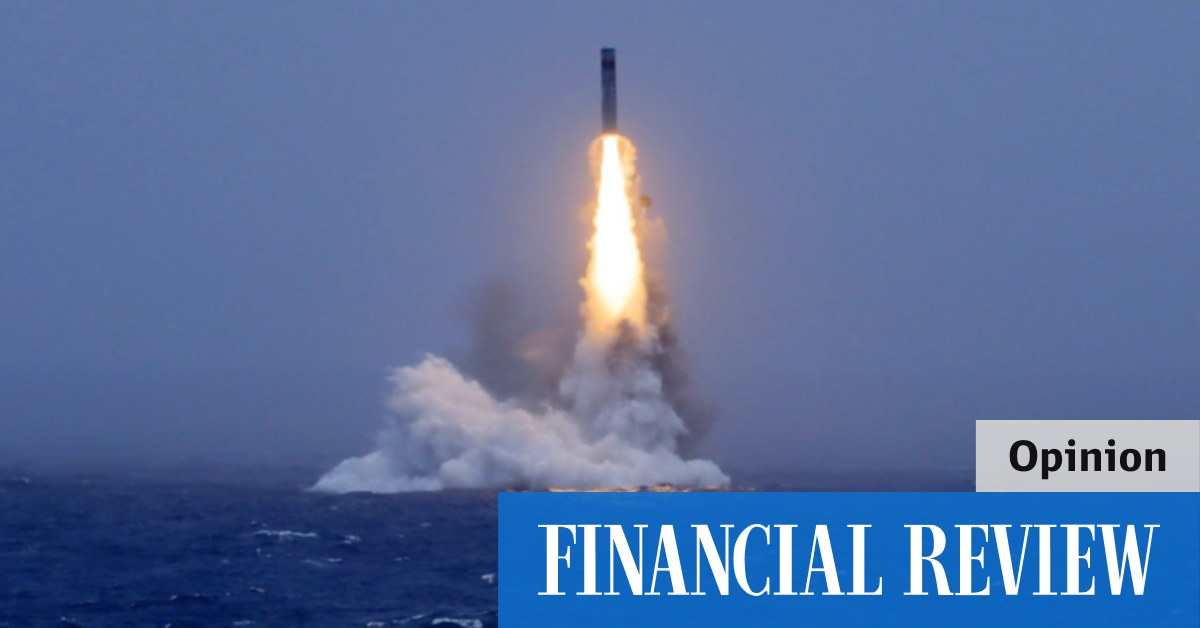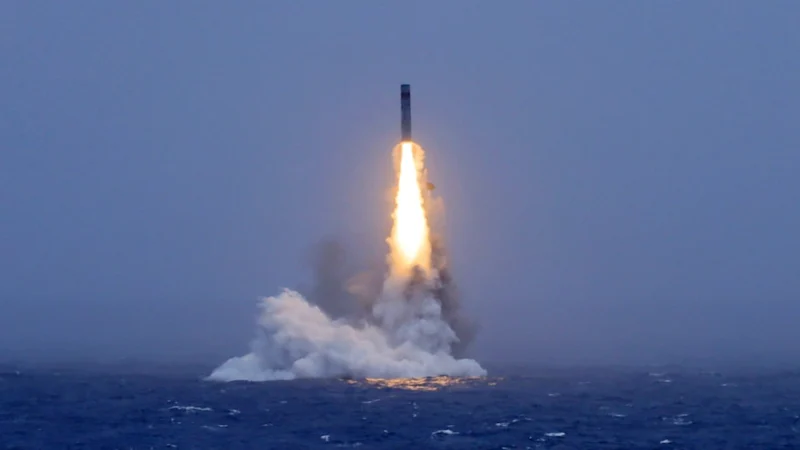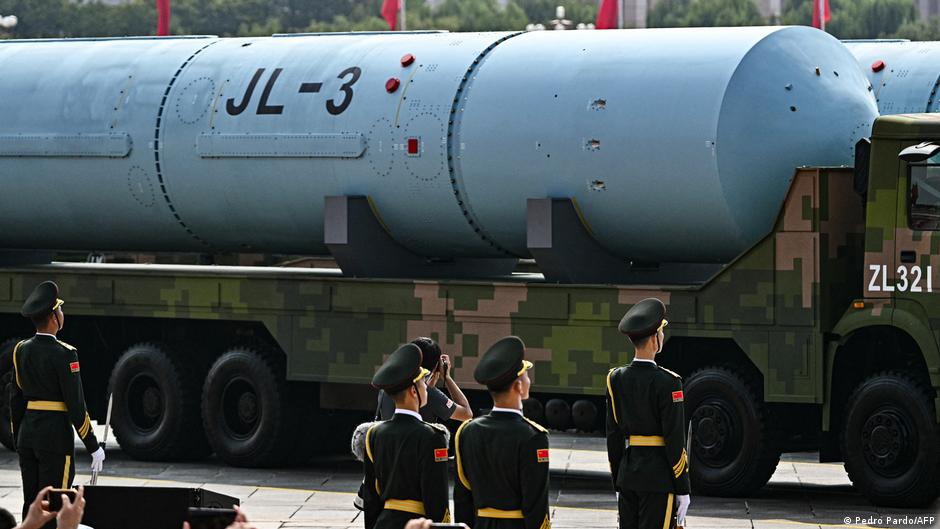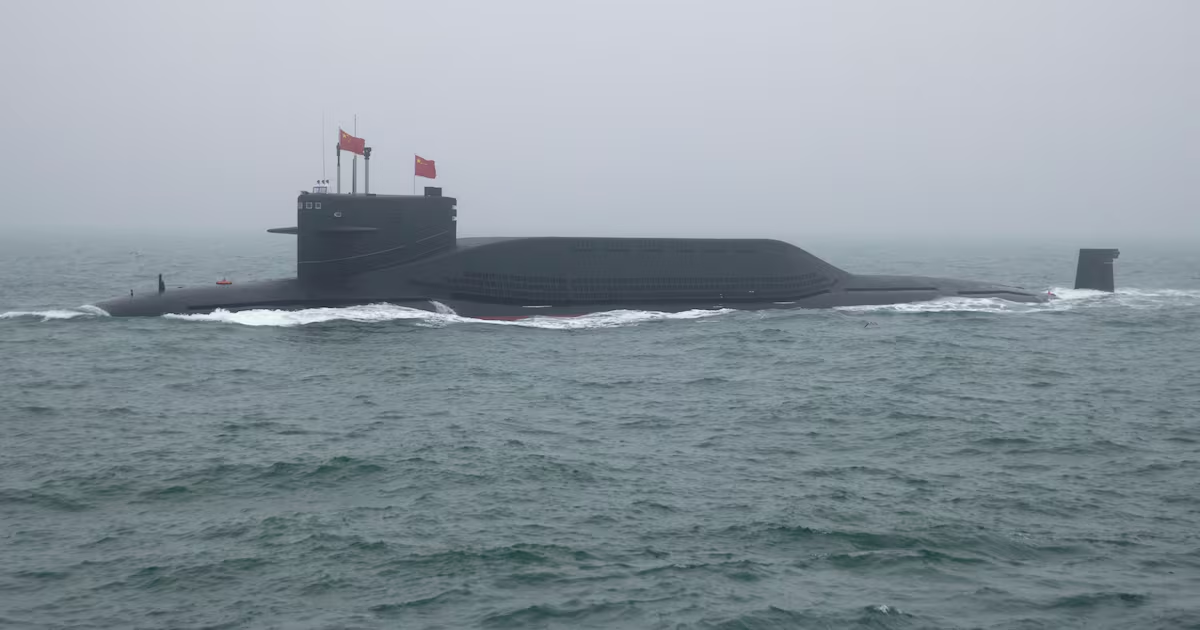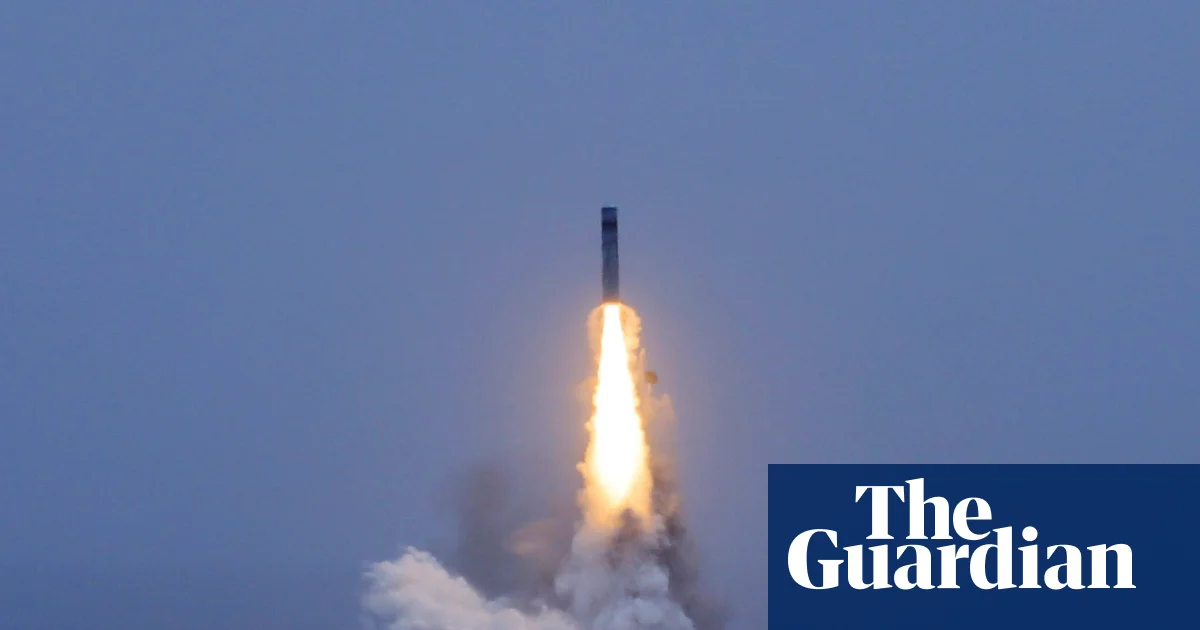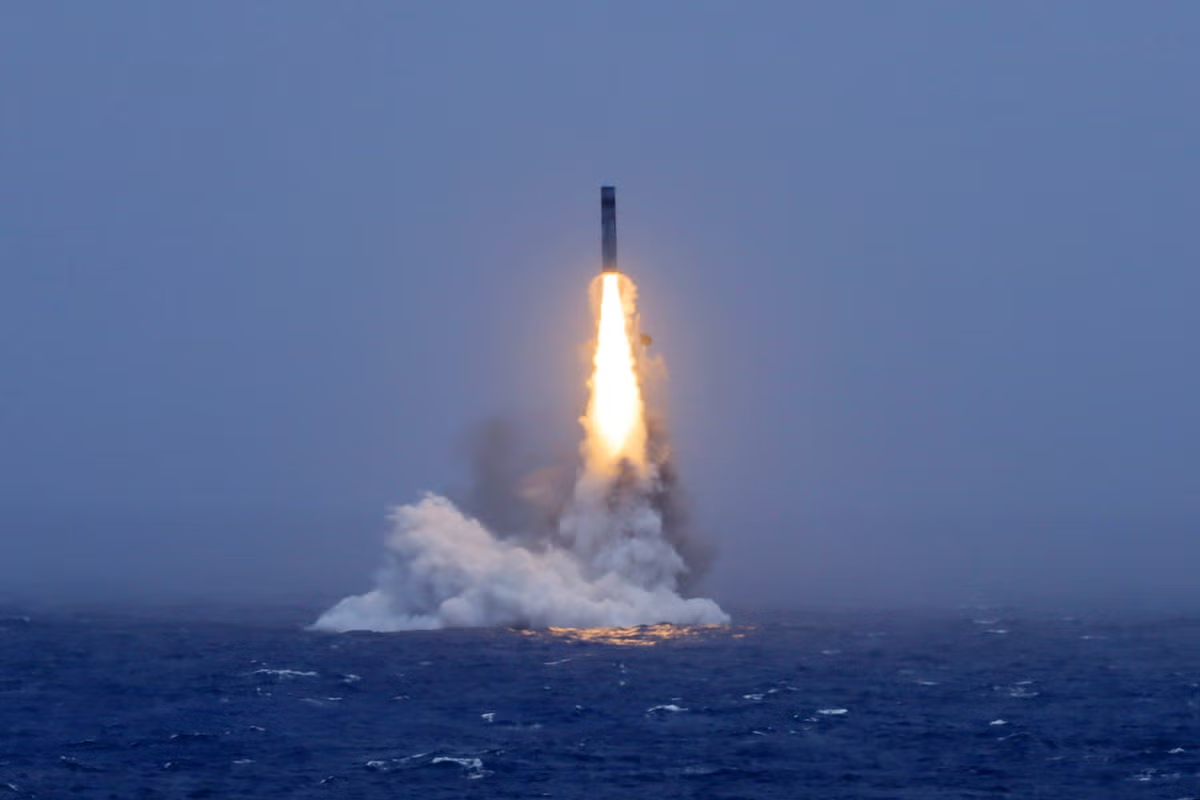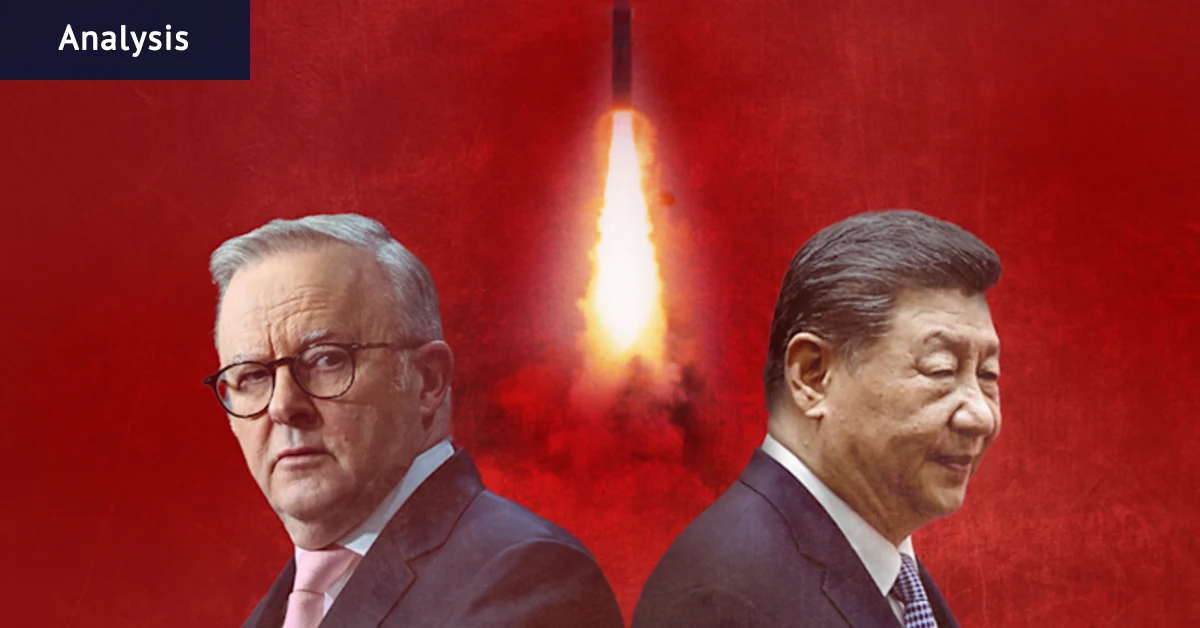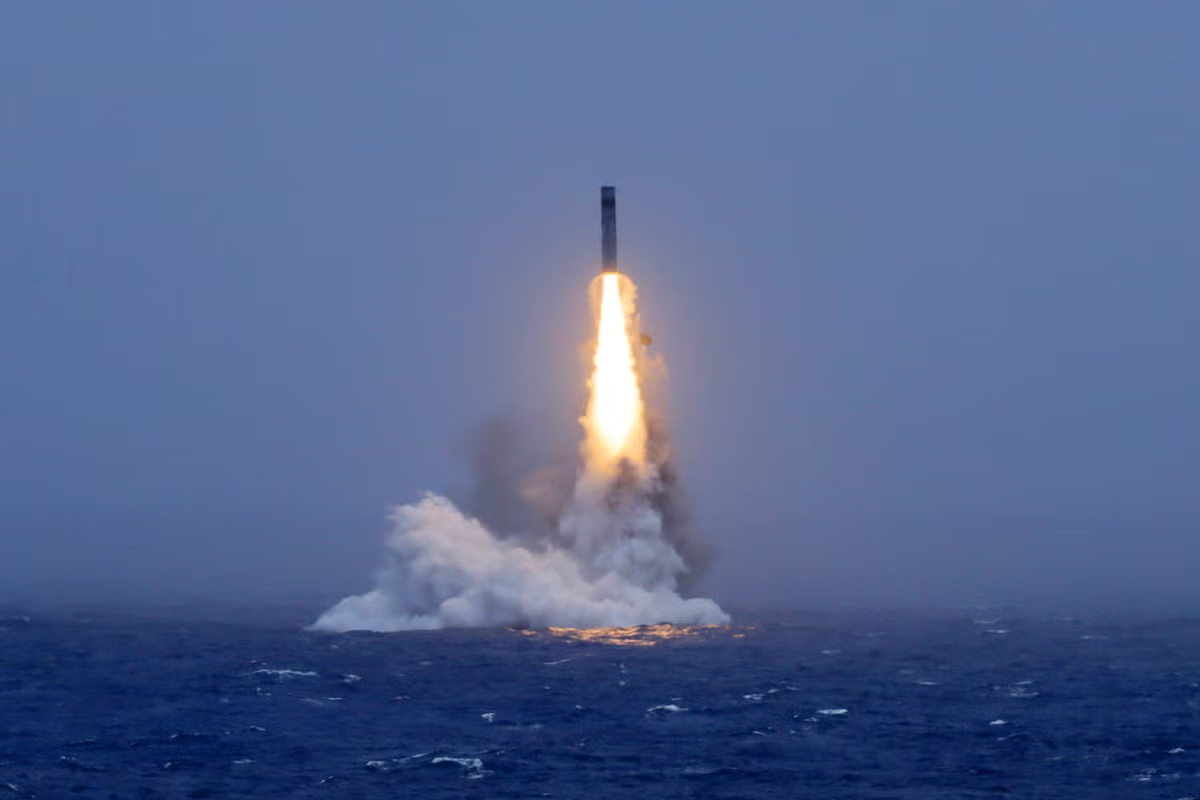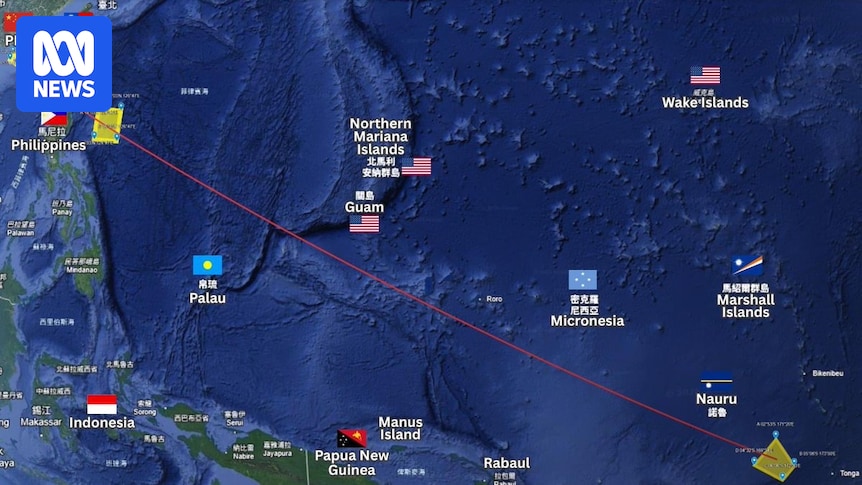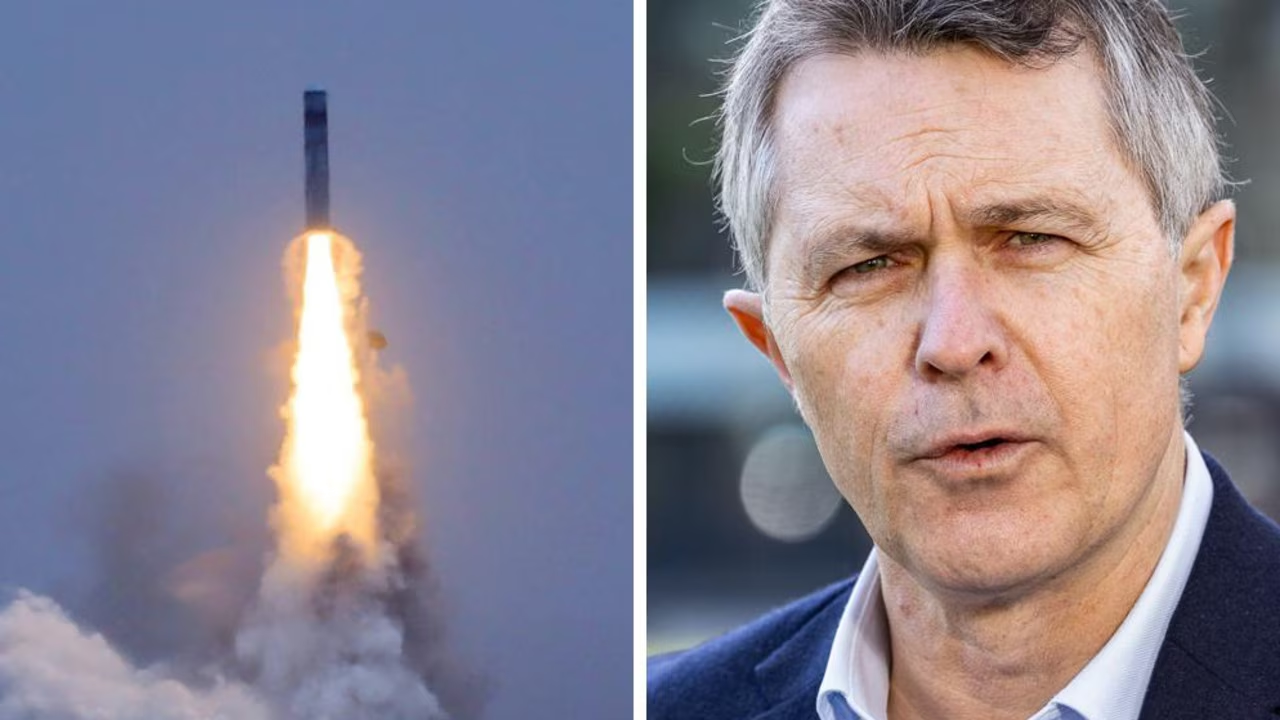
China is not making any friends “by firing a missile over someone’s backyard” as condemnation grows over its unprecedented Pacific test, a Labor minister has claimed.Beijing drew headlines earlier this week after test firing a ballistic missile about 1000km northeast of the Solomon Islands hours before Anthony Albanese was due to arrive in the capital Honiara – and hours after the Prime Minister signed Australia’s fourth-only alliance with Fiji while in Suva.The incident drew swift condemnation from across the political aisle in Canberra.“Good neighbours don’t shoot stuff over someone else’s house,” Education Minister Jason Clare told Sky News on Sunday. Mr Clare said China would not “make any friends” by lobbing a missile “over someone’s backyard”. He denied, however, that the launch was intended to coincide with the Mr Albanese’s visit to Suva to meet with Fiji Prime Minister Sitiveni Rabuka.China has maintained the missile test – which would typically come after a 48-hour notice period Australia was not afforded – was routine and in-keeping with international law.Defence Industry Minister Pat Conroy warned the region was witnessing the “biggest arms race, the biggest build-up of military since 1945”.“That is occurring without any transparency or strategic reassurance. That is the context that we face.”Mr Conroy said the “nightmare scenario” would be a conflict in the region.“We have to be careful about not getting into hypotheticals, but I highlighted when I represented Australia at the NATO summit this week that a conflict in the Indo-Pacific would be catastrophic for the globe, not just our region. We must do all we can to prevent that,” he said.Mr Conroy sought to spruik investment in defence, including SM-6 missile systems and Aegis combat systems, but would not confirm whether Australia would be able to shoot down a Chinese missile such as those tested in the event of a conflict. “We’ve got a range of capabilities in service right now … the critical thing is you can’t stand still,” he said.“This is a race where we need to make sure that the Australian Defence Force has the best possible equipment, and that’s why we’re providing the biggest peacetime increase in defence funding ever.”Asked about a potential conflict over Taiwan, he continued: “We’re prepared for a conflict in our region. Everyone is working very hard to avoid it”.“My main message to NATO is that the conflicts are no longer local, they’re global,” he said.Australia ‘on board’ with Pacific pactThe launch also drew condemnation from Pacific leaders, including Solomons’ Prime Minister Matthew Wale who has led a push for a region-wide security pact.The Ocean of Peace alliance signed between Australia and Fiji last week including provisions for more Pacific countries to join, though Mr Albanese dismissed any immediate moves towards further alliances when speaking in Suva on Monday.Mr Clare dismissed the idea the missile test would deter other Pacific countries from signing pacts with Australia. However, when pressed whether Australia was supportive of Mr Wale’s calls for a region-wide pact, Mr Conroy maintained it was for the region to lead. “We’re up for it. But, importantly, it needs to be driven by Prime Minister Wale, given he’s the current chair of the Pacific Islands Forum,” he said.Mr Conroy would not divulge “confidential discussions” with Mr Wale and that it would take “a number of years” for such an agreement to be established.“But, ultimately, it’s a decision of all the Pacific leaders. We act on a consensus approach,” he said.Pressed on whether Australia was “on board” with the move if it was driven by the region, Mr Conroy said “absolutely”. “It would be consistent with our approach to individual countries,” he said.“We’re proud to be the security partner of choice for the Pacific, just as we are the development partner of choice. This is all about peace and stability in our region.”Read related topics:China
China’s ‘backyard’ missile test not making friends: MP
China is not making any friends “by firing a missile over someone’s backyard” as condemnation grows over its unprecedented Pacific test, a Labor minister has claimed.
635 words~3 min read