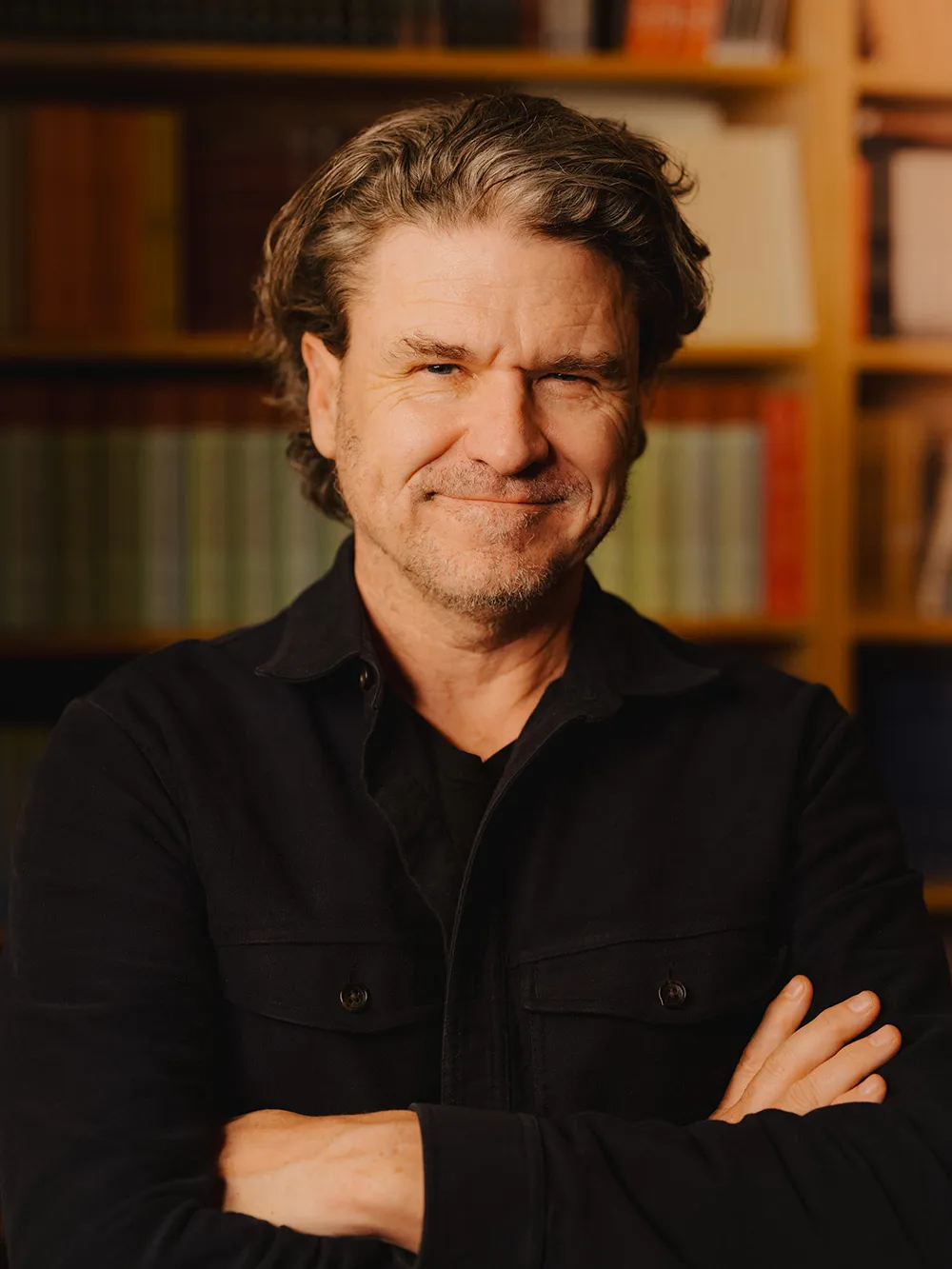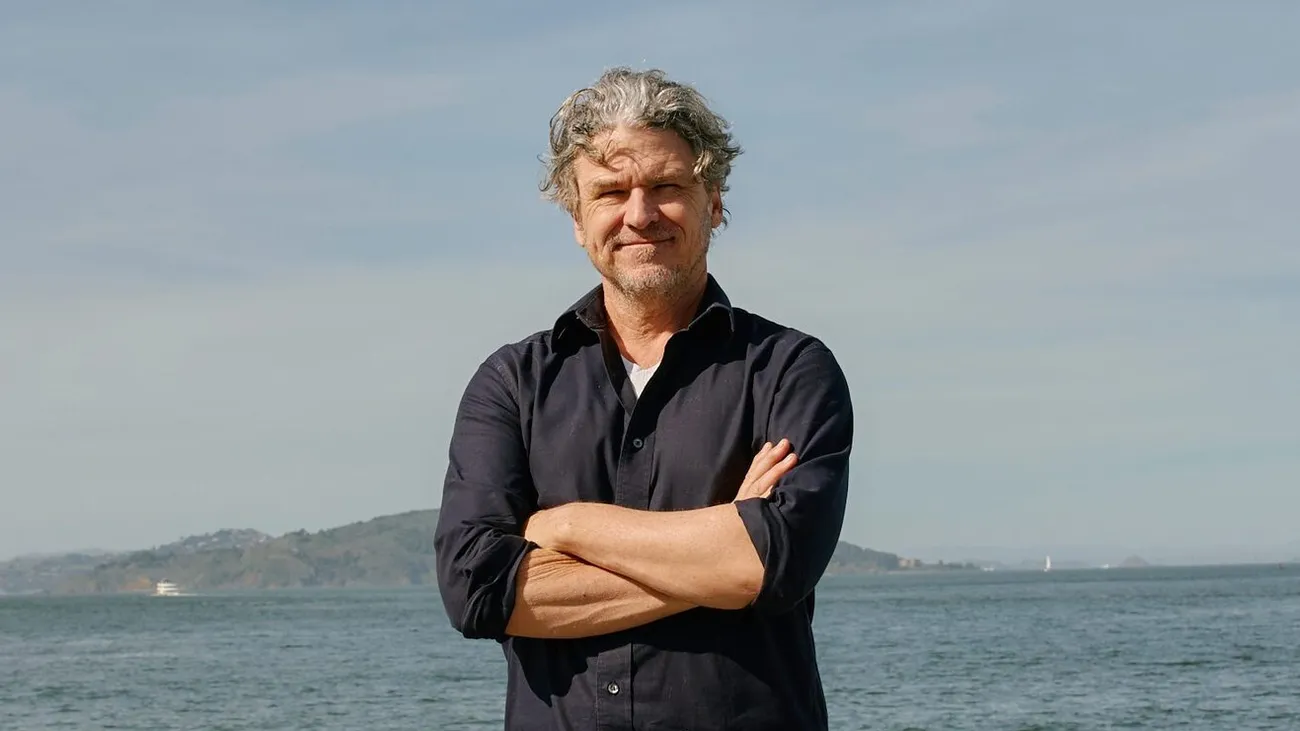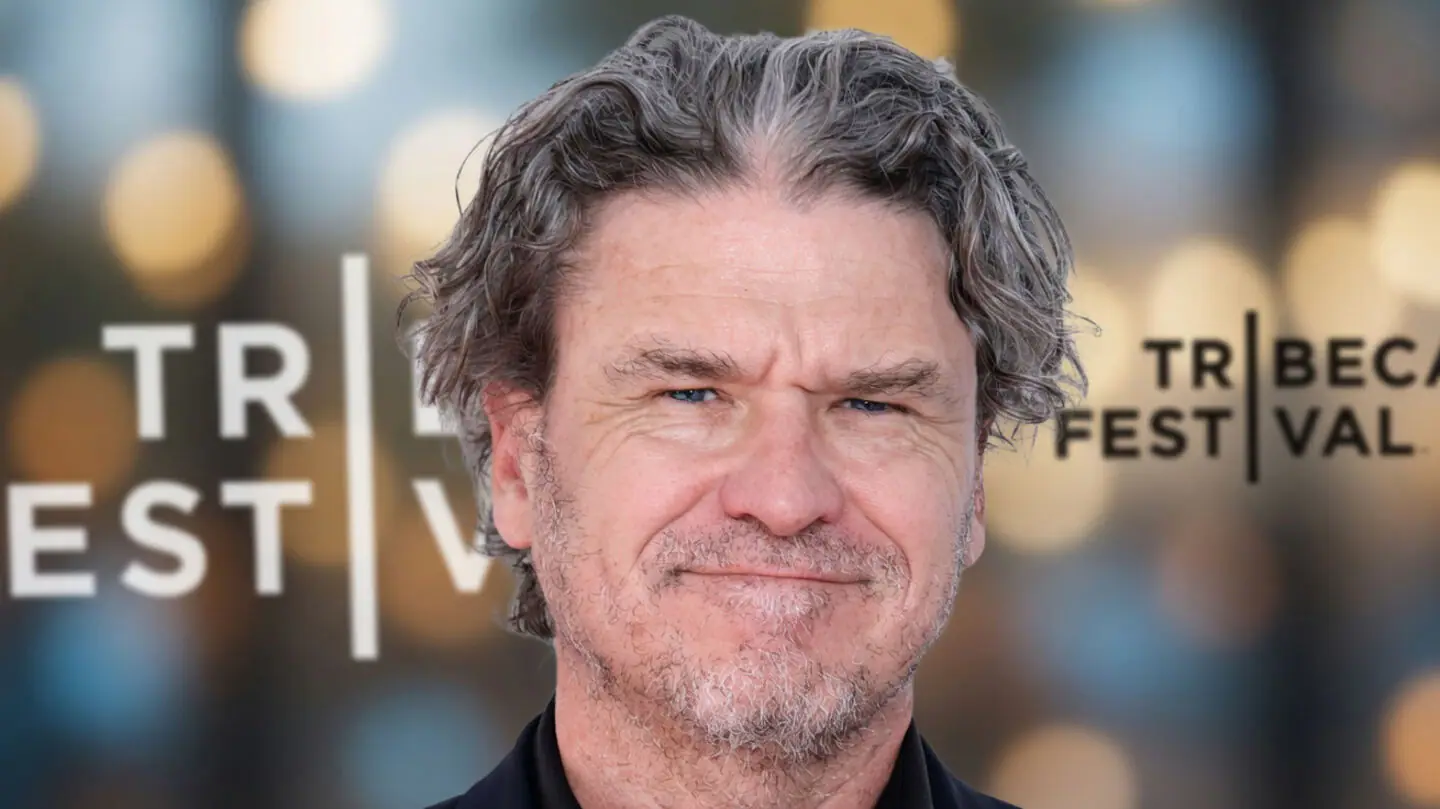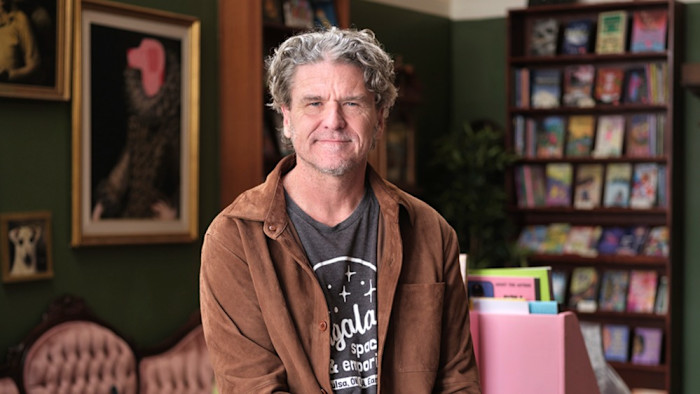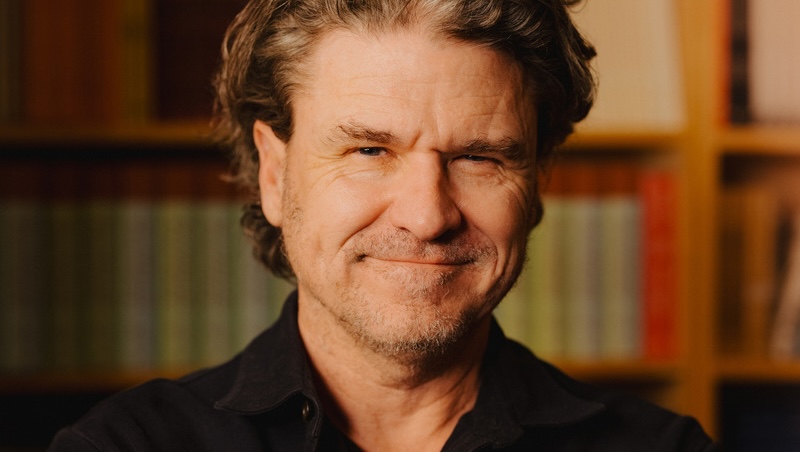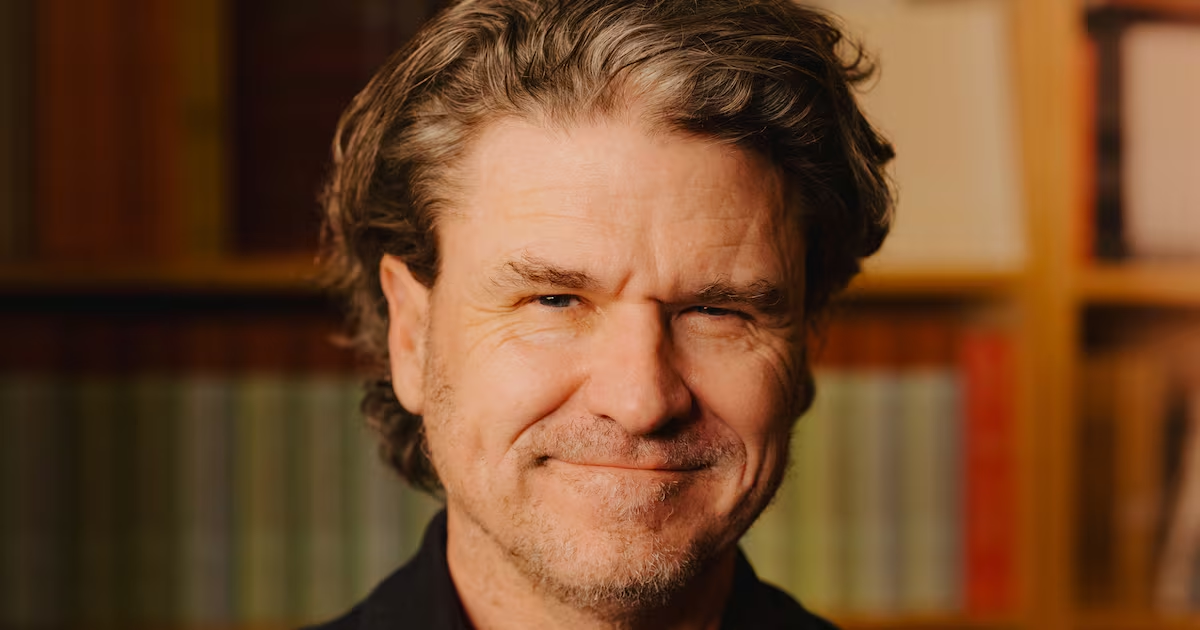
Dave Eggers is not a man hemmed in by an undue adherence to convention. Over the phone from his book tour in England (current stop: London), Eggers explains how he keeps things creatively stimulating at McSweeney’s, the small independent publishing company he founded in San Francisco in the late 1990s.“We hire life drawing models to pose at the offices for us, all of us art school refugees that work there, and they’re naked in our office while we draw,” Eggers says cheerfully. “Once a week we hire models and it’s always the most interesting people.”I can’t see HR departments in Ireland embracing the idea any time soon. No matter. It makes perfect sense for Eggers, a novelist and non-fiction author who is also a painter, editor, curator, non-profit founder, children’s books author, and more. Since he burst on to the literary scene in 2000 with his genre-bending memoir, A Heartbreaking Work of Staggering Genius, Eggers has been a restless spirit. A former Pulitzer Prize finalist, he has founded several non-profit organisations, many aimed at stretching out a helping hand to young artists, and he has plans for a new venture, Art + Water, to assist emerging visual artists in San Francisco. He’s had several books made into movies, including A Hologram for the King, starring Tom Hanks, and 2013’s The Circle with Hanks and Emma Watson. Keeping up with him even on paper feels like a stretch. Helpfully for Eggers’ time-management skills, life drawing is the subject of his new novel, Contrapposto. Its name refers to the technical stance a model might take, leaning back on one foot like Michelangelo’s David when posing for artists. Eggers spent 20 years scribbling notes and observations for the story, shoving them into drawers, then assembling them into a captivating, deeply alive novel of ideas about a shy artist called Cricket and his friend, the sexy, self-assured but not terribly stable Olympia.Cricket is a gifted painter, but his talents aren’t appreciated at college where professors rate only conceptual art, in a postmodern market where patrons buy investments rather than paintings, and old-fashioned skills with turps and canvas smack of the second-rate. Olympia, a budding curator and Cricket’s sometime lover, is enraged. Cricket is indifferent: he just wants to paint, not report to anyone, and not – like a Warhol or a Lichtenstein or a Pollock – be forced to repeat himself, to heap gold coins on a pile and relive old glories.Growing up in Indiana, Cricket realises that graft matters. “Much of the rightness of any drawing came through time and diligence and discernment. It came from work and humility – being able to recognise if something is wrong, and knowing how to address it. There was room for talent, yes, talent was much of it, but he was surprised by the role of sheer doggedness – the determination to get it right.”A traditional novel that makes the case for traditional artisan skills might not have seemed on the cards in 2026 from the form-bending, genre-ducking author of The Circle and The Parade, who grew up inspired by postmodernists such as Samuel Beckett. (A vaguely shocked New York Times reviewer declared they saw something of The Thorn Birds in its earthy, warmly charismatic prose. Ripping through the 400-plus pages, I thought of Charles Dickens.)Dave Eggers at Pier 29, which will house Art + Water, a teaching and community organisation, in San Francisco. Photograph: Poppy Lynch/The New York Times But it makes sense to Eggers. He says the philosophy underpinning the novel has a lot to do with his years on earth, and how he wants to spend his remaining ones. What’s a good way to live one’s life as a working artist? The question lingers with him.“I’m 56 and it’s on my mind every day,” he says. “It’s like, ‘Do I really want to do this? Do I really want to do that?’ How do you balance things so there’s devotion to your art, but there’s life as art? I think the latter is more important. I didn’t do a book tour for the last 15 years because I wanted to be home and present with my kids. It’s something you think about and you make little adjustments every week, every month.”Some of the adjustments are to his writing circumstances. Eggers writes for 250 days a year on a boat docked in a slip beneath the Golden Gate Bridge where he can look out at pelicans, sea lions and passing fishermen. He has to bike around the bay to a porta-potty if he needs the facilities. He types on a 1998 MacBook Pro with original software, a cracked screen and no internet. He listens to Sinéad O’Connor every day before he begins, always her folk standards album, Sean-Nós Nua, so he can – he sighs at the jadedness of the phrase – “centre” himself. “I started working on this boat five or six years ago because I was tired of being indoors all my life and that helped me a lot to have a different equilibrium.”It’s a lifestyle that would not have been possible when Eggers was a young man in his 20s, forced to beat the corporate drum to make a buck. His salad years were famously hard. His parents died of cancer within weeks of each other when Eggers was 21 and he helped raise his brother Toph, aged just eight, in Berkeley, California, where they moved to be with his sister Beth. A former journalism student at the University of Illinois, Eggers had ambitions but few opportunities to make them a reality. “I struggled,” he says. “I was a temp at companies throughout my 20s while trying to put out magazines and do illustrations. I had no real idea where I would end up or if I’d ever be able to make a living doing it.”Insecurity ripples through the early part of Eggers’ new novel. Growing up, Cricket is the sensitive boy who watches on as his single mother attaches herself to a bad man, burying his face in the pillow to avoid hearing the thud of fists, the screams. There are chem trails of Eggers’ old life in the heart-rending early scenes – Eggers’ father was a violent alcoholic and, like Cricket, the young Dave also used creativity as an escape hatch. ‘I don’t think the Trump administration reads, so, outside of The New York Times, all of us writers are safe’“In the ’70s it was quite regular to have that level of chaos at home,” he says. “Cricket has what he can do on the page, which is to order the world. I spent all my free time drawing because it gave me that sense of like, okay, this is mine, this I control. This is peace and even a kind of bliss.”Eggers has devoted a significant portion of his life to fostering creativity in young people. His non-profit centre 826 Valencia, founded in 2002, helps children and young adults keen to grow their writing skills. Roddy Doyle, whom Eggers idolised when he began writing novels, visited in the early days, watching classes and taking notes so he could create his own initiative, Fighting Words, in Dublin. “We’ve been in each other’s lives ever since,” says Eggers. [ The Beautiful Death of Ozzy Osbourne: Sympathy for the metalOpens in new window ]The centre is based in San Francisco, a city where hippies still puff on joints clustered on the sidewalks but where “half the cars are robot-driven and trillions of dollars are flowing through the city”. It’s near Sam Altman’s OpenAI, a company altering the landscape of modern life in every area of industry, not least writing and education. Eggers accepted an invitation from Altman to speak at OpenAI and used the forum to make his voice heard. “I said, ‘You’re adding 20 hours a week to the workload of every public school teacher in this country and the effect is apocalyptic on young people being able to develop their own voice. There is no safe amount of AI in humanities for kids under 22, at least in writing. If a young person decides to shop out their voice to a machine, then they become voiceless.’”Eggers and his wife, the writer Vendela Vida, have two children, aged 17 and 20. He says their “fierce and innovative” teachers are increasingly making their students hand-write essays in class under their supervision, recognising it is the only way to foster creativity and beget fairness. “Those kids end up being much more effective writers than those that go home and cut and paste or shop part of it out,” he says.In his non-fiction work Eggers has written about the Trump administration. He plans to again. “I’ve been working on something for 18 years now that’s so dark I have to take breaks from it, but a lot of it is about police violence in the US and how much gun violence we tolerate.” [ The German-Russian Century by Stefan Creuzberger: Impressive account of an age-old enmityOpens in new window ]He tries to balance the competing urges within himself. “As a journalist, you do certain things out of a sense of outrage,” he says. “I spent a lot of time on Trump during the first administration and I thought, ‘I’m not going to give this person 12 years of my life.’ There has to be room for the stories and projects you do that will outlast this one maniac.”That language – you wonder if it’s dangerous. Has he ever felt the Eye of Sauron upon him? “The old way was that you got audited by the IRS if you were too critical of a certain administration, but that hasn’t happened yet,” he says. “I don’t think the Trump administration reads, so, outside of The New York Times, all of us writers are safe. If we were on TV, it’s something different.” He tries to inspire students to speak the truth of their lives. “People have been fearful,” he says. “In the first administration, when I would write op-eds, students of mine would say, ‘Are you sure you can say that? Don’t you worry he’s going to sue you or threaten you?’ They have to understand that one of their purposes as writers is to speak truth to power.” Community matters to Eggers. Among the proliferation of screens in our lives, there can be great loneliness and vulnerability. He believes in the power of the group, to foster ideas and create uplift. People, he says, need to get out of the house. “I think we have to be more intentional,” he says. “It’s what Saul Bellow called taking a ‘humanity bath’, where you just immerse yourself in people, even with that little bit of risk that something might not be as perfect as sitting in your house or talking to a machine.“Some things are worth the risk.”Contrapposto by Dave Eggers is published by Canongate
Author Dave Eggers on AI, staying creative and the daily role of Sinéad O’Connor in his life
The author and non-profit founder on creativity, AI and finding meaning in life
1,819 words~8 min read