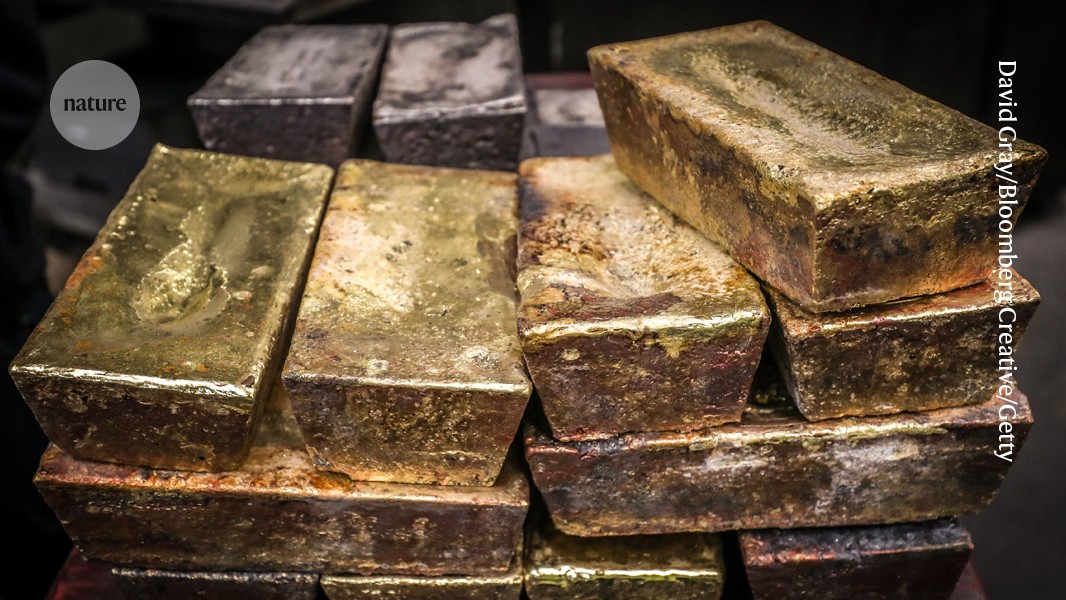
Gold has long been valued for its brilliant, long lasting shine. Now, researchers at Tulane University have uncovered an important reason why the precious metal remains so resistant to tarnishing. Their findings show that gold's durability is not determined by its chemistry alone. Instead, the arrangement of atoms on its surface plays a critical role.
The study, published in Physical Review Letters, found that atoms on certain gold surfaces naturally shift into protective patterns that make it extremely difficult for oxygen to react with the metal.
This newly identified behavior helps explain why gold jewelry, coins, and other objects can retain their luster for centuries. It could also help scientists develop more effective gold based catalysts for industrial manufacturing and clean energy technologies.
Gold's Hidden Atomic Defense
"People have generally thought gold doesn't tarnish simply because it doesn't interact strongly with oxygen," said Matthew Montemore, associate professor in Chemical Engineering in Tulane's School of Science and Engineering. "What we show is that for two of the most common gold surface types, the surface atoms actually rearrange themselves in a way that makes the gold much more resistant to oxidation."