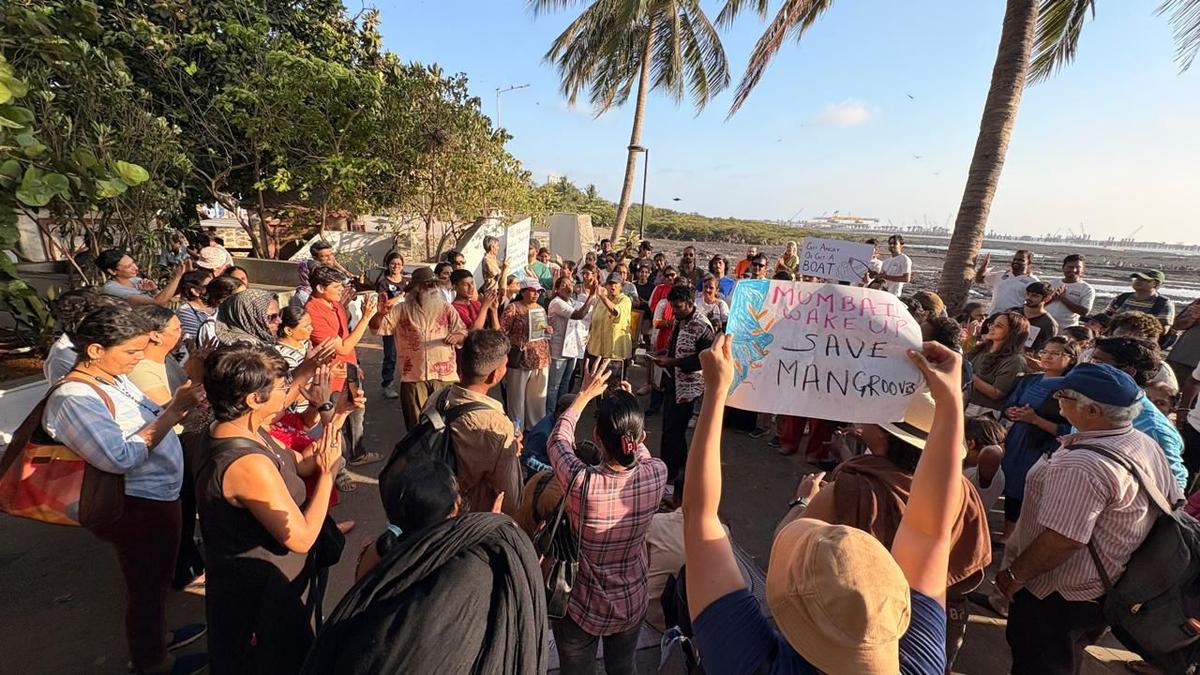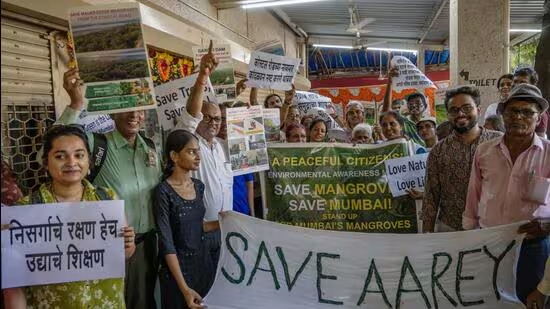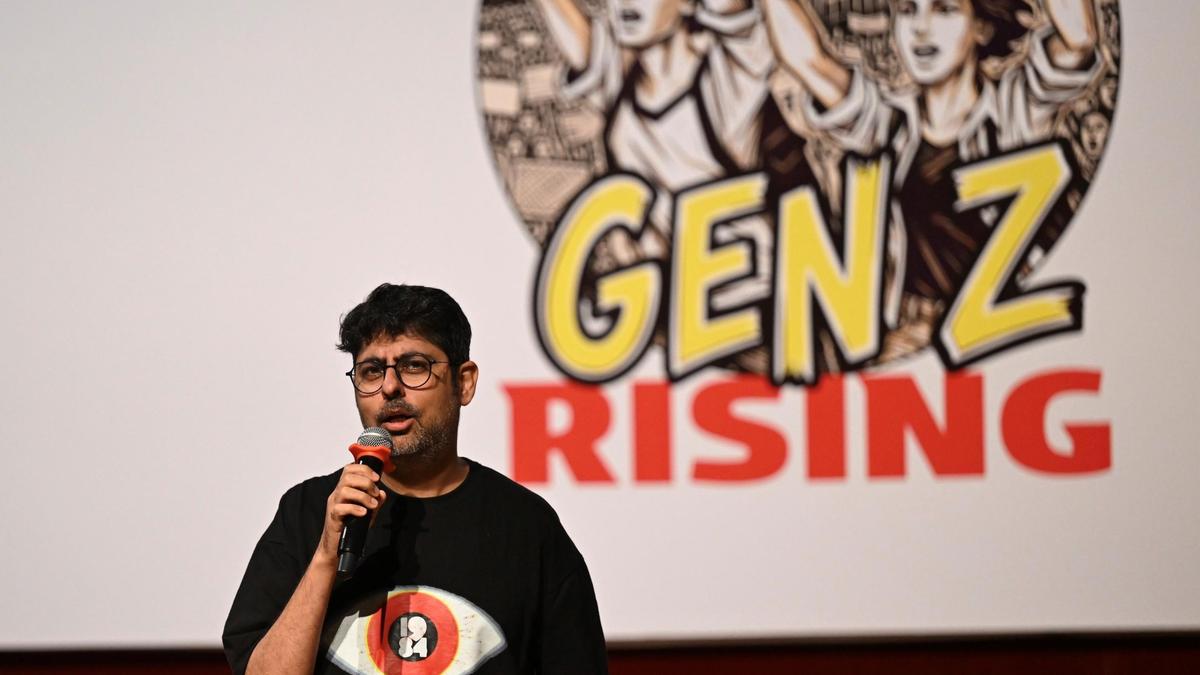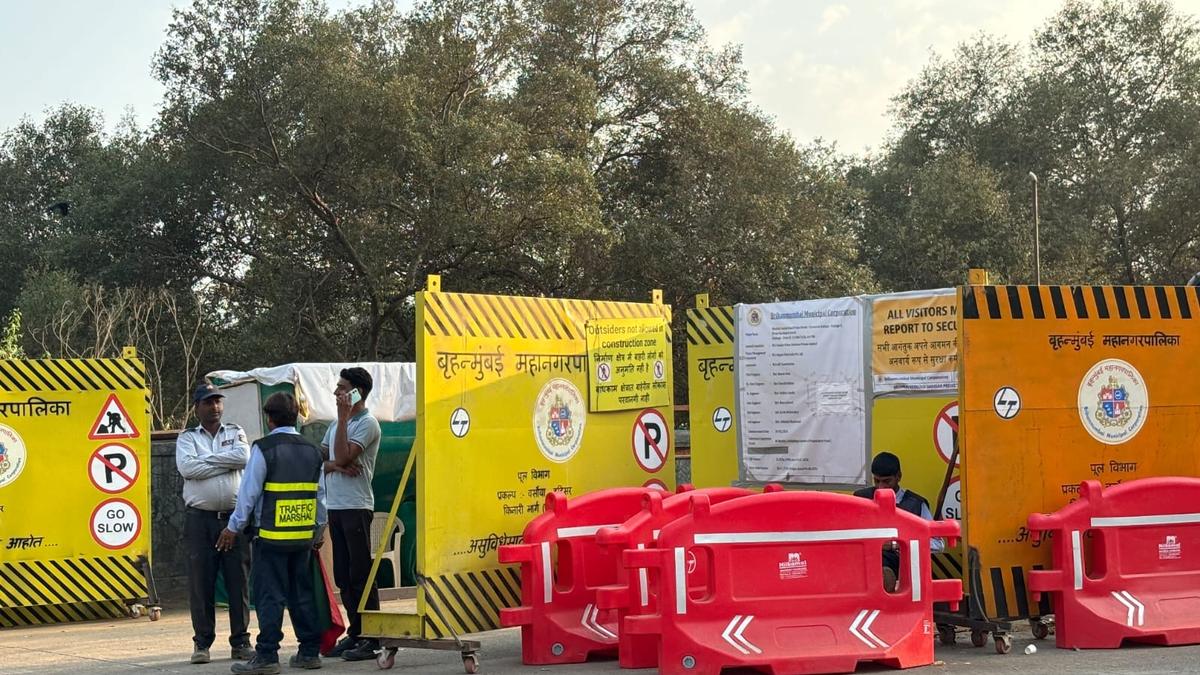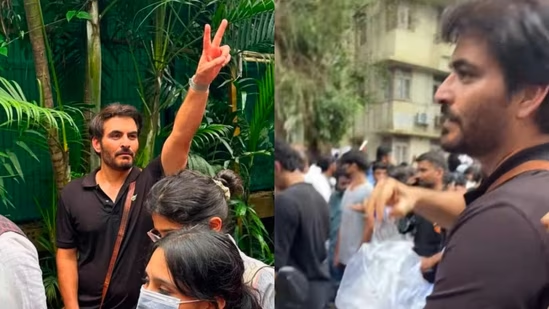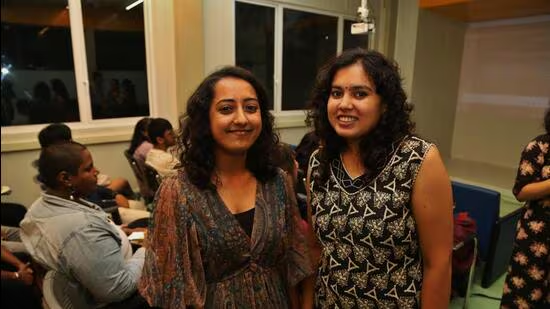
MUMBAI: On a Saturday evening in Thane, nearly 50 young people, most of them in their 20s, gathered after work to watch a documentary. For the next 75 minutes, they barely moved. As The Last Mangroves of Mumbai unfolded, the room fell silent. Familiar faces of activists, lawyers, researchers, fisherfolk and ordinary Mumbaikars appeared on screen, speaking calmly but passionately about a campaign to protect the city’s mangroves. By the time the credits rolled, the audience seemed less like spectators and more like participants in a movement.Thane, India - July -11, 2026:Aruna Jade ( left Side) bansari Kothari ( Right side) -Envoiroment documentary film maker- Environmental enthusiasts watch a documentary on environmental conservation during an awareness programme ,in Thane ,in Mumbai, India, on, Saturday, July -11, 2026. ( photo by Praful Gangurde / Hindustan Times ) (praful Gangurde)The opening scene sets the tone. As a group of citizens sing in protest against the proposed Mumbai Coastal Road (North), the documentary makes it clear that this is not merely a film about a road project. It is the story of a citizens’ movement that began with ordinary Mumbaikars questioning whether development must come at the cost of one of Mumbai’s most fragile ecosystems.Directed and written by Mumbai-based musician Aruna Jade in her documentary debut, The Last Mangroves of Mumbai: Mumbai’s Fight for Mangroves is presented by the Save Mumbai Mangroves (SMM) citizens’ movement, which has spearheaded the campaign against the diversion and felling of over 45,000 mangroves for the Mumbai Coastal Road (North) project.The proposed 26.3-km Mumbai Coastal Road (North), also known as the Versova-Bhayandar Coastal Road, is intended to improve north-south connectivity along Mumbai’s western coastline and reduce travel time between Versova and Bhayandar. Estimated to cost over ₹22,000 crore, it is the northern extension of the existing Mumbai Coastal Road.According to project documents, nearly 60,000 mangroves spread across 103.65 hectares will be affected. Of these, 45,675 mangroves have been approved for diversion, around 9,000 will be permanently felled and the remaining 36,000 are expected to be temporarily impacted during construction. The Bombay High Court cleared the proposal in December 2025, a decision later upheld by the Supreme Court, subject to compensatory afforestation and long-term ecological monitoring. Construction commenced after the required permissions were granted in January this year.Drawing on more than a year of archival footage, public hearings, protests, RTI documents, official records, research and site visits, the documentary pieces together the story of a citizens’ campaign as it unfolded. Rather than relying on narration, it lets environmentalists, lawyers, urban planners, researchers, members of the Koli community and ordinary citizens tell the story in their own words.Jade said the documentary is an attempt to reach the many Mumbaikars who stand to be affected by the project but, she believes, have been misinformed or only selectively informed that it will simply increase property values. Through the film, she hopes to engage with these residents and highlight what she describes as the project’s long-term environmental and social consequences.“People think they’ll get four or five FSI if the project comes up. But what will you do with that FSI if the city gets submerged and your neighbourhood is flooded?” Jade said.“The documentary explores the concerns raised by citizens during public hearings and examines how the civic body responded to them,” said Bansari Kothari of Save Mumbai Mangroves, who also features in the film.The film argues that the debate extends far beyond one stretch of mangroves. Those involved in the campaign say the decisions taken here could shape how future infrastructure projects are planned across the Mumbai Metropolitan Region.It also highlights an alternative alignment proposed by Bombay Greenway, which campaigners say could save the popular Nana Nani Park while meeting the project’s connectivity objectives. However, Abhijit Bangar, additional municipal commissioner (Projects), has maintained that the proposal is not feasible.Among those featured in the documentary are Alan Abraham of Bombay Greenway, urban researcher Hussain Indorewala, environmentalist Debi Goenka of the Conservation Action Trust, Vanashakti director Stalin N Dayanand, lawyers, researchers, fisherfolk, residents associated with the campaign and several ordinary Mumbaikars. Actor and environmental advocate Dia Mirza also appears in the film.For Dayanand, the documentary is an important record of a citizens’ movement told by the people who built it.“It shows that citizens can create their own platforms to document issues and also speak for themselves. This would help citizens raise their own voice,” he said, describing it as one of the most comprehensive accounts of the campaign.“I hope this film gives young people the confidence to participate in shaping the future of their own cities,” Mirza said.Jade said the filmmakers sought the Brihanmumbai Municipal Corporation’s perspective while making the documentary. According to her, they approached Abhijit Bangar, who said he would check with the municipal commissioner but did not respond thereafter. HT could not independently confirm this with Bangar.
From protest to big screen: Citizens’ movement for saving Mumbai’s last mangroves comes alive in documentary
MUMBAI: On a Saturday evening in Thane, nearly 50 young people, most of them in their 20s, gathered after work to watch a documentary | Mumbai news
805 words~4 min read