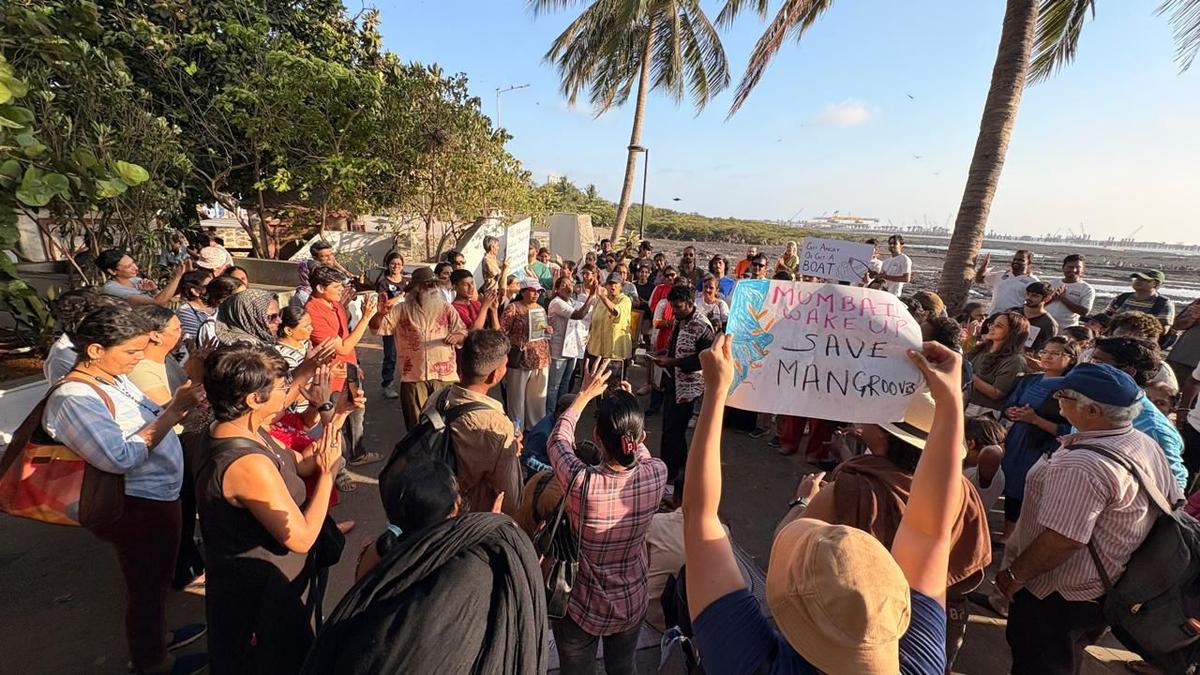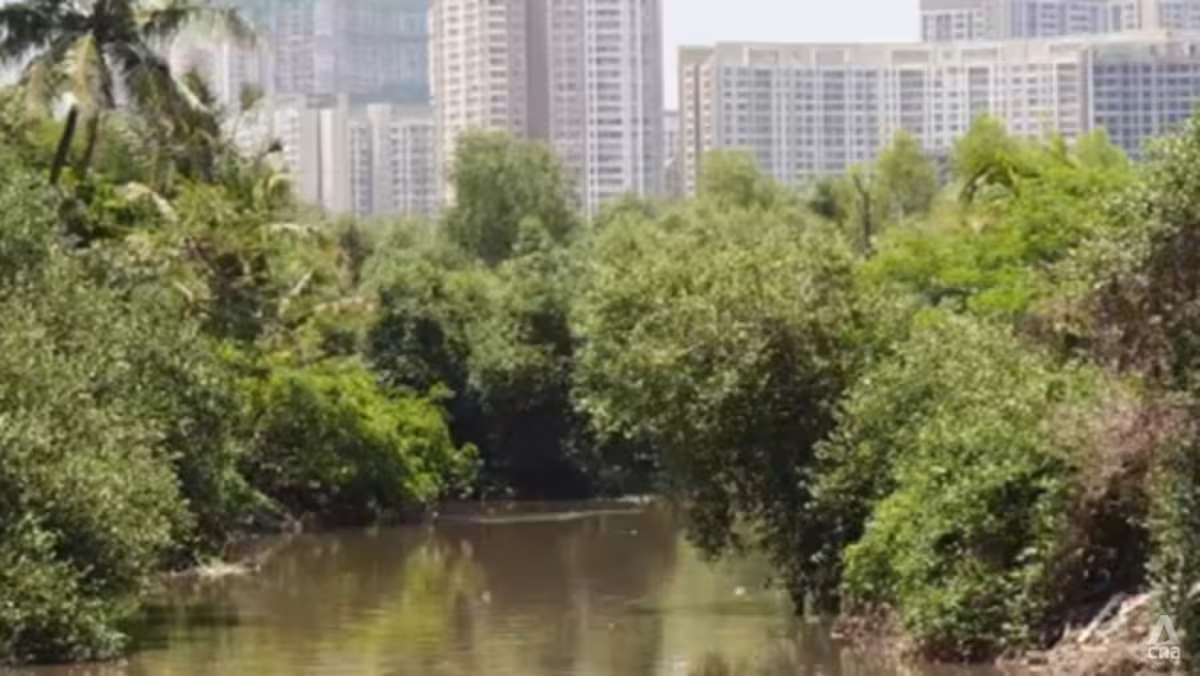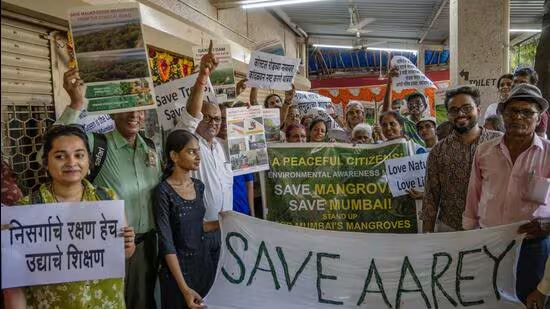
MUMBAI: Mumbai’s environmental warriors marked World Environment Day on Friday with a show of solidarity, as activists, environmentalists, urban planners, lawyers and citizens gathered in Goregaon to flag what they described as growing threats to the city’s forests, mangroves, environment and open spaces.iiMumbai, India - June 05, 2026: Hussain Indorewala, Assistant Professor and urban researcher at the Kamla Raheja Vidyanidhi Institute for Architecture and Environmental Studies (KRVIA)speaking at a public meeting followed by Rally under the theme of Challenges confronting the environment movement at Goregaon in mumbai, India, on Thursday, June 04, 2026. (Photo by Satish Bate/ Hindustan Times) (Hindustan Times)The event began with a rally from Parish of Our Lady of the Rosary to the Keshav Gore Smarak Trust Hall, where around 100 citizens attended a public meeting on the challenges confronting Mumbai’s environmental movement. Organised by the Samvidhan Jagar Samiti, the Bombay Catholic Sabha and the India Greens Party, the gathering brought together representatives of Save Mumbai Mangroves, Save Aarey, Amchi Mumbai Amchi BEST, Save Rani Baug Botanical Garden Foundation, Young Green and several other citizen groups.Opening the discussion, Advocate Lara Jesani said that Mumbai was standing at a critical juncture where environmental concerns were increasingly being overridden in the name of development. She argued that legal frameworks were being used to facilitate environmental destruction, limiting the ability of courts to provide remedies. The answer, she said, lay in active public participation and sustained citizen engagement to ensure that institutions remained accountable and laws reflected the aspirations and concerns of people.Hussain Indorewala, urban planner and professor at the Kamla Raheja Vidyanidhi Institute for Architecture and Environmental Studies,and also the co convenor of Amchi Mumbai Amchi BEST, a citizens’ platform advocating better bus services, said the most effective environmental intervention would be to strengthen public transport and push for policy changes that prioritise sustainable mobility. Criticising what he described as a growing emphasis on car-centric infrastructure, he emphasised that public transport should take precedence in urban planning.He said that projects such as the Coastal Road, which have impacted mangroves, offer limited public benefit and that investment in public transport would have been a more sustainable alternative.A significant portion of the discussion centred on the future of the Sanjay Gandhi National Park (SGNP) and its eco-sensitive zone. Referring to the Maharashtra government’s March 2026 approval of the Zonal Master Plan for the eco-sensitive zone of SGNP, Amrita Bhattacharjee of the Save Aarey movement warned that the plan would accelerate ecological degradation in and around the national park.“We have already been steadily losing biodiversity and critical ecosystems around SGNP. The final master plan will sound the death knell for the park and open up large tracts for so-called development,” she said.Bhattacharjee, who was associated with the movement opposing the Metro 3 car shed in Aarey, also alleged that development activities had altered the natural drainage patterns in the area. Referring to flooding in and around Aarey, she claimed that sections of the landscape now experienced significant waterlogging during heavy rainfall, which she attributed to ecological changes brought about by infrastructure interventions.Mangrove destruction linked to the Mumbai Coastal Road (North) project also emerged as a key concern. Chandrakant Suvarna of Save Mumbai Mangroves said that activists had spent months raising public awareness, filing complaints and RTIs and approaching authorities over the issue but had received no satisfactory response.Suvarna alleged that the group had proposed an alternative alignment for the project that would have avoided damage to mangroves but the proposal had not elicited any response from the civic administration. The Mumbai Coastal Road (North) has drawn opposition from environmental groups because approvals granted for the project could affect around 45,000 mangroves, making it one of the most contentious environmental issues in the city in recent years.Additional Municipal Commissioner (projects) Abhijit Bangar commenting on the alternative plan said, when we go ahead with any plan all the alternatives are thought and we have gone ahead with the most viable option , the proposed alternative plan seems to be bereft of any details .Shubhada Nikharage, founder trustee of the Save Rani Bagh Botanical Garden Foundation, highlighted how the Foundation had successfully opposedBMC’s plan in 2007 to establish a zoo to international standards in V.J.B. Botanical Garden and Zoo (popularly called Rani Bagh), at a price tag of ₹433 crore, following the opposition the project was eventually cancelled this year. This proposal would have decimated a thriving heritage botanical garden and destroyed hundreds of age-old precious trees, and open spaces with in the garden, she added.
Mumbai Greens rally against ‘car-centric development’, decimation of forests and mangroves
Opening the discussion, Advocate Lara Jesani said that Mumbai was standing at a critical juncture where environmental concerns were increasingly being overridden in the name of development. She argued that legal frameworks were being used to facilitate environmental destruction, limiting the ability of courts to provide remedies | Mumbai news
751 words~3 min read