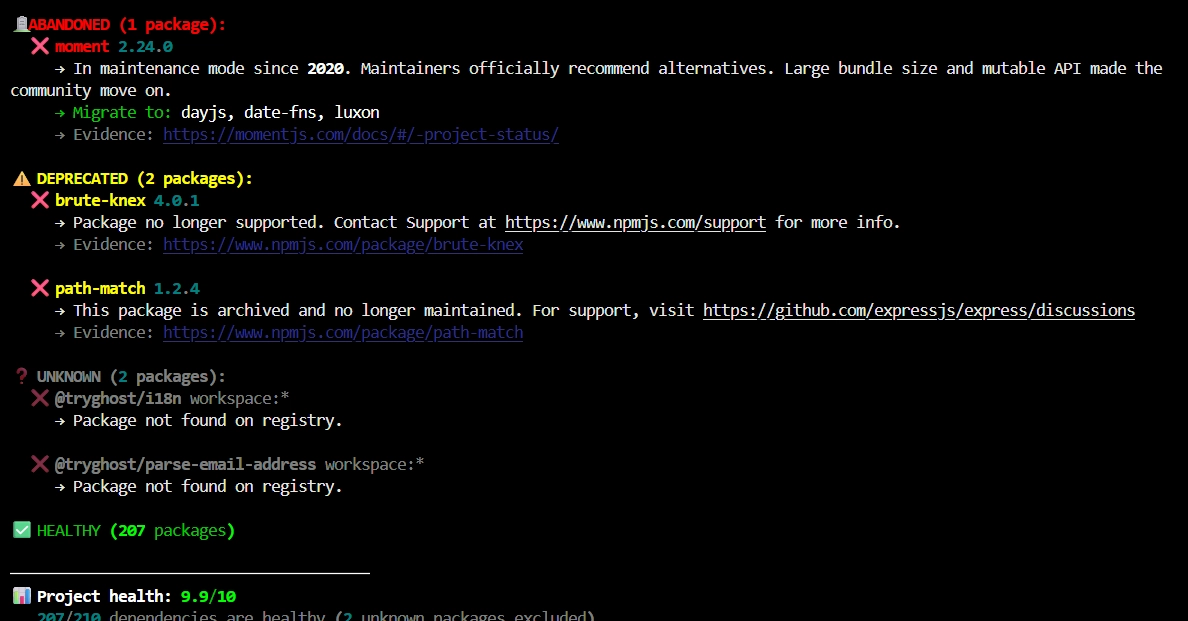
A practical walkthrough of auditing, updating, and replacing dependencies using Yarn.
Front-end projects rarely become hard to maintain overnight. Instead, complexity builds gradually as dependencies accumulate, decisions age, and patterns evolve. At some point, you realize the application still works, but every change carries hidden risk. This article is a practical guide based on a real experience maintaining a legacy project that had passed through multiple developers and, over time, became difficult to manage due to inconsistent dependencies, weak documentation, and lack of technical ownership.
Is this really necessary?
Before anything else, it is worth understanding the main reasons to care about keeping your project’s dependencies up to date.
Accumulated technical risk Outdated libraries may contain security vulnerabilities, performance issues, or bugs that have already been fixed in newer versions. As updates are postponed, these risks accumulate and become harder to control.