npm Dependencies: How to Evaluate a Library Before Shipping It to Production
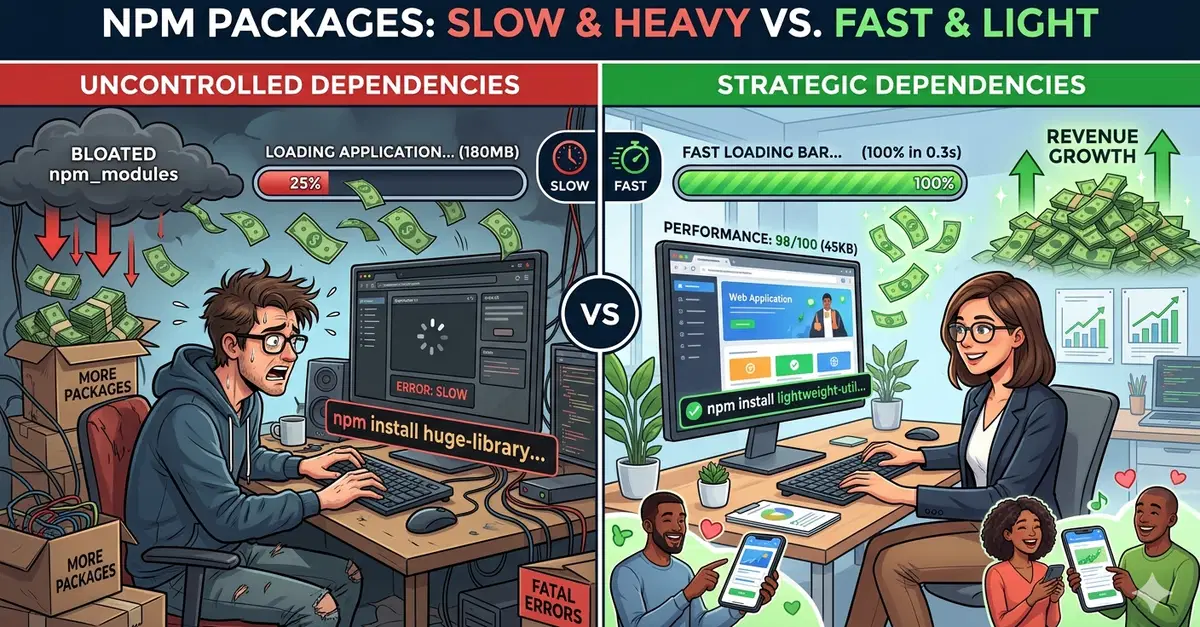
Back in 2005, when I was 16 and managing the network at a cyber café, I learned something no manual ever taught me: every cable you plugged in was debt. If the vendor for that cable disappeared or changed the connector, the problem was yours. Not the vendor's, not the customer's. Yours. Today, when I look at a package.json with 180 direct dependencies in a TypeScript project, I think exactly the same thing. Every entry in that file is a cable someone is going to have to maintain. And in most cases, that someone is you.
My take is direct: adding an npm dependency isn't just installing code — it's assuming its maintenance, its CVE history, its transitive dependencies, and the exit cost when the library gets abandoned. The question isn't "does it work?" The question is "what happens when it stops working in six months?"
Why Evaluating npm Dependencies Is a Maintenance Decision, Not Just a Security One
The official npm documentation defines a package as "a file or directory described by a package.json" (npm docs). That's all npm guarantees as a platform: that the file exists and has metadata. Nothing about whether the author is still active, whether it has tests, whether the types are correct, or whether you'll be able to upgrade in two years without breaking half the system.