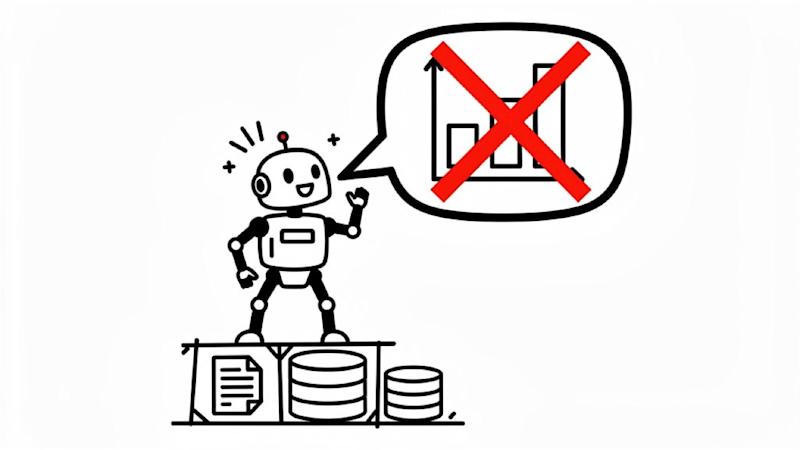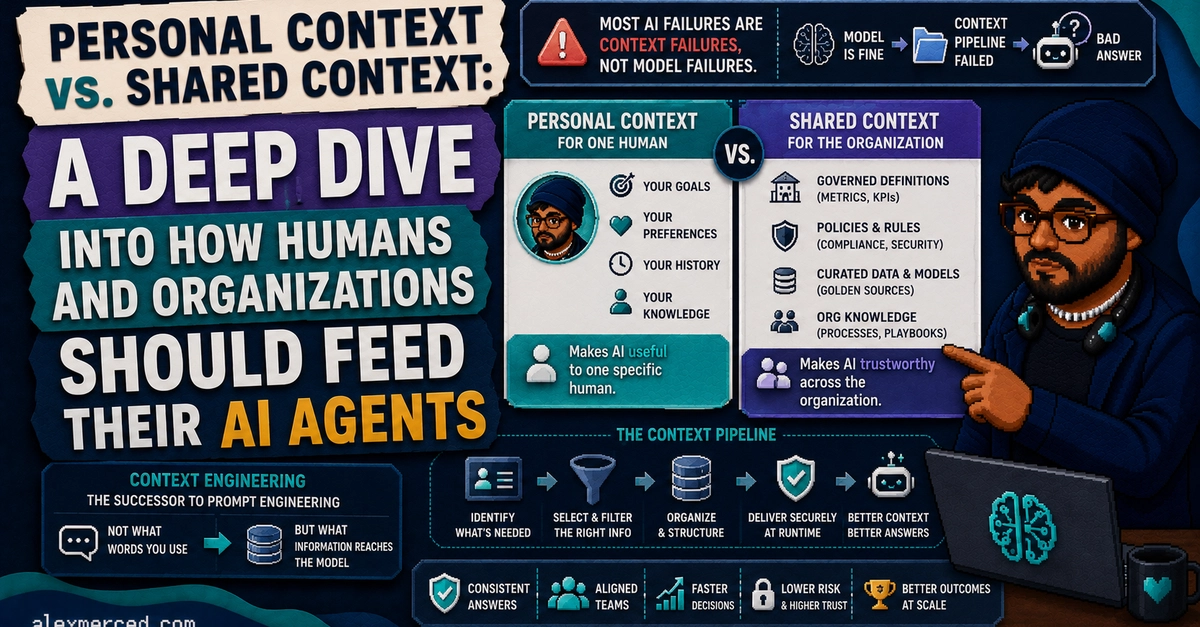
The most important discovery of the agent era fits in one sentence: most AI failures are context failures, not model failures. When your assistant gives a generic answer, forgets what you told it last week, invents a metric definition, or confidently applies last quarter's policy, the model underneath was usually working fine. What failed was the pipeline that decides what the model knows at the moment it answers.
The industry has a name for the discipline that fixes this: context engineering, the successor to prompt engineering, concerned not with what words you use but with what configuration of information reaches the model at decision time. And within context engineering, one distinction matters more than any other, because it splits the problem into two genuinely different games: personal context, the accumulated knowledge that makes an AI useful to one specific human, and shared context, the governed knowledge that makes AI trustworthy across an organization.
I live on both sides of that split. Personally, I run an intensive AI-assisted content operation, weekly newsletters, long-form articles, books, built on carefully engineered personal context: style rules, source pipelines, project files, and accumulated preferences that make my tools an extension of how I work. Professionally, I spend my days in the enterprise version of the problem, where the question is how thousands of employees and their agents can draw on organizational knowledge without shredding permissions, provenance, or truth. The two games share vocabulary and diverge on almost everything else: what works, what breaks, and what the failure modes cost.