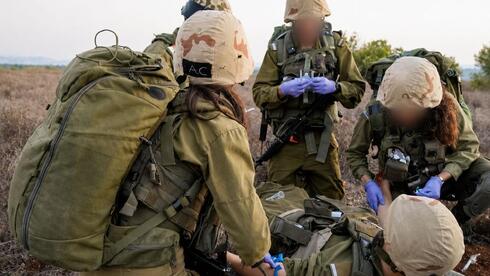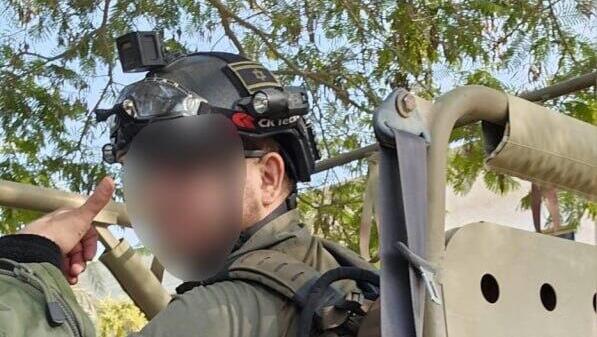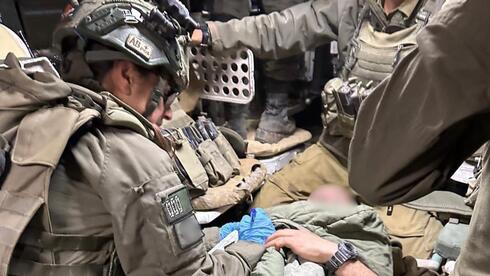
Capt. (res.) Dr. M. left the safety of a major hospital to serve as a combat doctor in Gaza, Lebanon and Syria; carrying dozens of kilograms of gear, she treats wounded soldiers under fire, including a fighter who lost both legsSarit Rosenblum|Deep in the darkness somewhere in southern Lebanon, a reserve female officer and doctor walks carefully through the terrain. On her back, she carries medical equipment weighing dozens of kilograms. In her hand, she holds a dark walking stick, using it to find her way and avoid stumbling. Around her there is maximum alertness and a silence that could explode at any moment.Capt. (res.) Dr. M. is an unusual figure, even in a war where the extraordinary has become routine. In civilian life, she is a senior physician at a major hospital in central Israel, an experienced and respected medical professional. Gallery'I wasn’t sure they would accept someone my age'; Capt. (res.) Dr. M. treating wounded soldiers on the front lines (Photo: IDF Spokesperson’s Unit)But since October 7, she has been serving in the IDF reserves. After initially serving as a doctor with the Paratroopers Brigade, joining ground operations, participating in ongoing missions and treating dozens of wounded soldiers, she has spent recent months serving as a combat doctor with the Givati Brigade.M. prefers not to reveal her age, but says she is the mother of two sons who also serve in the IDF. She is at a stage in life when many doctors in her position would choose to remain in the safer, air-conditioned hospital corridors.Her children have long since grown up, and life could have become quieter. But then the war began. She chose, on her own initiative, to replace the sterile environment of the emergency room with sleeping on broken floors, first in Gaza and later in Lebanon, alongside soldiers, mostly the same age as her sons.Although her civilian medical specialty remains confidential at her request, it is a highly sought-after and critical field on the battlefield. “In the IDF, this is a very needed profession,” Dr. M. says, fully aware of the added value she brings to the field. “Let’s just say I’m not afraid of routine medicine or trauma, not major trauma and not minor trauma.”At the start of the war, when she sought to do her part, M. was initially assigned to a rear-area role. But as soon as the opportunity arose, she refused to stay behind and requested to serve closer to the front lines.“They brought me back from an exemption I had held for many years,” she says. “At the hospital, I was involved in Home Front Command training and emergency preparedness efforts, which is how I developed a connection with the commanders there. “When they were leaving the hospital, I asked them: ‘Do you need doctors?’ “I wasn’t sure they would accept someone my age. I thought they might assign me to a clinic somewhere. Instead, they said: ‘Great. Do you have time? Go into Gaza.’”The decision to enter the heart of the fighting created a complicated family situation. “My first thought was not to tell them, because why worry them? But then I realized I couldn’t do that. If something had happened, I would be angry myself if one of them had entered there without telling me.“I called my husband and said: ‘Listen, I’m going into Gaza.’ At first, we considered not telling the boys, but given their own military service, we knew there was no way to keep it from them. Their reaction was very moving: ‘Mom, you lost the right to worry about us. From now on, we worry about you.’”Since then, she has moved with the forces across multiple fronts. “I went from Gaza to Lebanon, from there to Syria and then back to Lebanon, including deep operations on all fronts.”In every one of those fronts, there was, and still is, active fighting. Aren’t you afraid?
The female doctor fighting on the front lines: 'I wasn’t sure they’d accept someone my age'
Capt. (res.) Dr. M. left the safety of a major hospital to serve as a combat doctor in Gaza, Lebanon and Syria; carrying dozens of kilograms of gear, she treats wounded soldiers under fire, including a fighter who lost both legs
1,658 words~8 min read