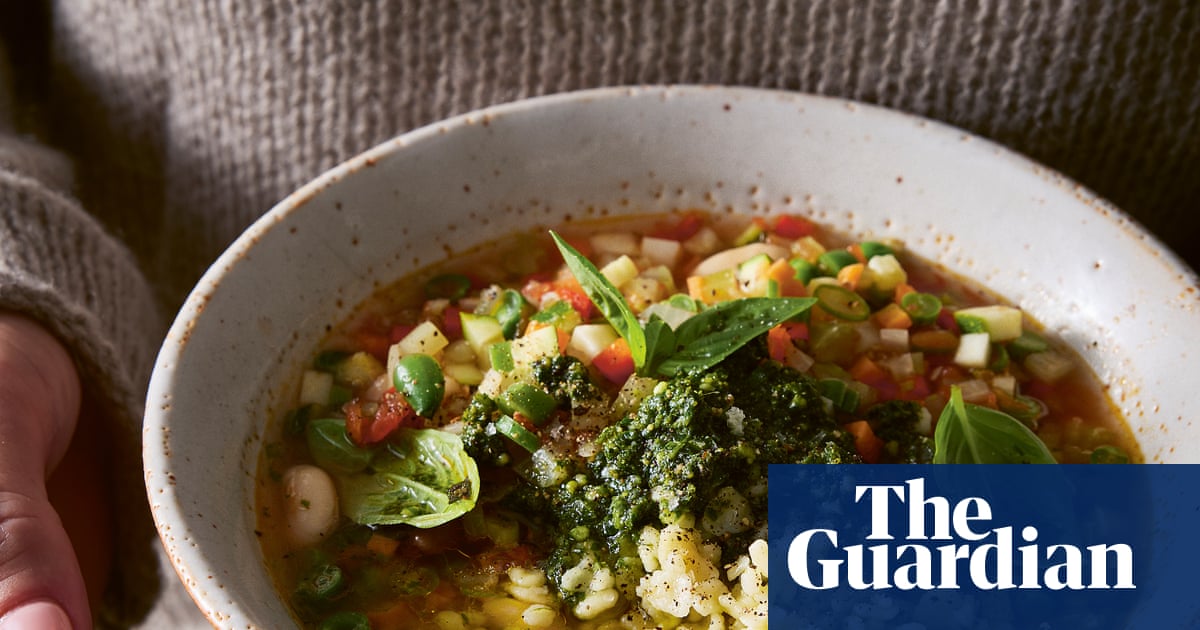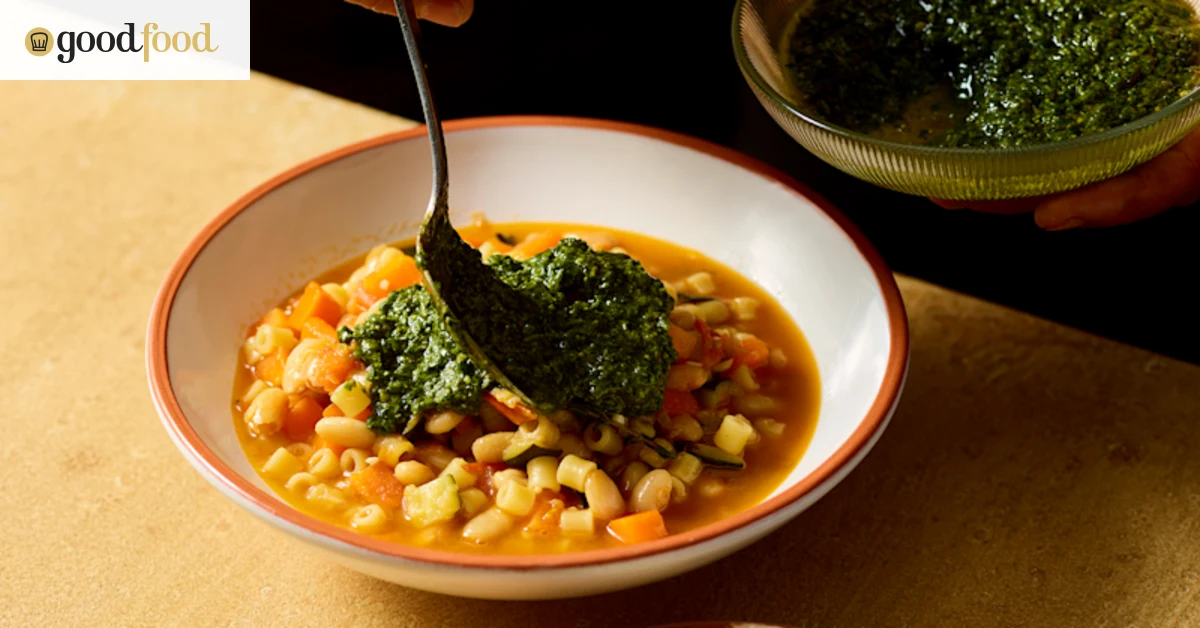
The French-born chef shares a handful of recipes from his latest cookbook, from a soup best described as “Provence in a bowl” to rich cuts of beef simmered gently with vegetables, and a fancy twist on the classic croque-monsieur.Guillaume BrahimiJuly 12, 2026For French-born chef and television presenter Guillaume Brahimi, food has always been part of the fabric of life – not just in the kitchen, but in everyday rituals, family gatherings and village markets.As he writes in his new cookbook, Plat du Tour, “Food is the heartbeat of France. It tells the story of who we are, where we come from and how we live.”Now living in Australia, Brahimi carries that heritage with him, blending it with new influences and perspectives of his home here.His new recipe collection celebrates the best of both worlds, bringing together more than 70 regional recipes inspired by the SBS television series of the same name.From regional classics to simple home-style meals, the recipes celebrate the beauty of seasonal produce and the pleasure of eating well.‘Food is the heartbeat of France. It tells the story of who we are, where we come from and how we live.’Chef Guillaume Brahimi“[The book] combines two great passions of mine – the joy of sharing French food and one of the country’s most loved events, the Tour de France,” Brahimi writes.The best recipes from Australia's leading chefs straight to your inbox.Sign up“Every July, as the riders make their way across the rich culinary landscape of France, they reveal something extraordinary: not only the beauty of France, but also its incredible diversity of regions, traditions and flavours.”As former Sydney Morning Herald restaurant critic Terry Durack writes in the book, Brahimi isn’t just one of Australia’s celebrated chefs, he’s also a proud ambassador for the cuisine of his homeland.“Coq a vin. Salade nicoise. Tarte au chocolat. It’s your own personal tour of France’s greatest and most delicious dishes, in one glorious book.”Here, Brahimi shares four recipes from the collection: vegetable-rich soup au pistou; slow-cooked pot-au-feu; steak frites with bearnaise sauce; and an elevated twist on the classic croque-monsieur.Pistou is the Provencal cousin of pesto.Mark RoperSoup au pistouSoupe au pistou is Provence in a bowl – generous, rustic and full of sunshine. It’s the kind of dish you’ll find in villages across the south of France, made with whatever vegetables are fresh and plentiful, always finished with a dollop of pistou – the Provencal cousin of pesto, made with basil, garlic and olive oil. I like to use white beans, zucchini, carrot and pasta, but it’s a flexible recipe. What matters is the spirit: a soup that brings people together, simple but full of flavour. It’s honest, regional French cooking at its very best.INGREDIENTS2 tbsp extra virgin olive oil1 large onion, finely chopped6 garlic cloves, finely chopped4 carrots, diced to 1cm 3 zucchini, diced to 1cm6 thyme sprigs1 fresh bay leaf5 tomatoes, diced to 1cm 1.2 litres vegetable stock100g macaroni400g canned haricot beans (or other white beans)sea salt and freshly ground black pepper, to tastetoasted, sliced baguette, to servePistou6 garlic cloves50ml extra virgin olive oil, plus 50ml more50g (1 cup) basil65g (⅔ cup) parmesan, finely gratedsea salt and freshly ground black pepper, to tasteMETHODTo make the pistou, crush the garlic with 50ml of olive oil using a mortar and pestle until the garlic forms a paste. Remove the garlic and set aside. Add the remaining 50ml oil and the basil to the mortar and grind until a basil paste forms. Combine the basil paste with the garlic paste, then add the parmesan. Stir to combine, then season with salt and pepper, cover and set aside.Heat the olive oil in a large saucepan over medium-high heat. Add the onion and stir for 1 minute, then add the garlic and saute again. Add the carrots, zucchini, thyme and bay leaf and stir, then add the tomatoes and cook for 2 minutes. Season with salt and pepper. Add the vegetable stock and allow the mixture to come to the boil. Once boiling, add the macaroni and cook according to packet instructions until al dente.When the pasta is almost cooked, add the haricot beans to warm through.Ladle the soup into bowls and top with a large spoonful of the pistou. Serve with toasted baguette on the side.Serves 4Serve this soulful bowl with a spoonful of Dijon mustard, a few cornichons and warm bread on the side.Mark RoperPot-au-feuPot-au-feu is a dish I grew up with, and it’s the ultimate comfort food. It’s not complicated, but it takes time, and that’s what makes it special. The key is in the slow cooking: rich cuts of beef simmered gently with vegetables, marrow bones and a classic bouquet garni until everything is tender and deeply flavoured. I serve it just as it comes – meat, vegetables and broth all together – with a good spoonful of Dijon mustard, a few cornichons and warm bread on the side. If you can’t find marrow bones, beef shanks will work just as well.INGREDIENTS1.5kg beef short ribs400g beef chuck, cut into large dice1 tbsp sea salt1 bouquet garni (see note)2 onions, peeled and studded with cloves2 leeks, white part only, thickly sliced2 celery stalks, roughly chopped1 litre (4 cups) beef stock6 medium white potatoes, peeled and roughly chopped3 large carrots, peeled and roughly chopped2 turnips, peeled and quartered6 x 5 cm beef marrow bonesblack pepper, to tastefinely chopped flat-leaf (Italian) parsley, to serveDijon mustard, to servecornichons, to servewarm bread rolls or sliced baguette, to serveMETHODHalf-fill a stockpot with water. Add the short ribs and chuck, salt and black pepper and bring to a simmer, skimming the surface of any foam and impurities. Add the bouquet garni, onions, leeks and celery and cook gently, uncovered, for 2 hours, skimming the surface whenever necessary, and topping up with beef stock when the water becomes very low.Add the potatoes, carrots, turnips and marrow bones and simmer for another 35 minutes, until the vegetables are tender.Using a slotted spoon, scoop the meat and vegetables from the broth into a dish. Strain the broth through a piece of muslin (cheesecloth) to serve with the meat and vegetables.Serve the meat, vegetables and broth topped with a sprinkle of parsley with Dijon mustard, cornichons and warm bread rolls on the side.Serves 4-6Note: To make the bouquet garni, tie five thyme sprigs, four flat-leaf (Italian) parsley sprigs and two fresh bay leaves together with string.Bearnaise sauce is said to have been invented in 1836 for the opening of Le Pavillon Henri IV. Mark RoperSteak frites with bearnaise sauce and macheSteak frites – the classic pairing of steak and French fries – is a beloved staple of brasseries across Europe, and is often claimed as the national dish by both France and Belgium. This version is served with bearnaise sauce, said to have been invented in 1836 by chef Jules Collinet for the opening of Le Pavillon Henri IV near Paris. Named in honour of the king’s birthplace in Bearn, the sauce is a tribute to one of France’s most popular monarchs – and to its rich culinary tradition.INGREDIENTS8 boiling (waxy) potatoes such as desireevegetable oil, for deep-frying100ml extra virgin olive oil4 x 300g beef sirloin steakssea salt, to taste50g mache, to serveBearnaise reduction100ml white-wine vinegar4 tarragon sprigs1 eschalot (French shallot), roughly sliced5 white peppercorns1 fresh bay leafBearnaise sauce5 egg yolks, lightly whisked25ml bearnaise reduction100g clarified butter, melted3 tbsp finely chopped flat-leaf (Italian) parsley3 tbsp finely chopped tarragon3 tbsp snipped chivessea salt and freshly ground black pepper, to tasteMETHODPeel the potatoes, then cut them into 1cm batons and place them in water overnight. When you’re ready to make the frites, drain and dry the potatoes.To make the reduction, combine all the ingredients in a small saucepan and bring to the boil. Simmer for 2-3 minutes, or until reduced by half. Strain through a fine-mesh sieve, discarding the solids, then set aside to cool.Fill a deep saucepan with vegetable oil and bring to 140C. Add the potatoes and blanch for 6 minutes, until almost tender. Remove the potatoes and drain on paper towels for 30 minutes. Leave the oil in the pan.To prepare for making the bearnaise sauce, fill a saucepan a quarter full of water and bring to the boil. Reduce to a simmer. Place a wet tea towel on your benchtop.To make the bearnaise sauce, combine the egg yolks and reduction in a large mixing bowl. Place the bowl on top of the simmering water, making sure the bowl doesn’t have direct contact with water, and use a large whisk to beat the mixture while rotating the bowl so that the mixture doesn’t catch the sides. Once the sauce starts to turn a creamy pale yellow colour and is thickened and fluffy, remove it from the heat and place the bowl on the wet tea towel. Pour the melted clarified butter into the sauce in a very slow stream while whisking constantly until all the butter is incorporated and the mixture has thickened slightly. Season, then fold the herbs through the sauce. Keep in a warm place until serving. If the sauce is too thick, add a spoonful of warm water.Preheat the oven to 180C fan-forced (200C conventional).Place the vegetable oil back on the heat and bring up to 180C. Add the blanched chips and fry for 9 minutes, turning regularly, until golden and crisp. Drain on paper towel and season with sea salt.To cook the steaks, heat the olive oil in a large heavy-based frypan over medium-high heat. Cook the steaks for 2 minutes on one side, then turn over and cook for 2 minutes more. Place on a baking tray and rest in the oven for 5 minutes.To serve, place steak and chips on the plates and spoon the bearnaise sauce on top of the steak and add a little mache.Serves 4Cook gently so the bread goes golden and crisp while the cheese melts inside. Mark RoperSmoked salmon croque-monsieurThis is my twist on the classic croque-monsieur – a version I like to serve when I want something a little lighter, but still completely indulgent. Instead of ham, I use beautiful smoked salmon, layered with sliced mozzarella, a sprinkle of chives and soft white bread. The trick is to cook it gently, so the bread goes golden and crisp while the cheese melts inside. And just to take it to the next level, I finish each piece with a little spoonful of salmon roe – a nod to my love of luxury, and a perfect burst of flavour and texture. It’s elegant, simple and tres delicieux.INGREDIENTS4 slices white sandwich bread80g room-temperature unsalted butter8 slices smoked salmon8 slices mozzarella2 tsp snipped chives20g salmon roe (optional)METHODLay the four slices of bread on the bench and butter one side of each slice. Turn two of the slices over – these will be your sandwich bases. Add two pieces of salmon to each base, followed by two pieces of mozzarella. Sprinkle the chives on top, then add the remaining salmon and mozzarella slices. Top each sandwich with the remaining bread slices, butter side to the outside.Heat a large frypan over medium heat, add the sandwiches and toast for 3-4 minutes, until nicely browned and the cheese is beginning to melt. Flip the sandwiches and toast on the other side for 3-4 minutes.To serve, remove the crusts and cut each sandwich into quarters. Top two quarters of each sandwich with salmon roe.Serves 2 This is an edited extract from Plat du Tour by Guillaume Brahimi, photography by Mark Roper. Published by Hardie Grant Books, RRP $45.More:Cookbook extractsFrenchComfort foodWinter warmerFrom our partners
‘Generous, rustic and full of sunshine’: How to make Guillaume Brahimi’s comforting soup
The French-born chef shares four recipes from his latest cookbook.
1,925 words~9 min read