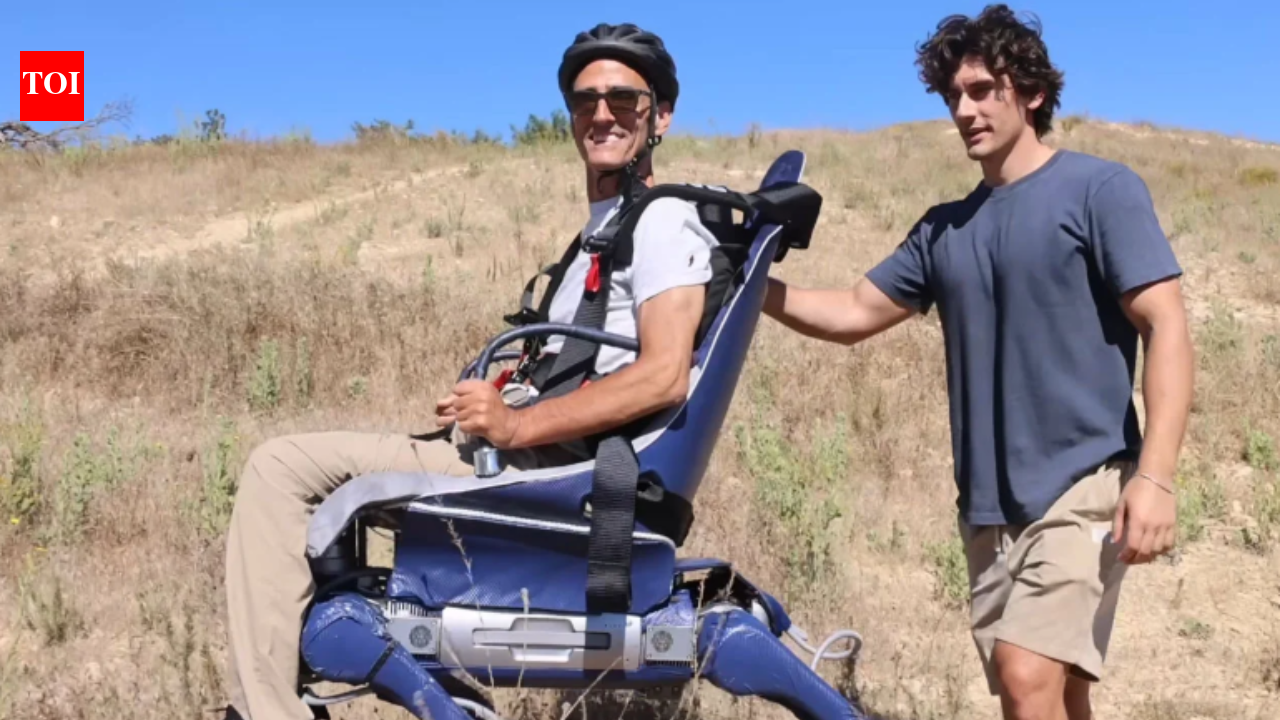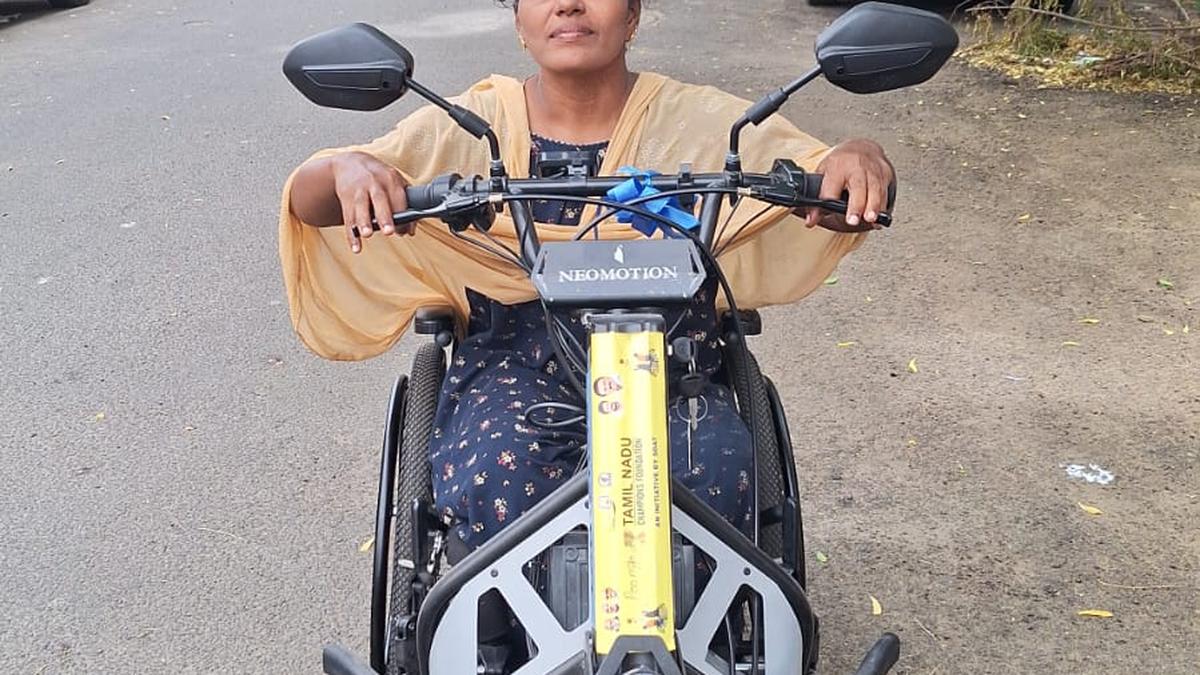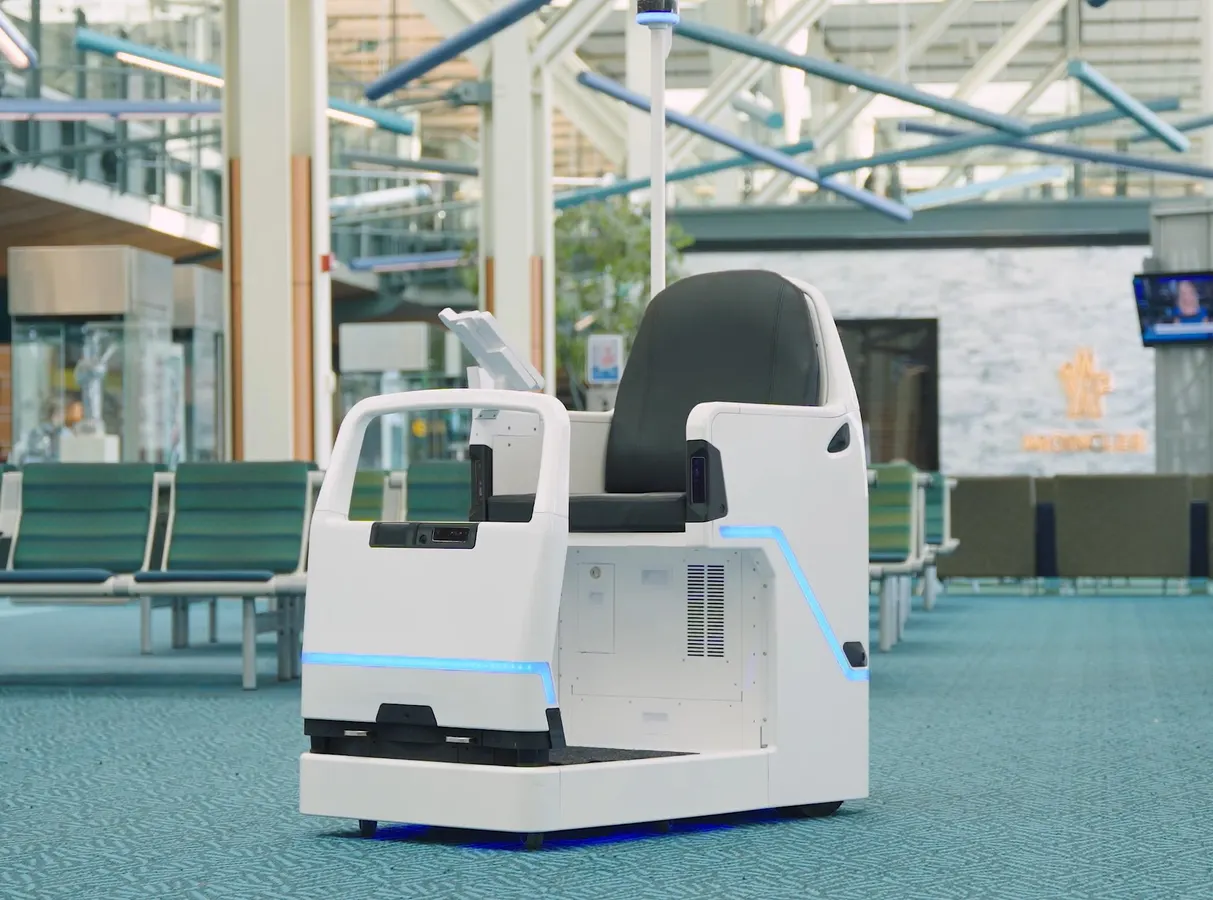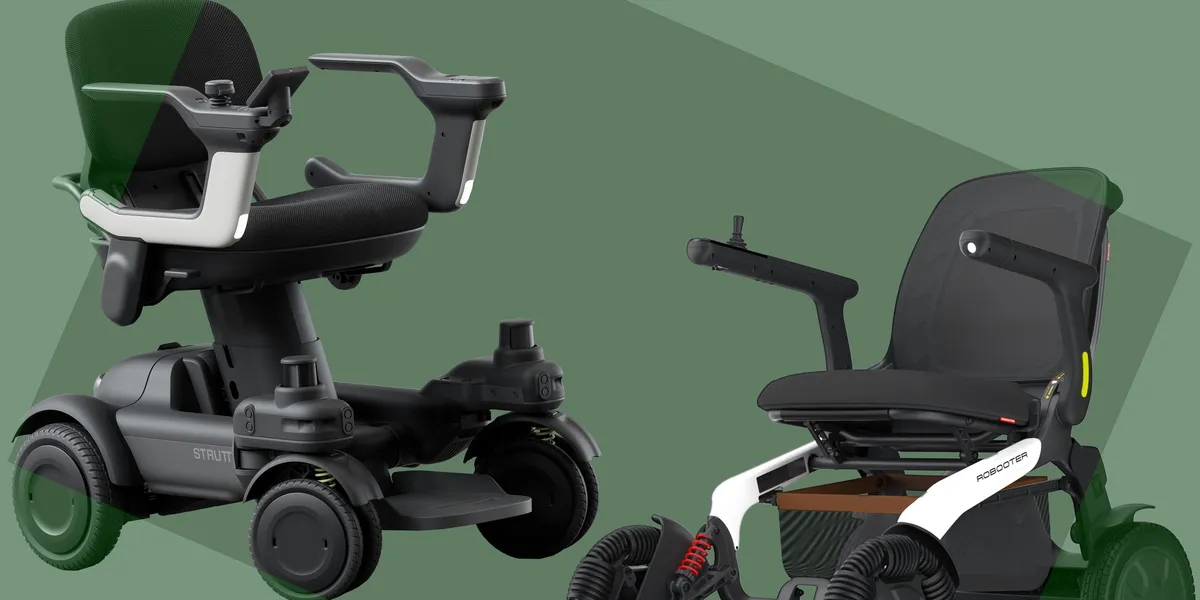
The promise of the smart wheelchair—a powered mobility device capable of navigating spaces on its own—has never been realized for most of the people who might benefit from it most. This year, researchers and companies say they’re starting to close the gap. Two commercial products arriving on U.S. shores this year reveal how differently that claim can be made.In March, the Shanghai-based mobility company Robooter launched a direct-to-consumer U.S. website offering FDA-cleared, app-connected “smart” wheelchairs on the consumer market—with no prescription required, no insurer to argue with, and no waitlist. This month, the EV1 from the Singapore based startup Strutt begins fulfilling pre-orders. Strutt’s smart wheelchair is a sensor-equipped, obstacle-avoiding device also available to anyone online. However, for all its technical capability, the EV1 is not sold or classified as a medical device.For anyone watching assistive mobility technology from the outside, Robooter and EV1 each looks something like a breakthrough. But for the engineers, clinicians, and disability advocates who have spent their careers thinking about what powered mobility actually demands of a wheelchair—and of the (sometimes) disabled user using it—both products raise the same urgent questions: “Smart” according to whom? And what are the inevitable tradeoffs?What Robooter and EV1 Do DifferentlyRobooter’s E80 Lightweight Power Wheelchair and its E60-Pro A All-Terrain Electric Wheelchair ship directly to U.S. consumers. Robooter did not respond to a request for comment. But according to its website, both chairs offer app-based remote steering, automatic folding, and a novice mode that eases first-time users into powered mobility.Robooter says its cruise control lets the chair hold a steady speed without the user continuously pushing the joystick forward. Which it says can reduce hand fatigue—useful for people whose disability causes stamina to drop after sustained movement.The E80 is the lighter of the two chairs, built from carbon fiber, and supports up to 150 kilograms despite weighing only 16 kg. But for all these conveniences, neither the E80 nor the E60-Pro has autonomous navigation or the ability to detect and avoid obstacles. Steering still runs through the joystick, the same as on any conventional power chair.The Strutt EV1 works differently. It combines lidar and camera-based sensors to map its surroundings, letting a user select a destination and have the chair navigate there on its own. The EV1 has picked up a Red Dot Luminary Award, an iF Design Award, and a CES Best of Innovation Award, in part, for that navigation system. But Strutt’s own website carries a disclaimer: the EV1 is not intended for use as a medical device.The self-navgating capability is the line separating EV1 from Robooter’s chairs—and it’s also, according to at least one researcher who has spent two decades building similar systems, the harder half of the problem to solve responsibly.“Autonomous navigation is solvable,” says Christian Mandel, a senior researcher at the German Research Center for Artificial Intelligence in Bremen. “But what still has to be done—we have to prove that it is safe, that it is failure-safe, such that we can cope with, for example, the medical device regulation. Which the Strutt wheelchair does not do.”Ginny Paleg, a pediatric physical therapist from Maryland has watched that unresolved safety question play out in real airports, where a leading commercial smart wheelchair add-on already ferries travelers to their gates. “I am constantly in airports and I see the autonomous wheelchairs,” she says. “The problem is it’s very unreliable. It stops and then an adult has to restart it. Sometimes it doesn’t stop. Sometimes it stops when it sees a shadow.” The Robooter E-60 PRO-A smart wheelchair provides app-based controls for its users, but the person in the seat still does all the steering.RobooterWhat Do Direct-to-Consumer Smart Wheelchairs Trade Away?According to Paleg, Robooter smart wheelchairs like the E80 boast competitive prices and compelling powered-wheelchair features—although lacking any self-driving or self-navigating capability. However, she says, how might a disabled person even assemble the device?“I don’t understand how this could come out of a box,” she says. “Because you have to know if this person is cortically impaired, or if this person has vision impairment? Does this person have intellectual impairment? You have to know what’s needed.”For disabled users to be able to use them, smart wheelchairs must still serve the communities they’re marketed to. And this is where Paleg says regulations and approval processes for medical devices make a difference.“In the current environment, when insurance denies [a smart wheelchair purchase], parents try to go on the secondary market, and things don’t always work,” she says. “We need all those regulatory processes, and we need to be able to use the systems that are in place.”A secondary concern also isn’t addressed using the simple e-commerce approach, she says. “If you’re going to spend that kind of money, it’s something you need. So if I buy something from China, and the child falls off the curb, who’s liable for that? … Who do we hold accountable? The direct-to-consumer approach just doesn’t work.”According to Pooja Viswanathan, CEO and founder of the Toronto-based Braze Mobility, customizability is more than just a nice-to-have for assistive technology that’s actually assistive to the disabled user.“Unlike consumer technologies, there is no such thing as an ‘average’ wheelchair user,” she says. “People have very different physical abilities, cognitive abilities, sensory needs, environments, and personal preferences, and these needs can also change over time. ... I think one of the biggest misconceptions is that we are trying to build a single smart wheelchair that will work for everyone. In reality, the future is likely to be adaptive systems that can personalize their behavior to individual users and continue to adapt as their needs, abilities, and goals change over time.”For instance, a customizable smart wheelchair could beneft from adjustable seats, automatic leg rests, and custom armrests and headrests.Some wheelchair users use a molded seat designed to prevent pressure sores from prolonged sitting. On the other hand, there are those who need programmable functions, such as the ability to elevate their legs or recline the backrest intermittently throughout the day to prevent blood clots by increasing circulation.Depending on the terrain being navigated, a user may also need additional suspension options when spending time outdoors. Other important customization options include alternative driving methods for those who cannot use their hands—including mechanical head joysticks or head-array sensor systems. Sip-and-puff systems can also enable a user to drive using their mouth. These are just a few of the customization options that the direct-to-consumer approach would eliminate—but for some disabled users can be crucial. The Strutt EV1’s sensors build a live map of the room, a step beyond simple remote control. However, Strutt also stresses that their EV1 is not a medical device. StruttWhat Potential Smart Wheelchair Users Risk Being Left Out?And while neither Robooter nor Strutt’s new products fulfill the promise of smart wheelchairs for disabled users, they together describe a direction toward smarter and more powerful assistive technology today.Heather Feldner, a physical therapist and an associate professor in the Department of Rehabilitation Medicine at the University of Washington, says it’s only a matter of time before smart wheelchairs with self-driving capabilities like the EV1’s are ready to be sold for disabled users.“I would say the world has to be ready because there are a lot of people who can benefit from semiautonomous or more fully autonomous devices,” Feldner says. “If we’re having that conversation about cars, and the cars are starting to come, there’s no reason why we shouldn’t be having similar conversations about personal mobility devices.”However, she adds that direct-to-consumer technology can still perform a useful end-run around an unfair marketplace for disabled users.“Unfortunately we are driven by a system where anything that’s labeled as specialty or healthcare related equipment has a much higher cost involved,” Feldner says. “And the way that is paid for is largely out of the hands of the people that are needing the equipment. So in a way, it’s great for a consumer to have the ability to say, ‘This is technology that I need to do what I want to do in the world, and I can access it without going through those channels.’“But for folks who don’t have the socioeconomic means to do that,” she continues, “They’re still left behind. There have been a lot of creative ways that people have dealt with that—like through crowdsourcing for funding or through advocacy and lobbying for things to be covered. But that regulatory piece is challenging I think not just for smart wheelchairs but for a lot of equipment that could benefit people with disabilities.”The tension between Robooter and EV1 is not unique to the U.S. assistive technology market. In Australia, the Melbourne-based Control Bionics sells an autonomous navigation module called DROVE, cleared by that country’s therapeutic goods regulator. But it isn’t sold direct to consumer. In Germany, the Munich-based Munevo‘s head-controlled DRIVE system has cleared both E.U. and U.S. FDA medical device standards, but it replaces a joystick rather than replacing a person’s judgment about where to go.Somewhere between Robooter, Strutt, Control Bionics and Munevo’s technologies lies a genuine “smart wheelchair” that Feldner, Paleg, and Viswanathan have all, in their different ways, been waiting for—one that’s autonomous, safe, approved, prescribable, and available to the people who need it most. That kind of device does not yet exist, anywhere.
Two New Wheelchairs Reveal What “Smart” Really Means Today
App-controlled chairs are not the same as self-driving ones
1,542 words~7 min read