Ji Da-gyum
For over a decade, I’ve navigated the complexities of North Korean affairs, security, and foreign policy from both Seoul and Washington, D.C. As the National Desk Political Team Lead, I track the pulse of geopolitics, closely following developments from the Unification Ministry and the Foreign Ministry. My mornings start with Rodong Sinmun—North Korea’s state mouthpiece—before diving into the day’s headlines from Seoul and Washington.
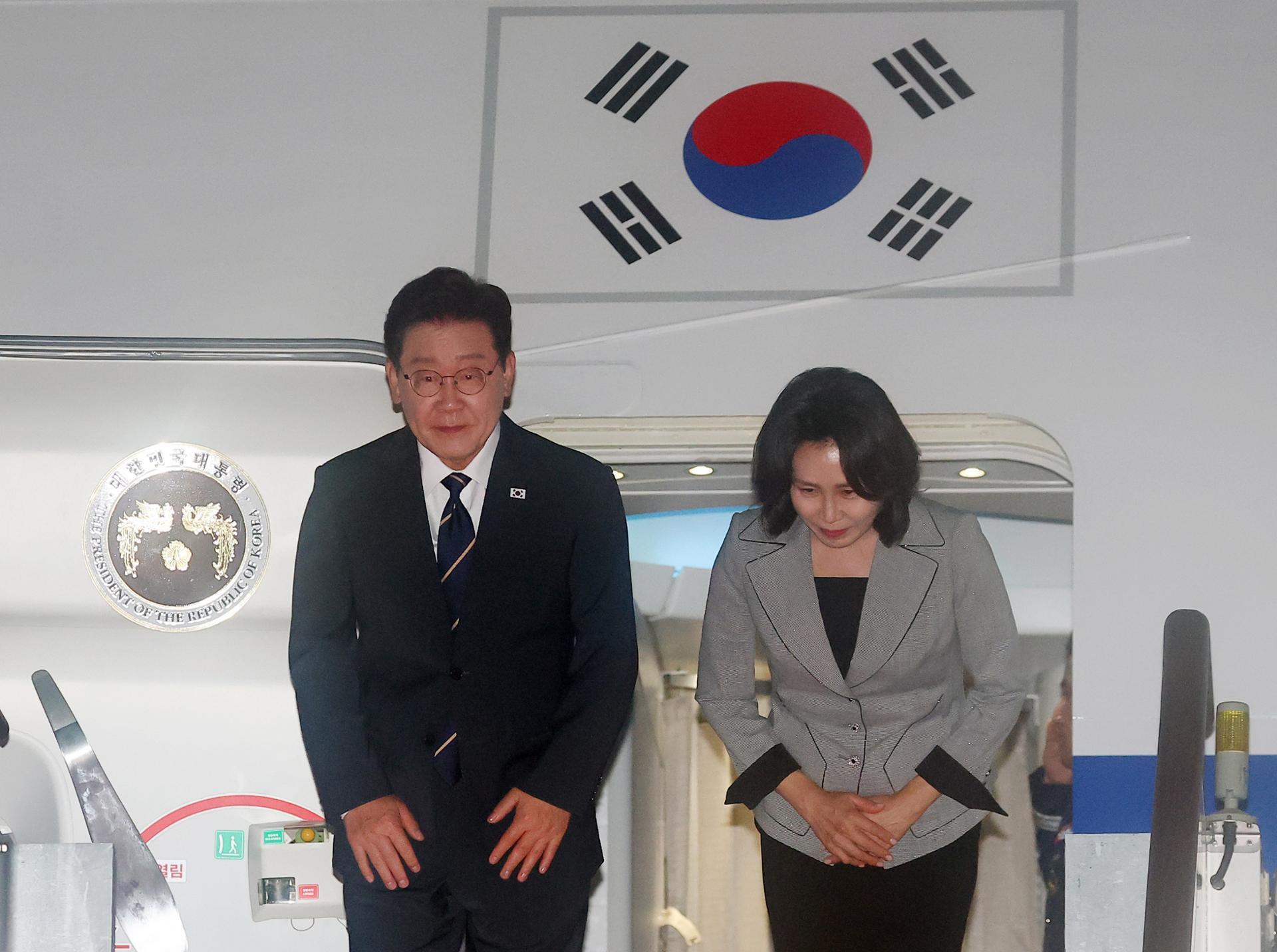
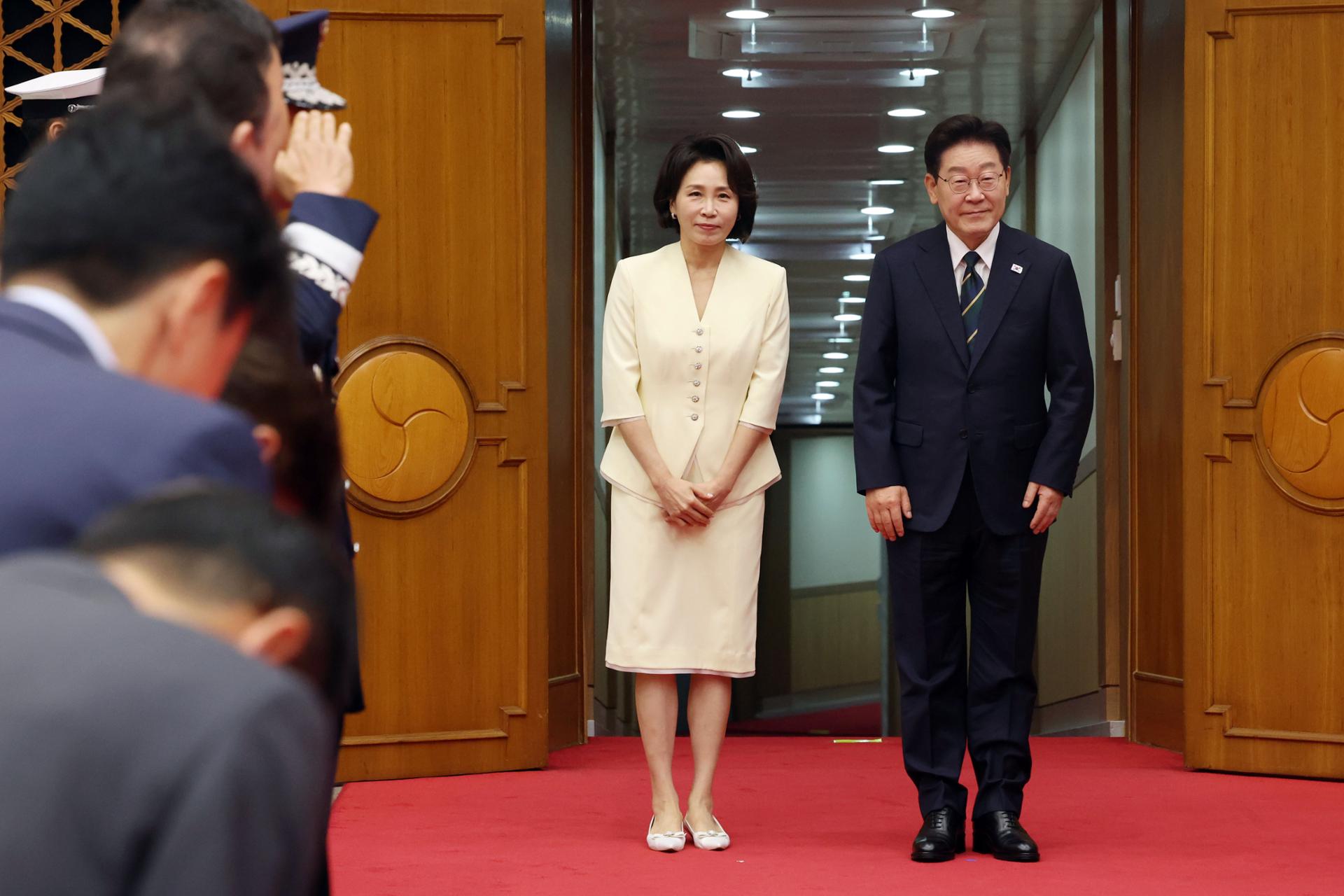
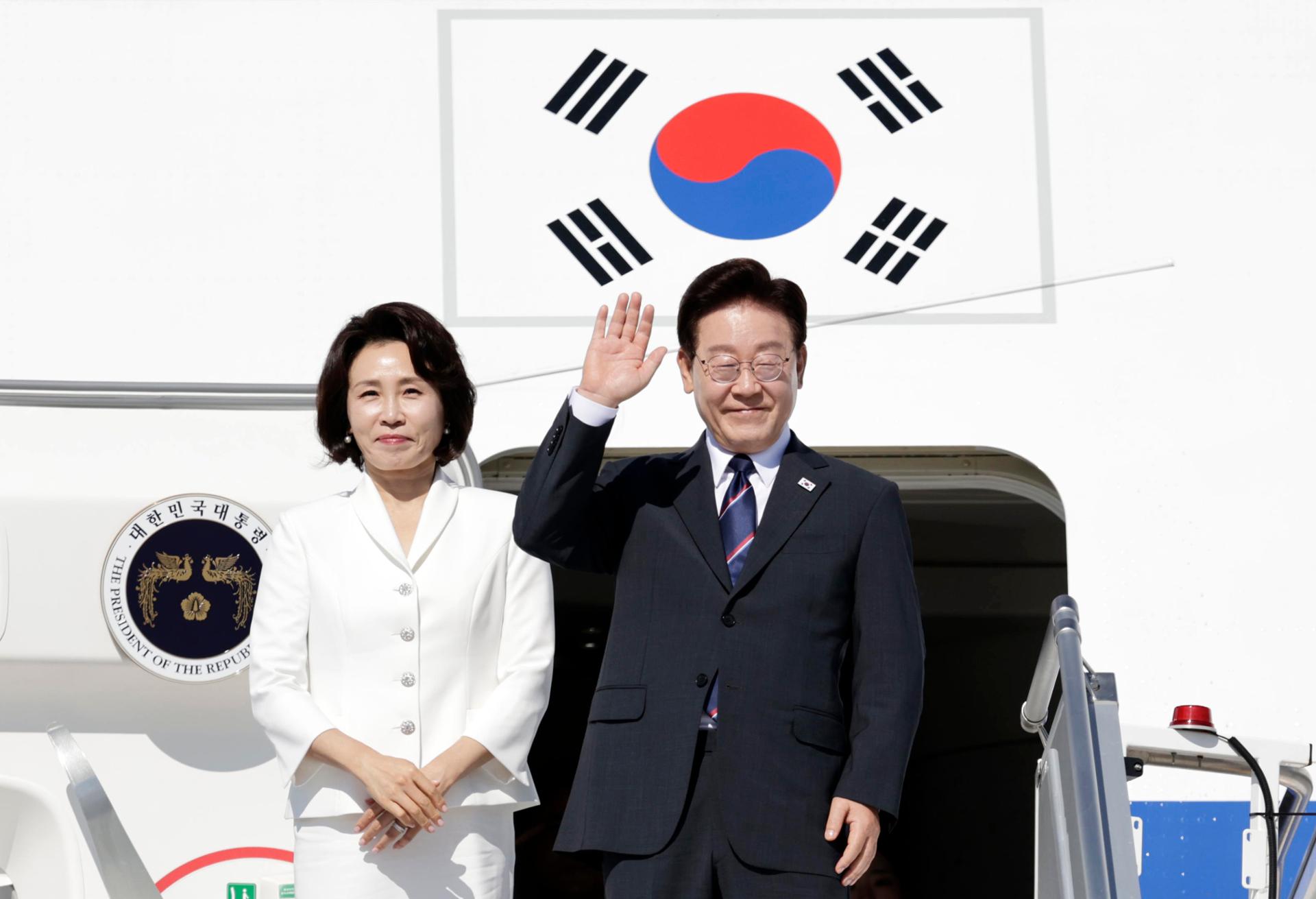
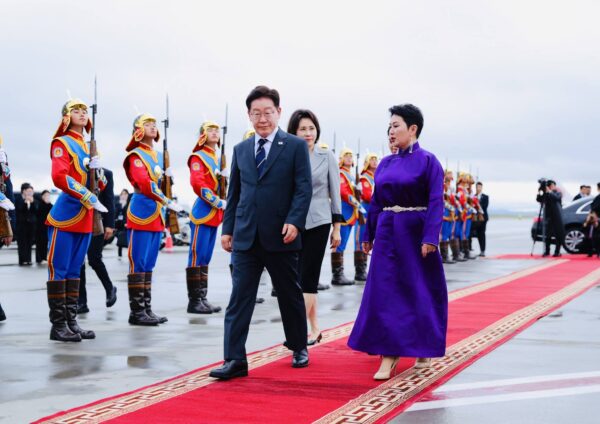
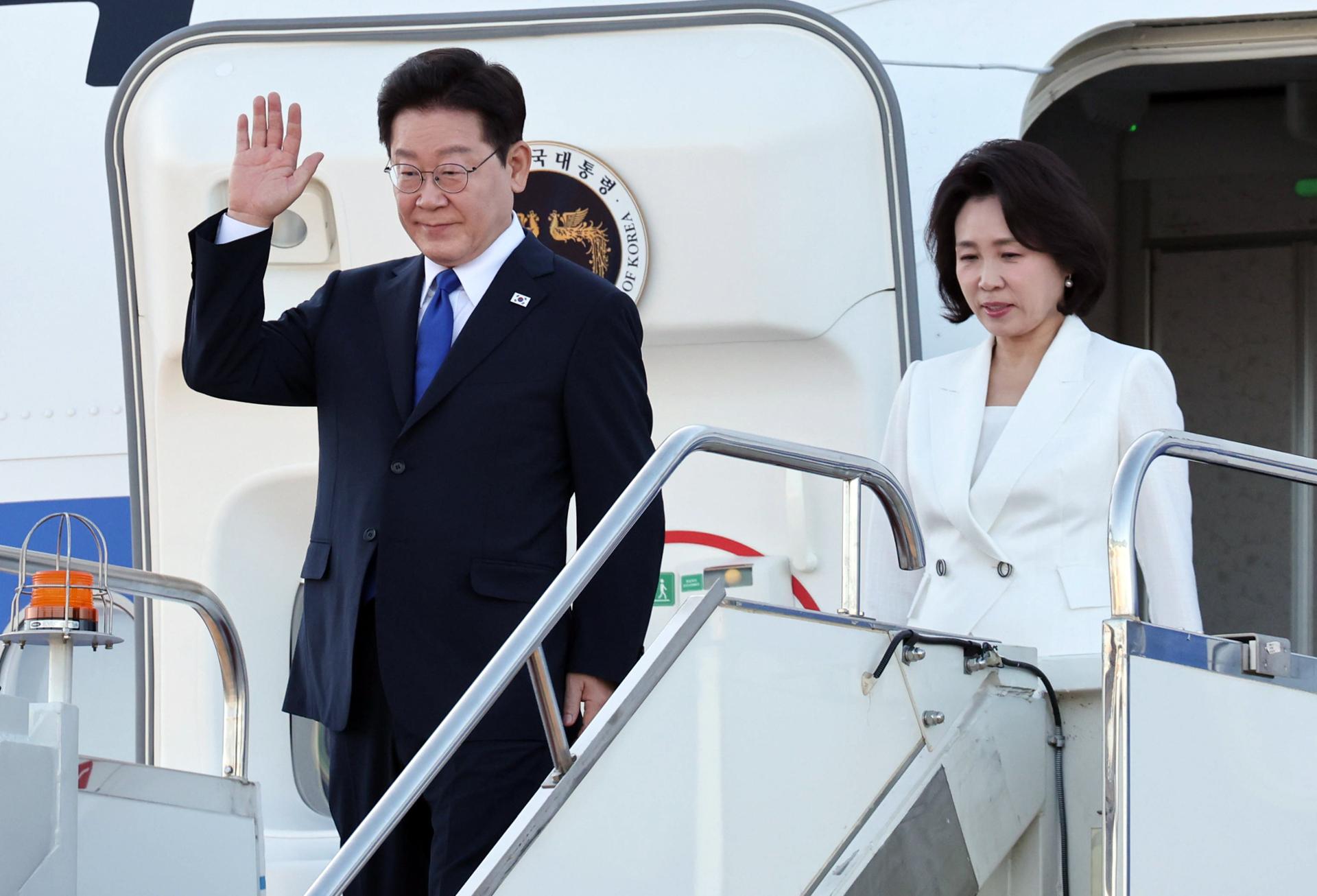
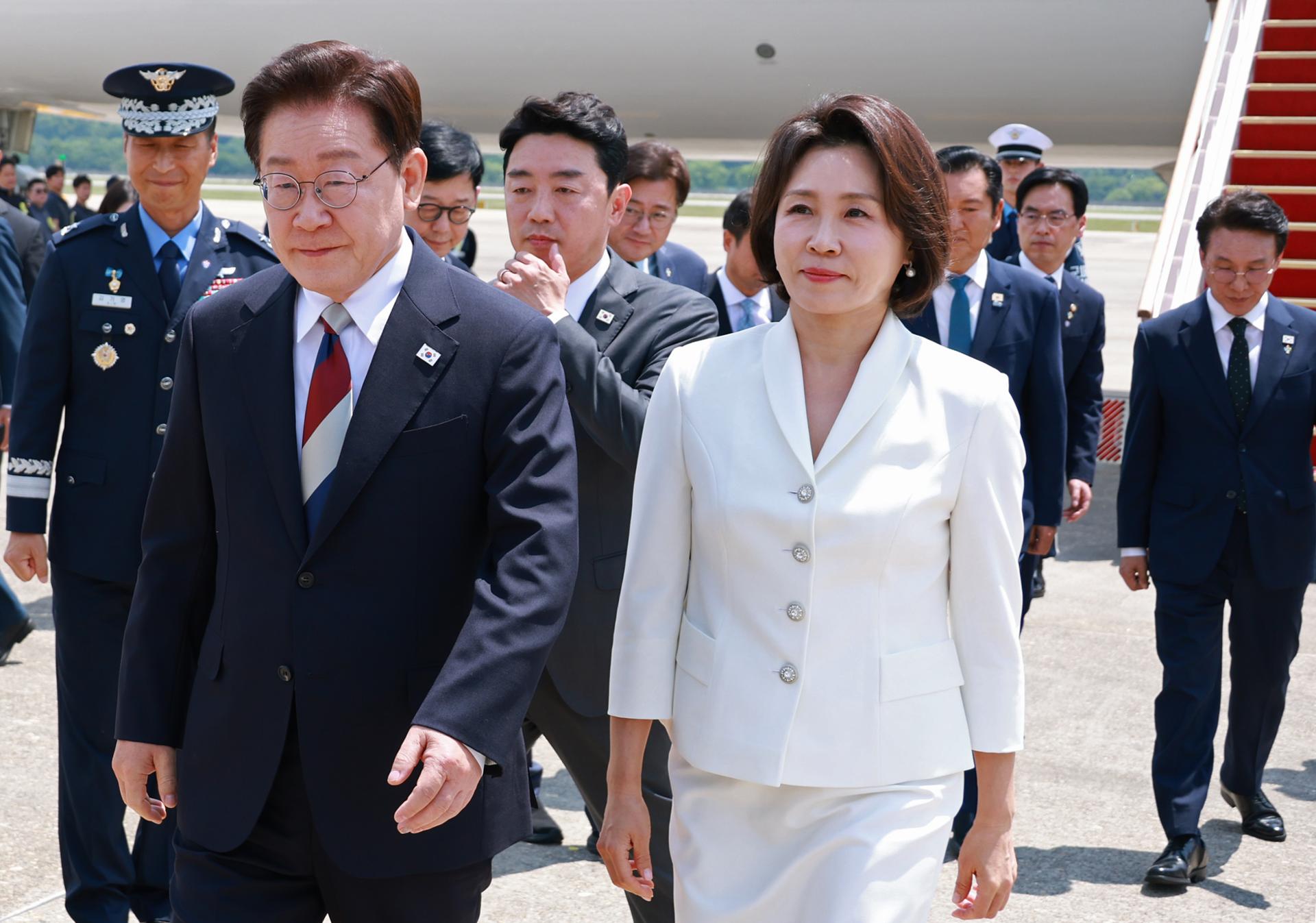
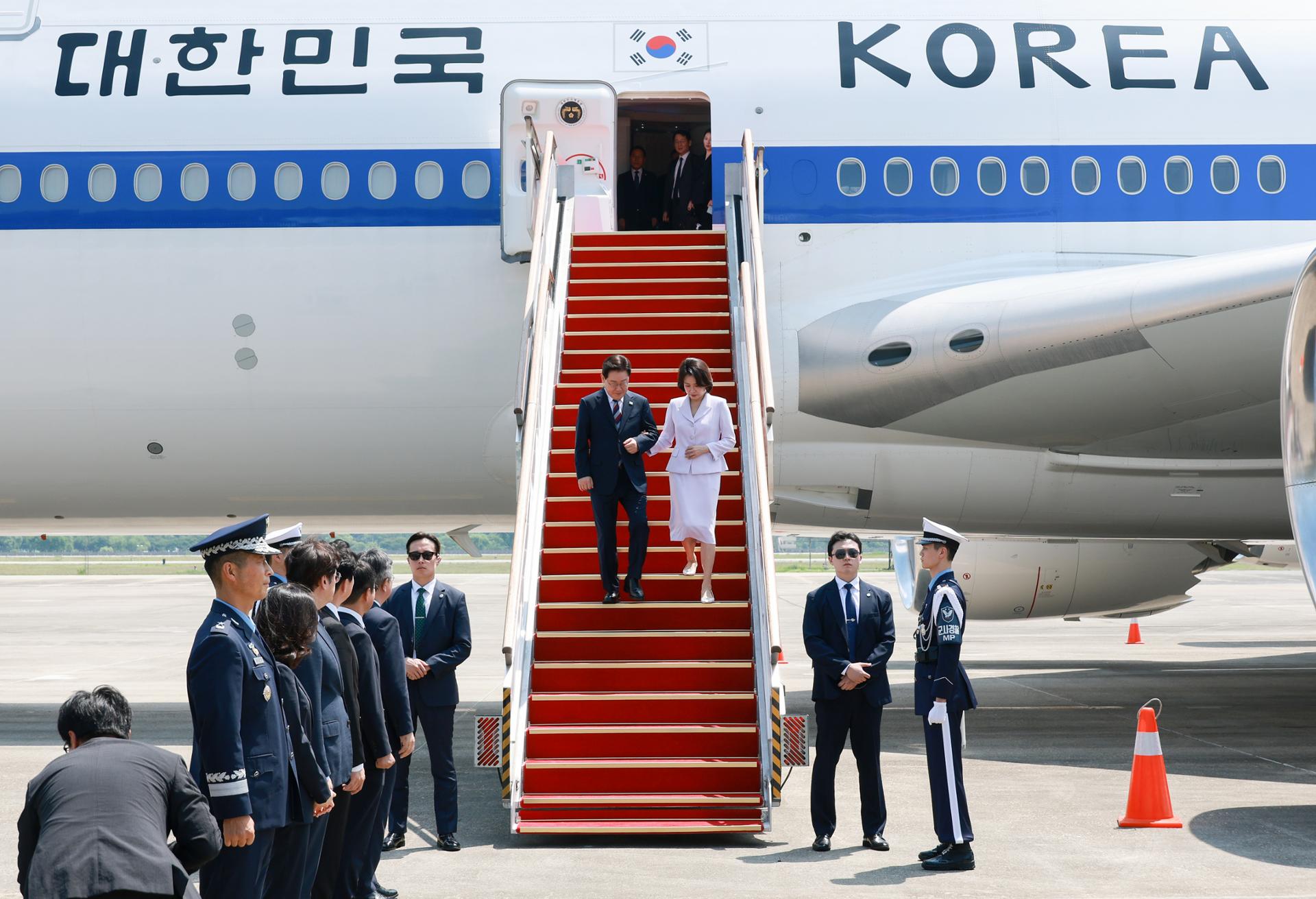
Returns home to mounting domestic challenges, including housing policy, mega projects and possible Cabinet reshuffle President Lee Jae Myung and first lady Kim Hea Kyung arrive at Seoul Air Base in Seongnam on Saturday after concluding a trip that included the NATO summit and a state visit to Mongolia. (Yonhap) President Lee Jae Myung returned to Seoul on Saturday after a five-day diplomatic tour that took him from a NATO summit in Turkey to a state visit to Mongolia, underscoring his effort to position South Korea as a more consequential player in both Euro-Atlantic security and the emerging geopolitics of Eurasia.The journey also served as a bridge between Lee’s immediate foreign policy priorities and a broader strategic vision.From NATO to Mongolia, the trip underscored his effort to deepen South Korea’s engagement with the 32-member trans-Atlantic alliance while expanding ties with countries across the northern reaches of Asia — a region his administration increasingly sees as important to economic security and supply chain resilience. President Lee Jae Myung talks with US President Donald Trump during an official welcoming dinner hosted by Turkish President Recep Tayyip Erdog an and first lady Emine Erdogan at the Presidential Complex in Ankara, Turkey on Tuesday. (Pool Photo via Yonhap) From NATO partnership to US shipbuildingLee’s trip began in Ankara, where he attended a NATO summit for the first time as president and sought to present South Korea as a long-term, trusted partner rather than merely a weapons supplier to the world’s largest defense market.Speaking at the NATO Summit Defense Industry Forum on Tuesday, one of the summit’s flagship events, Lee proposed a “Korea-NATO Defense Industry Partnership 2.0,” calling for the relationship to move beyond arms purchases toward the joint development, production and operation of advanced weapons systems.On the sidelines of the summit, Lee also held a series of bilateral meetings with the leaders of Ukraine, Canada, Norway and Romania, discussing defense cooperation, economic ties and regional security challenges.Lee’s first one-on-one meeting with Ukrainian President Volodymyr Zelenskyy was particularly closely watched. The two discussed North Korean prisoners of war being held in Ukraine, as well as broader efforts to promote peace and support Ukraine’s recovery and reconstruction.Lee’s NATO visit also provided another opportunity to discuss a proposal floated by US President Donald Trump during the Group of Seven summit in France last month to accelerate US naval shipbuilding with the help of South Korean shipbuilders.The issue surfaced again during brief exchanges between the two leaders at summit events, leading the treaty allies to agree to launch working-level consultations on how to move the proposal forward. President Lee Jae Myung and first lady Kim Hye Kyung greet spectators alongside Mongolian President Ukhnaagiin Khurelsukh at the Naadam Festival grounds in Ulaanbaatar on Saturday during their state visit to Mongolia. (Pool photo via Yonhap) Launchpad for Northern strategyFrom Ankara, Lee traveled to Mongolia for a three-day state visit, the first by a South Korean president in 15 years and one that officials described as carrying significance beyond bilateral relations.A senior Cheong Wa Dae official said Thursday that Lee’s visit was significant because Mongolia represented “the starting point of a renewed Northern Policy aimed at expanding exchanges and cooperation with countries across the broader northern region.”“Building on the outcomes of this visit, we hope to carry that momentum into the Central Asia summit in September, strengthening ties with our northern partners and opening new avenues for cooperation,” the official said.South Korea is set to host its first summit with the five Central Asian countries — Kazakhstan, Kyrgyzstan, Tajikistan, Turkmenistan and Uzbekistan — in September.“In the process, we also hope to identify new opportunities for progress on issues related to the Korean Peninsula,” the official said. “That is one of the objectives guiding our efforts.”The centerpiece of the Mongolia visit was Lee’s summit with Mongolian President Ukhnaagiin Khurelsukh, during which the two leaders adopted a joint declaration proclaiming a “Golden Age of Korea-Mongolia Relations.”The declaration outlined an expansive agenda for future cooperation, including the conclusion in principle of a Comprehensive Economic Partnership Agreement, a broad trade pact intended to deepen economic integration between the two countries.The two governments also agreed to develop mutually beneficial cooperation based on Mongolia’s abundant critical mineral resources and South Korea’s advanced technologies, while expanding collaboration in roads, railways, transportation and other infrastructure projects. President Lee Jae Myung and Mongolian President Ukhnaagiin Khurelsukh exchange greetings after the Korea-Mongolia Business Forum at a hotel in Ulaanbaatar on Thursday. (Pool photo via Yonhap) Beyond economics, the declaration also addressed regional peace and security.The two countries said they “expressed support for the three pillars of the Treaty on the Non-Proliferation of Nuclear Weapons — nonproliferation, disarmament and the peaceful use of nuclear energy.”The declaration added that “the two leaders emphasized that peace and stability on the Korean Peninsula are of great importance in promoting peace, stability and security throughout Northeast Asia.” The two sides also “reaffirmed their position that all issues should be resolved peacefully through dialogue.”However, the joint declaration made no reference to North Korea’s denuclearization as a shared objective. Instead, it simply stated that “South Korea explained its policy of peaceful coexistence and shared growth on the Korean Peninsula, including inter-Korean exchanges, normalization of relations and a phased approach to denuclearization.”Lee capped the visit on Saturday by attending the opening ceremony of Mongolia’s Naadam Festival as an official guest of honor, becoming the first South Korean president to attend the country’s largest national celebration in that capacity.Lee and first lady Kim Hea Kyung later attended a farewell luncheon hosted by Khurelsukh. The presidential couple received an unusually warm sendoff lasting about four hours before departing for Seoul. President Lee Jae Myung shakes hands with presidential chief of staff Kang Hoon-sik upon arriving at Seoul Air Base in Seongnam, Gyeonggi Province, on Saturday after concluding a trip that included the NATO summit and a state visit to Mongolia. (Newsis) Home to full in-boxBack home, however, Lee faces a crowded domestic agenda.He is expected to spend the coming weeks reviewing follow-up measures stemming from the trip while refocusing on domestic priorities as he enters the second year of his presidency.Among the most immediate tasks is advancing the government’s recently announced “three mega projects” — spanning semiconductors, artificial intelligence data centers and physical AI — including the establishment of a dedicated presidential task force to oversee their implementation.The Lee administration is also preparing a series of public discussions on housing policy.Lee is scheduled to preside over a major real estate policy forum on July 23, where housing supply, financing and taxation will be among the principal issues debated as the government seeks to refine its approach to stabilizing the housing market.Beginning Wednesday, Lee is also set to chair a second round of ministerial policy briefings at Cheong Wa Dae through July 21, following a first round held in December 2025, as part of a broader effort to accelerate the implementation of key policy initiatives.Attention is also turning to a possible Cabinet reshuffle, with Prime Minister Han Sung-sook having taken office on July 1. Lee has already signaled that changes to his administration may be on the horizon.At a news conference marking the first anniversary of his presidency on June 8, Lee said that “the time seems to be approaching when we need to make some adjustments to the way we work, as well as to the substance and direction of our policies.”