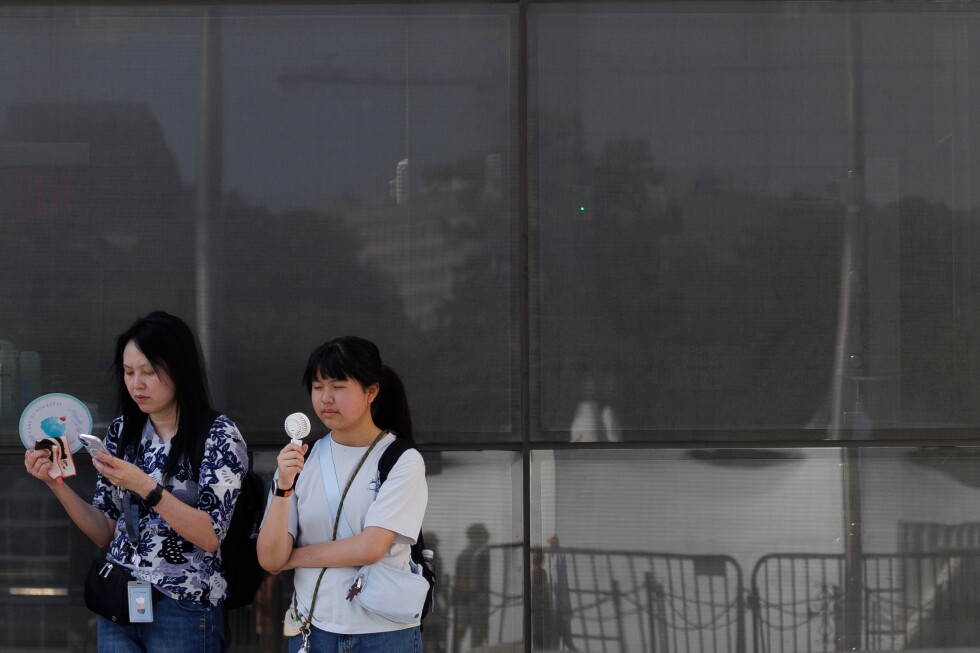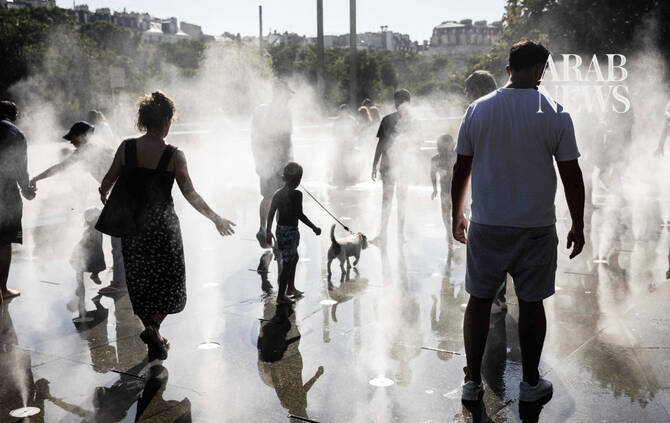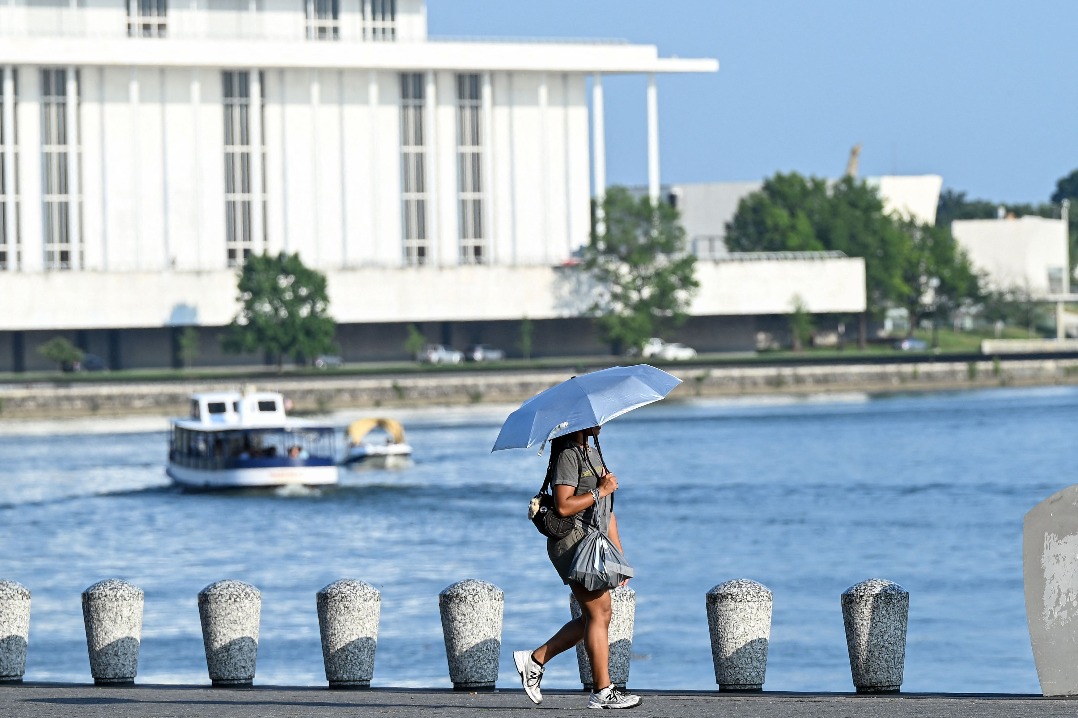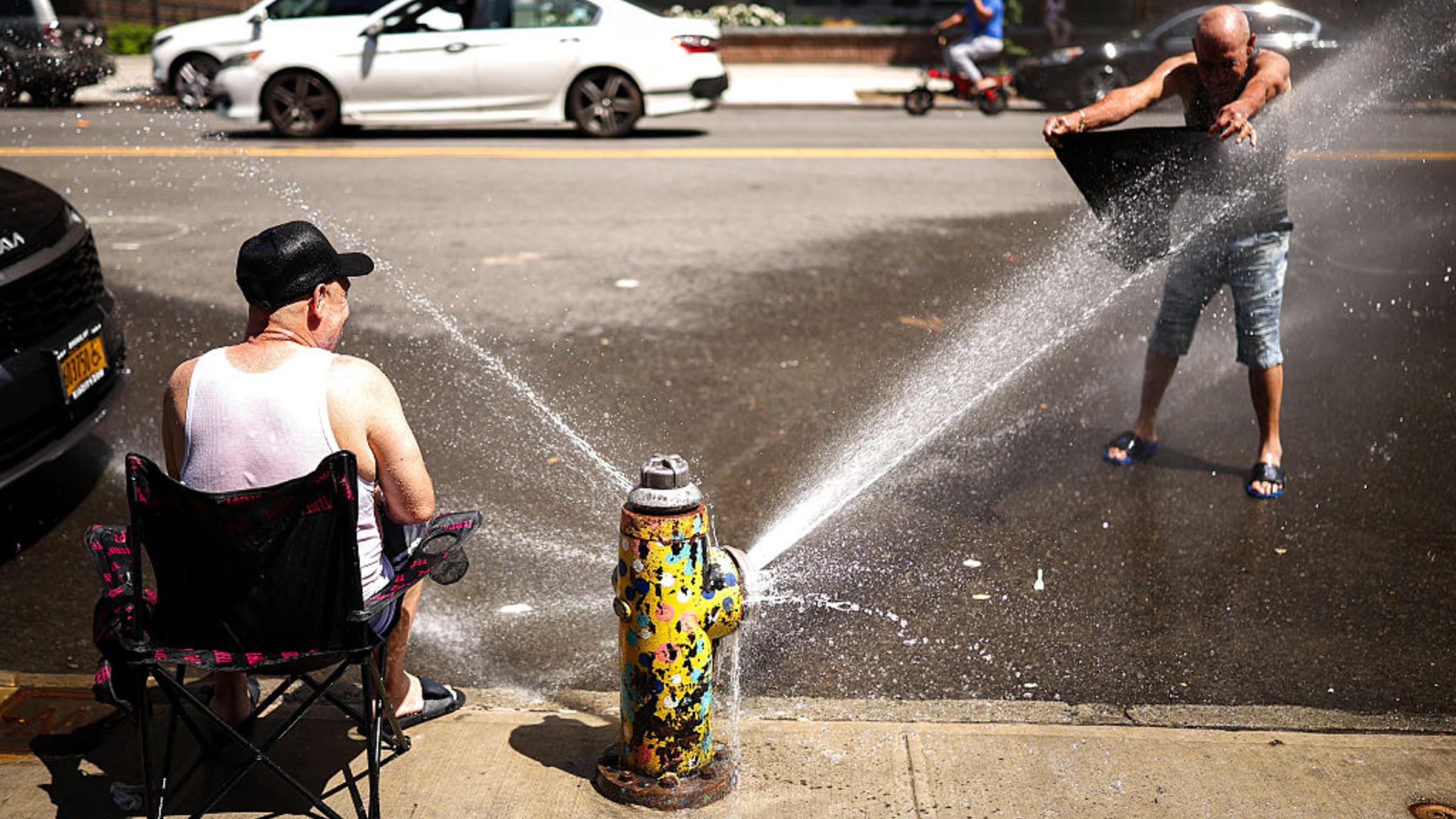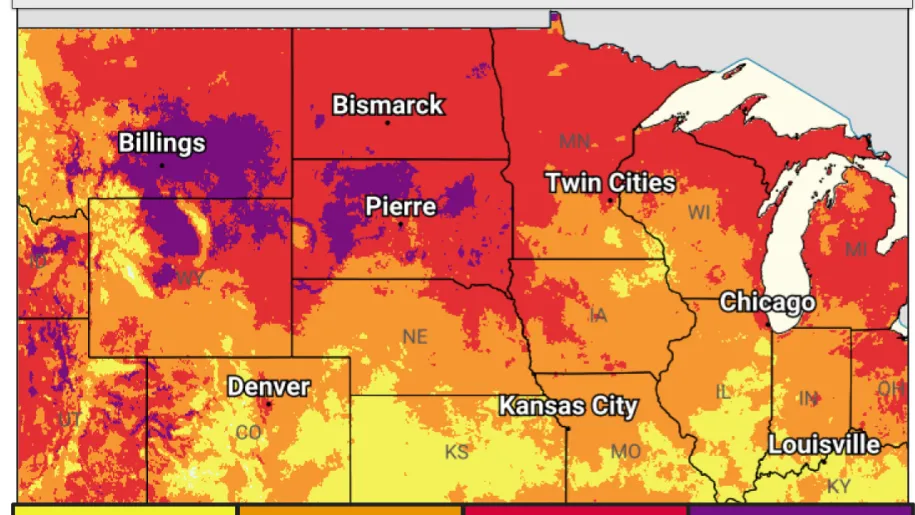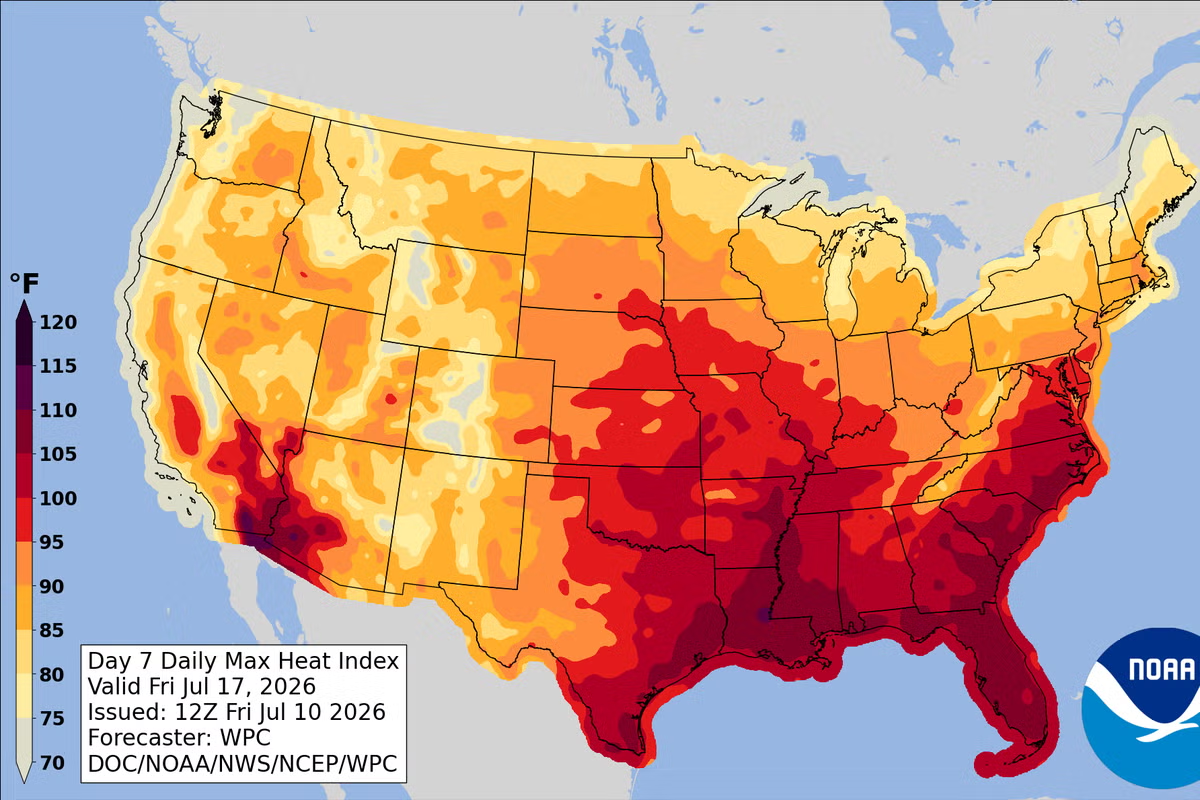
A widespread and dangerous heat wave is building across the U.S., with triple-digit highs expected in the Southwest and Great Plains this weekend before spreading eastward under a dome of high pressure that meteorologists say could trap oppressive temperatures for a week or more.Forecasters are advising people to stay hydrated and find places to cool off, warning of temperatures 15 to 25 degrees Fahrenheit (8 to 14 degrees Celsius) warmer than normal in many areas, including at night — especially bad for people’s health because their bodies won’t have a chance to recover. The heat dome is expected to affect as much as two-thirds of the continental United States.“The heat doesn’t necessarily stop when it’s dark out,” said Josh Adam, a meteorologist with the National Weather Service in Bismarck, North Dakota, where temperatures will surpass 100 F (37 C) until Tuesday. That is a dramatic spike for a state where summer temperatures are typically in the 80s, he said.
Temperature records will be broken
The National Weather Service predicts that more than 90 U.S. local temperature records will be tied or broken through Wednesday — with two-thirds of those being overnight heat records. Temperatures won’t drop below 80 F (27 C) at night in Fort Lauderdale, Florida; Miami; Tampa, Florida; Galveston, Texas; and Charleston, South Carolina, according to the forecast.The current heat dome — formed when high pressure traps hot air while blocking cooling winds and rain — is one of the strongest to affect the Dakotas in 25 years, said Chad Merrill, a senior meteorologist with AccuWeather.Forecasters expect record triple-digit highs this weekend in Nevada, Utah, Colorado, Wyoming, Idaho, Montana, North Dakota and South Dakota.AT LEAST 25 DEATHS OVER FOURTH OF JULY WEEKEND ATTRIBUTED TO HEATNevada, a state accustomed to hot weather, is even hotter than normal, said Andrew Gorelow, a meteorologist with the National Weather Service in Las Vegas. The temperature in Las Vegas is expected to hit 111 F (48 C) on Saturday, Gorelow said.Hydrating and finding cool spaces is critical, experts said.They also warn the heat could spike fire risk to some parts of the country that already are dry, including the Rockies, where Merrill said dry thunderstorms could develop.Climate change is supercharging heat