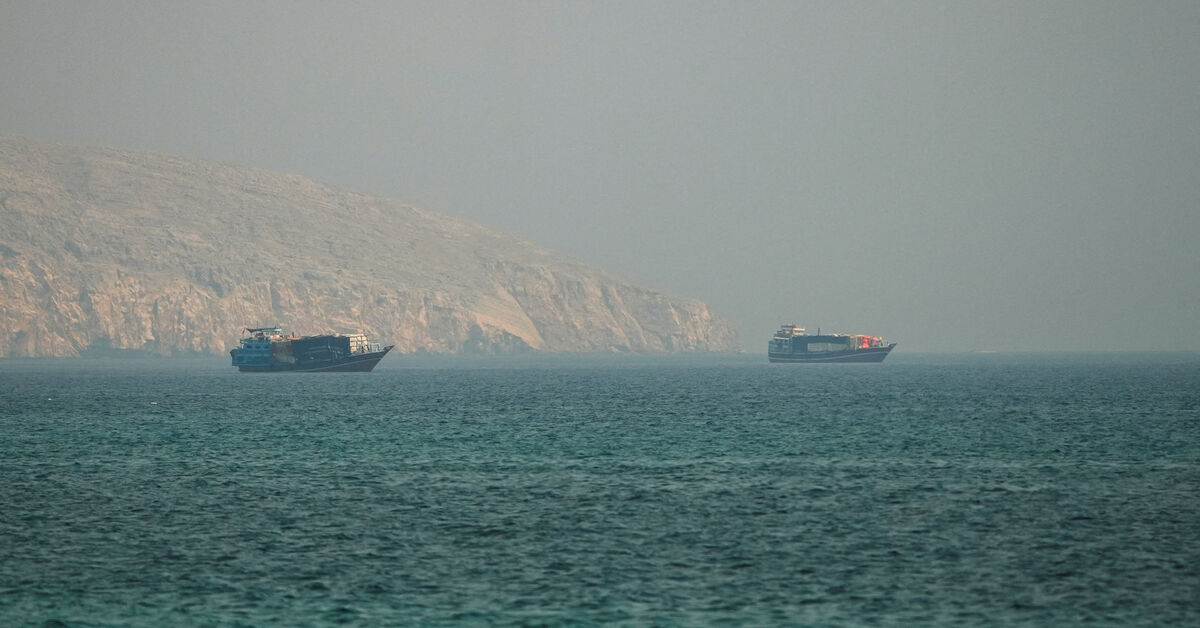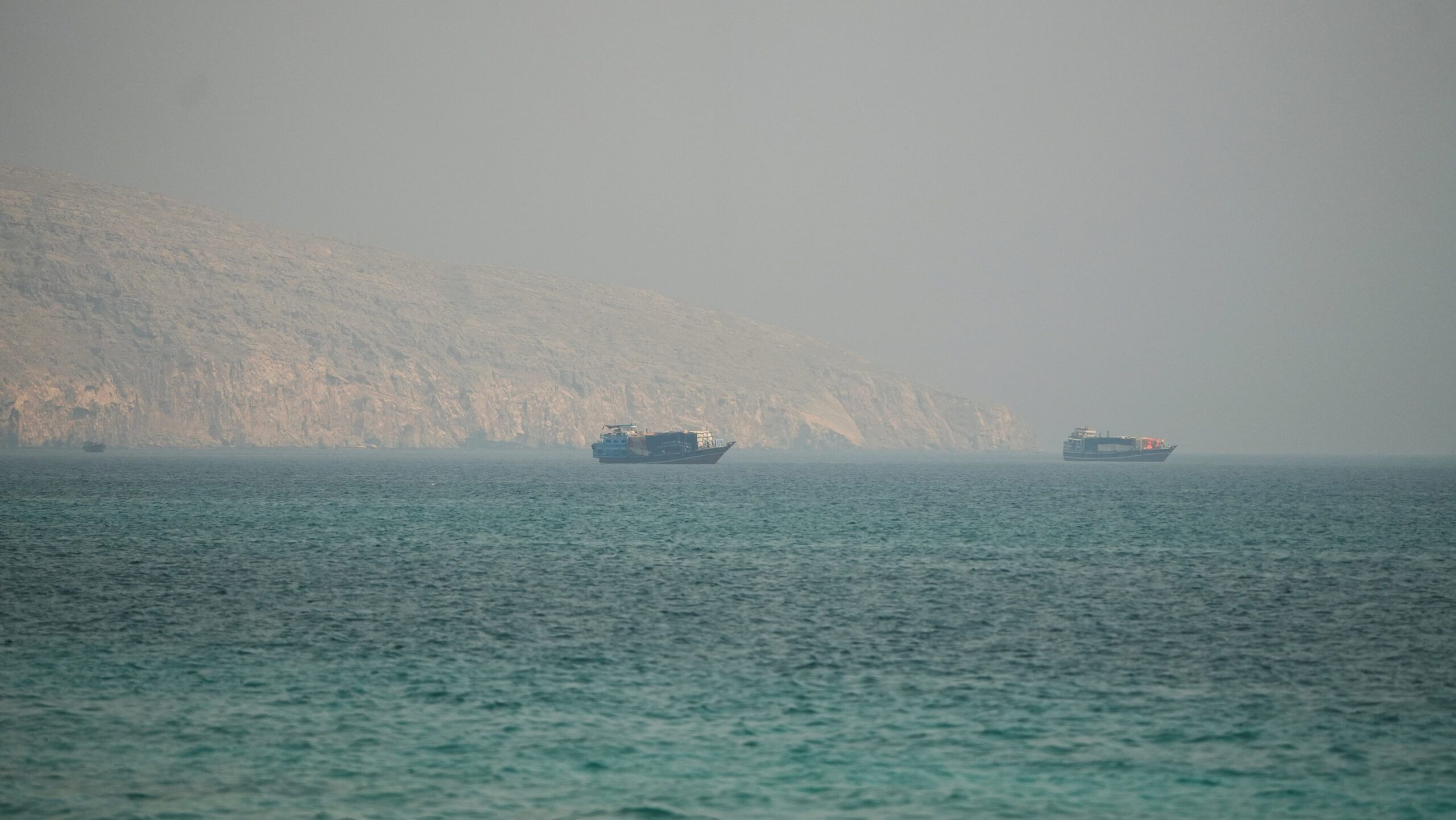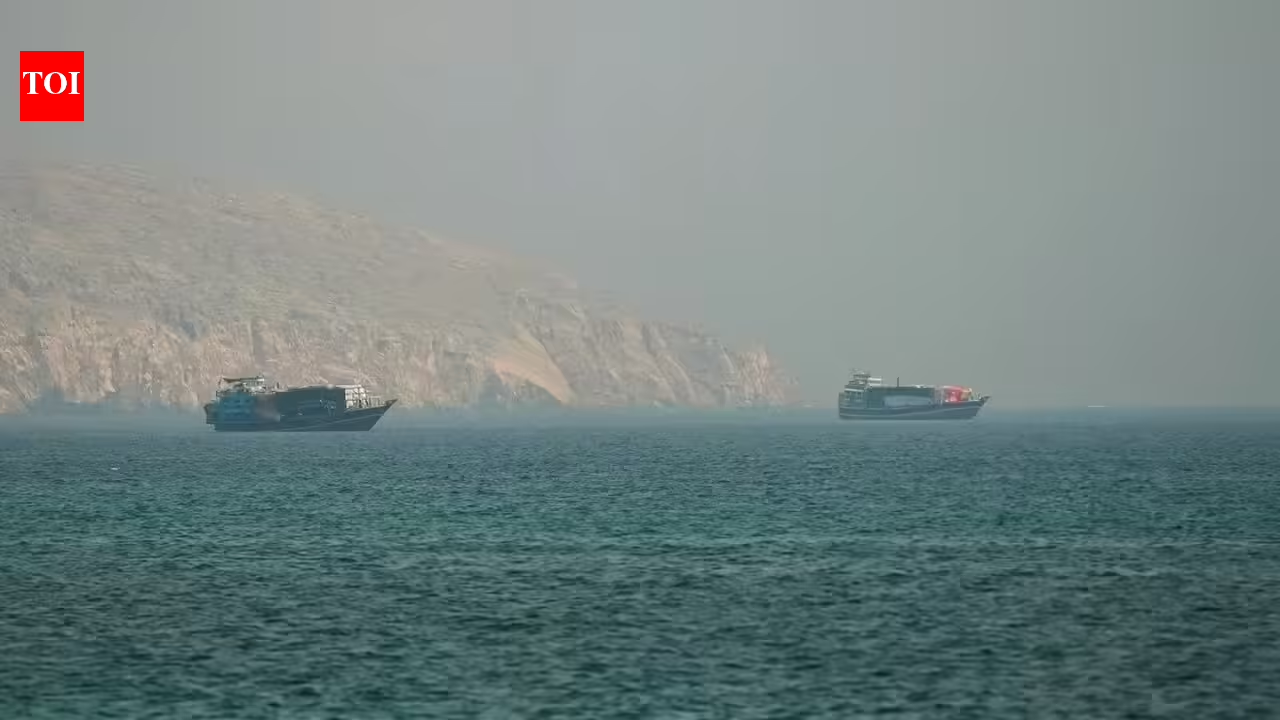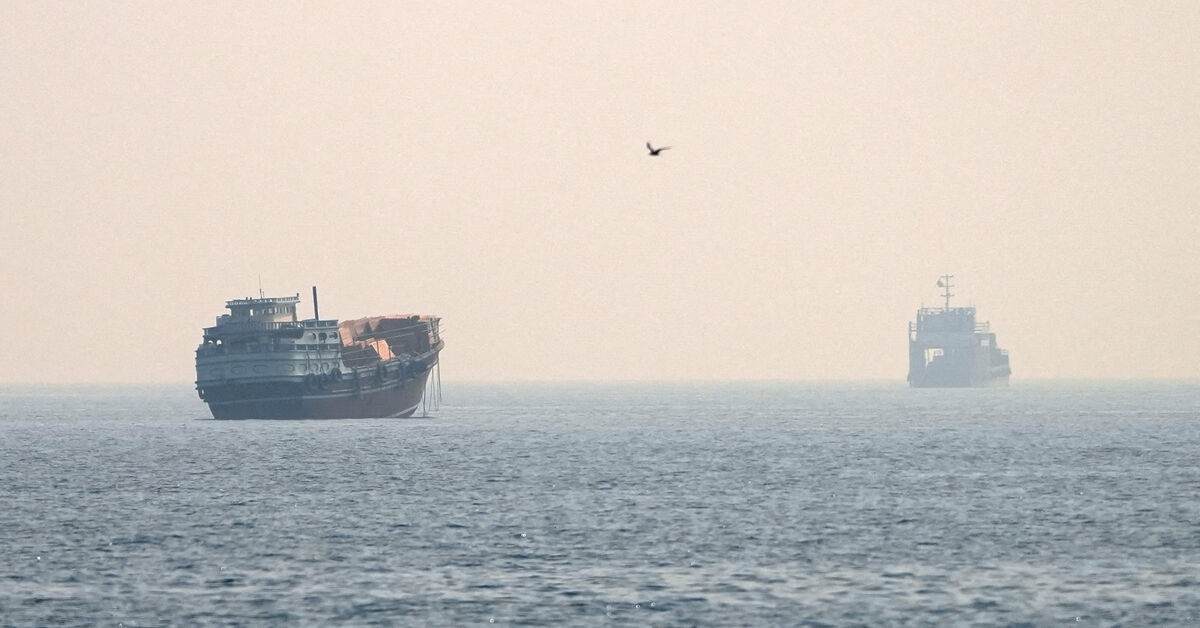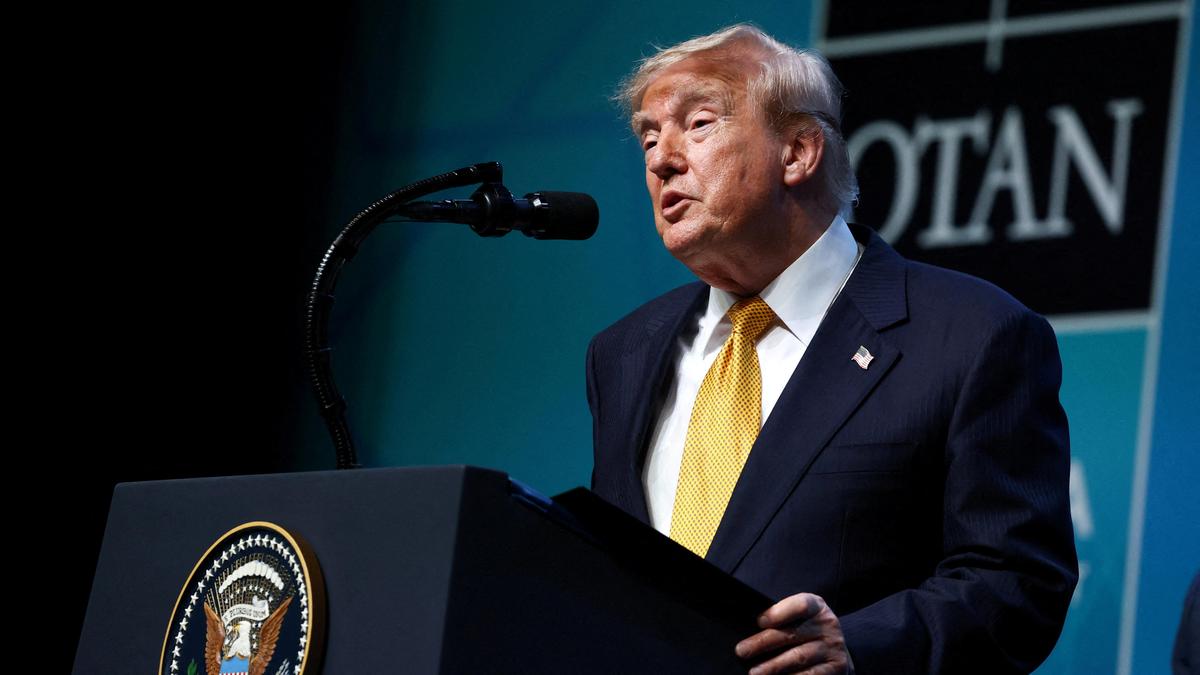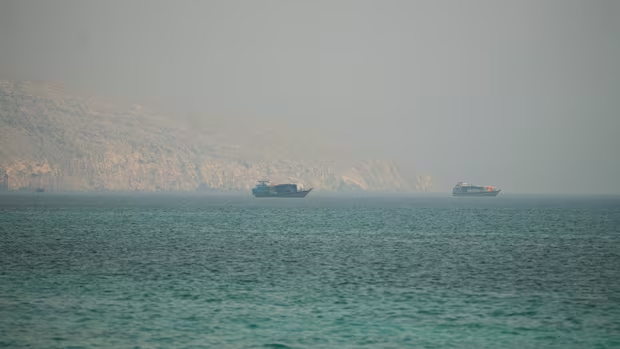
WorldThe United States is seeking a pledge from Iran that it will allow safe passage for ships through the Strait of Hormuz — all while U.S. President Donald Trump is saying that their ceasefire is over.The news comes as hostilities between the two warring nations continueThomson Reuters · Posted: Jul 11, 2026 8:33 AM EDT | Last Updated: 39 minutes agoListen to this articleEstimated 5 minutesThe audio version of this article is generated by AI-based technology. Mispronunciations can occur. We are working with our partners to continually review and improve the results.Vessels are shown at the Strait of Hormuz, as seen from Musandam, Oman, on Thursday. (Reuters)Iran's foreign affairs minister arrived in Oman on Saturday to discuss arrangements for the safe passage of ships through the Strait of Hormuz, Iranian state media said, with Washington seeking a public pledge of free, secure transit.U.S. President Donald Trump said on Friday that the U.S. and Iran had agreed to continue talks despite an escalation of hostilities this week, while also declaring an end to the ceasefire reached between the two sides. No attacks were reported on Friday or early Saturday, however.Iran's semi-official Tasnim News Agency said on Saturday that Foreign Affairs Minister Abbas Araghchi had arrived in Oman. The country is helping to mediate an end to a war that has spread insecurity in the Gulf and raised prices around the world since the U.S. and Israel launched airstrikes on Iran on Feb. 28.CBS News and the BBC both reported that U.S. Vice-President JD Vance, Secretary of State Marco Rubio, special envoy Steve Witkoff and Trump's son-in-law, Jared Kushner, were expected to lead negotiations on Saturday with Araghchi.Reuters was not immediately able to confirm the reports, which did not say whether they would be in Oman or attend virtually. Iran's Fars News Agency later cited a source saying no negotiations would take place until the U.S. retreated from its positions.WATCH | How are the latest escalations affecting the economy?:How is the reignited U.S.-Iran conflict impacting the global economy?July 10|Duration 8:39Renewed fighting between the U.S. and Iran is causing global economic uncertainty as an already fragile market experiences more shipping disruptions in the Strait of Hormuz. Economist Justin Wolfers joins Power & Politics to evaluate how this conflict is weighing on the global markets.Iran says U.S. violated interim agreementAraghchi accused the U.S. of violating the ceasefire agreement; the U.S. revoked the licence authorizing the sale of Iranian crude on Tuesday after the vessels were hit."There can only be mutual compliance," he wrote on social media platform X.Three Qatari and Saudi commercial tankers came under fire earlier in the week, prompting the U.S. to hit Iranian sites and Iran to respond with strikes on U.S. military sites in Gulf states.Attacks by the U.S. and Iran intensify across the Middle EastAnalysisAs Trump declares ceasefire over, Iran's leadership is divided over how it wants the war to endWhile Iran has not claimed responsibility for the ship attacks, analysts say Tehran uses such actions to gain leverage in negotiations.Senior U.S. officials told reporters on Friday that Iran had informed U.S. officials that recent attacks on shipping in the Strait of Hormuz were from an "errant part of their system," comments that appeared to be aimed at calming tensions.The flareup cast further doubt over the future of an interim agreement aimed at ending the conflict and pushed oil prices higher — a politically sensitive issue for Trump ahead of November congressional elections.WATCH | U.S.-Iran progress seems fragile as ceasefire crumbles:The National | U.S.-Iran ceasefire crumblingJuly 9|Duration 45:41July 9, 2026 | U.S. President Donald Trump says Iran still wants a ceasefire deal as the countries continue tit-for-tat attacks. Mark Carney looks to reset relations with Saudi Arabia. And severe flooding has devastating impacts across Canada."The Islamic Republic of Iran has asked us to continue 'talks.' We have agreed to do so, but the United States has stated to them, in no uncertain terms, that the Cease Fire is OVER!" Trump posted on his Truth Social platform on Friday.Iran disputed Trump's interpretation, saying it had not requested talks with the U.S. but had agreed to host a Qatari mediator, state television reported. Qatari negotiators met officials in Iran on Friday to de-escalate tensions and discuss the Strait of Hormuz, a person with knowledge of the situation told Reuters.The Wall Street Journal and other U.S. media reported this week that Israel had shared intelligence with Washington that Iran had recently devised a plan to assassinate Trump.Trump posted that he had ordered the U.S. military to be prepared to launch strikes against Iran if Tehran carried out or attempted an assassination of the president."1000 Missiles are Locked and Loaded and aimed at the Islamic Republic of Iran, with thousands of more to immediately follow, should the Iranian Government act on its threat, pronounced in many corners of the Globe, to assassinate, or attempt to assassinate, the sitting President of the United States of America, in this case, ME!," he wrote.There was no immediate comment from Iran on Trump's latest remarks.WATCH | Was the Strait of Hormuz ever really open?:Strait of Hormuz never really re-opened after U.S.-Iran ceasefireJuly 9|Duration 0:52Daily transits through the Strait of Hormuz increased after the U.S. and Iran signed a memorandum of understanding to end the conflict and the U.S. lifted its naval blockade on June 18, but that's still barely half of the average before the war.At the funeral of Ayatollah Ali Khamenei, Iran's slain supreme leader, on Thursday, a huge crowd of mourners packed a courtyard, some bearing banners reading, "We Will Kill Trump."Khamenei was killed in an airstrike on the first day of the war.U.S. officials report constructive talksThe U.S. is demanding that Iran publicly state it will stop attacks on ships in the Strait of Hormuz — and that all lanes will be open with no tolls through the waterway that carried one-fifth of global oil supplies before the war, the senior U.S. officials told reporters on Friday.During the war, Tehran has largely taken control of the strait, forcing a stalemate in its confrontation with the world's most powerful military.At least 17 people were killed in U.S. strikes on six cities in Iran on Wednesday and Thursday, the head of the public relations and information centre at Iran's Health Ministry said. He said 115 people were wounded.Even so, U.S. officials said conversations between the two countries had been productive in recent days.LISTEN | Experts concerned with latest Strait of Hormuz development:Bizdigest3:35Only a handful of ships passed through the Strait of Hormuz today, and experts are worried this time the oil crisis could be worseThe renewed hostilities between the U-S and Iran have all but stopped traffic entirely. Now we did see two tankers sail through early this morning. But still, that is far from the 40 or so ships per day that WERE using the Strait, in the weeks since it reopened.Tehran said any breach of commitments by Washington would be met with "reciprocal action," the Foreign Affairs Ministry spokesperson said, according to state media.Last month's interim deal was meant to pave the way to the end of a conflict now in its fifth month, which has killed thousands, throttled worldwide energy supplies and raised fears of a global economic downturn.
U.S. seeks public pledge from Iran to free up Strait of Hormuz | CBC News
The United States is seeking a pledge from Iran that it will allow safe passage for ships through the Strait of Hormuz — all while U.S. President Donald Trump is saying that their ceasefire is over.
1,206 words~5 min read