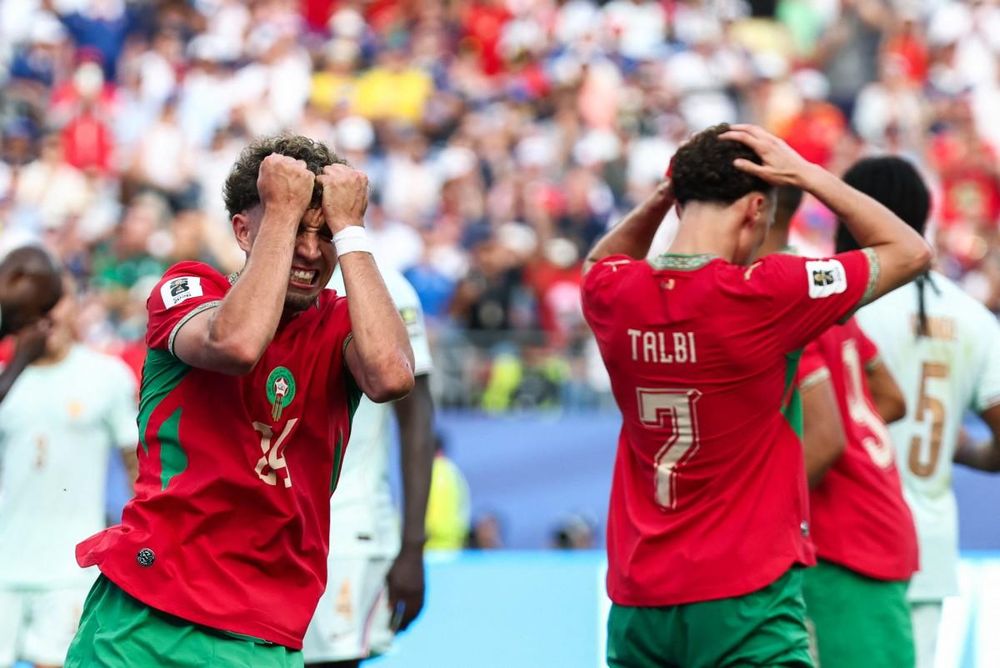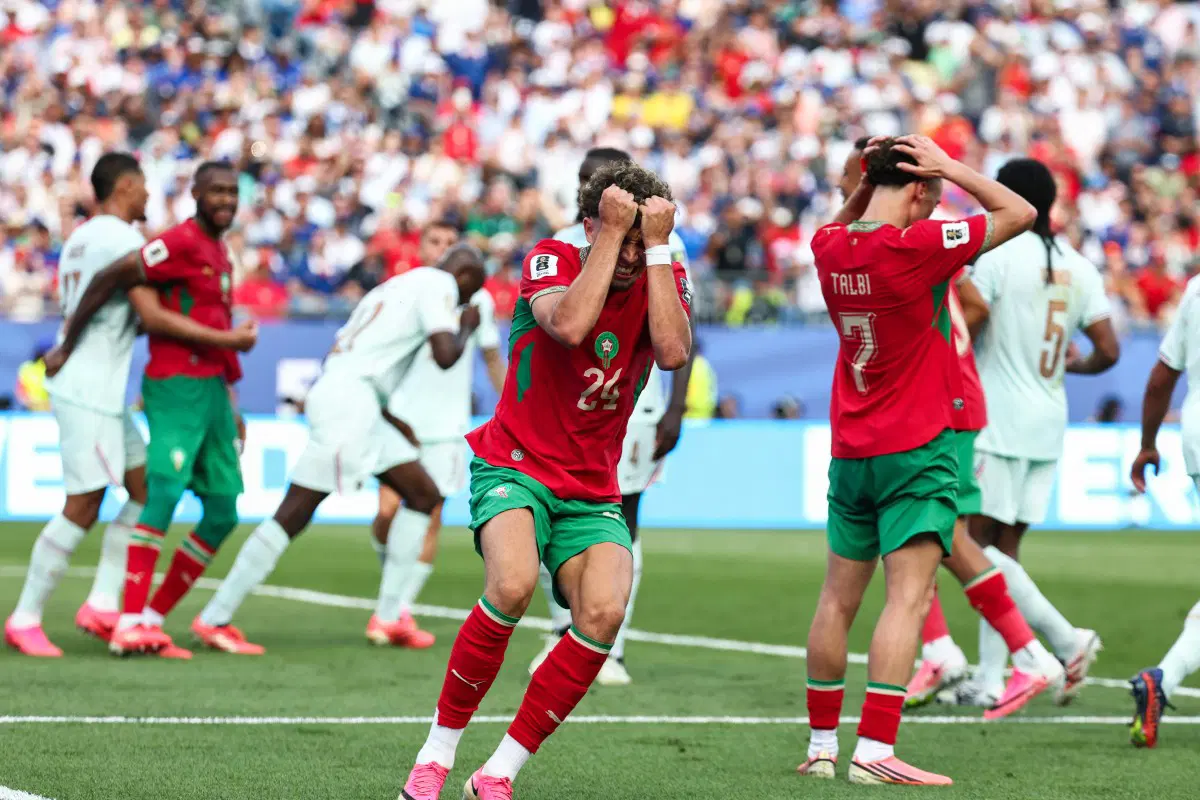
Morocco’s midfielder #24 Neil El Aynaoui reacts to a missed chance during the 2026 World Cup football tournament quarter-final match between France and Morocco at Boston Stadium in Foxborough on July 9, 2026. (Photo by FRANCK FIFE / AFP)
By Jacob Ajom
The 2026 FIFA World Cup has exposed new realities patterning to the growth, development and spread football enjoys among other sports. When FIFA announced the new expanded 48-team format – with Africa getting 9 automatic slots – for its flagship tournament, skeptics, including yours sincerely felt the field was too large and feared the tournament would become boring with low standard matches.
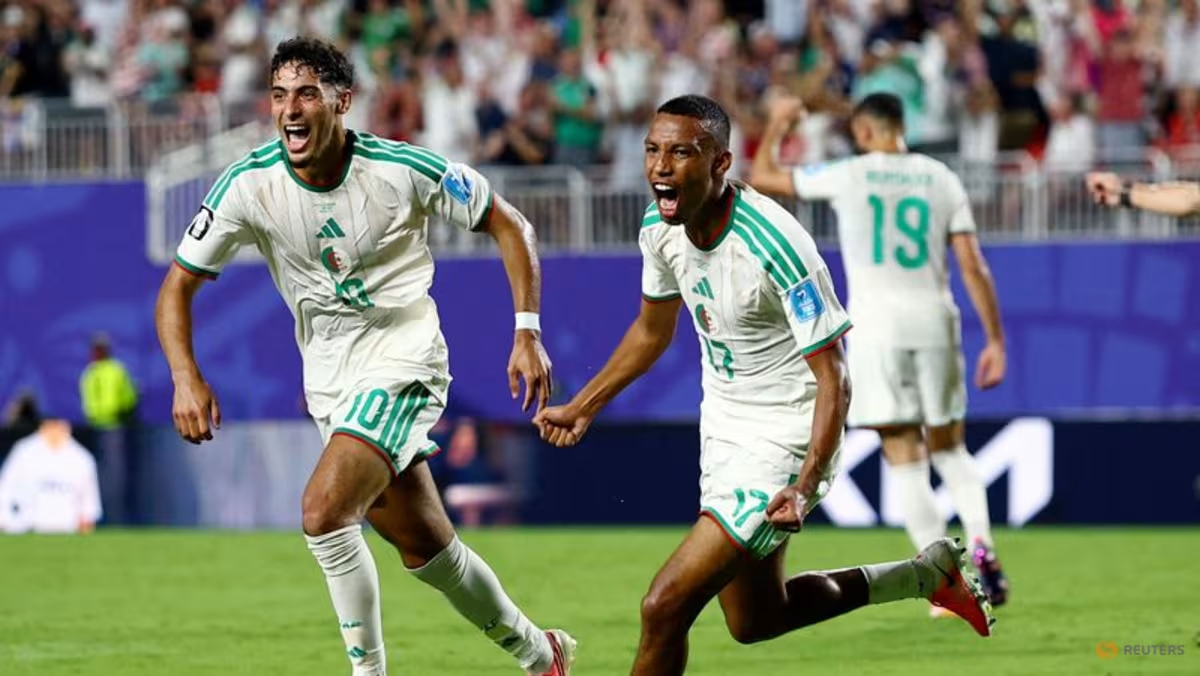
To a large extent FIFA’s postulations have been justified as majority of the teams that went to the tournament have shown that they were worthy representatives of their confederations. A team like Curacao may have conceded 7-1 against Germany in their opening game, but the Dutch Island exited the tournament with a point and some pride. For Africa, it has not been a bad outing, although it could have been better. Out of the ten African representatives nine made it to the Round of 32,. Only Algeria returned early, with no point. Debutants Cape Verde shook the world with their sleek and robust style of play. They were unlucky not to have progressed beyond the Round of 32. For a long time to come, the football world will not forget them in a hurry.