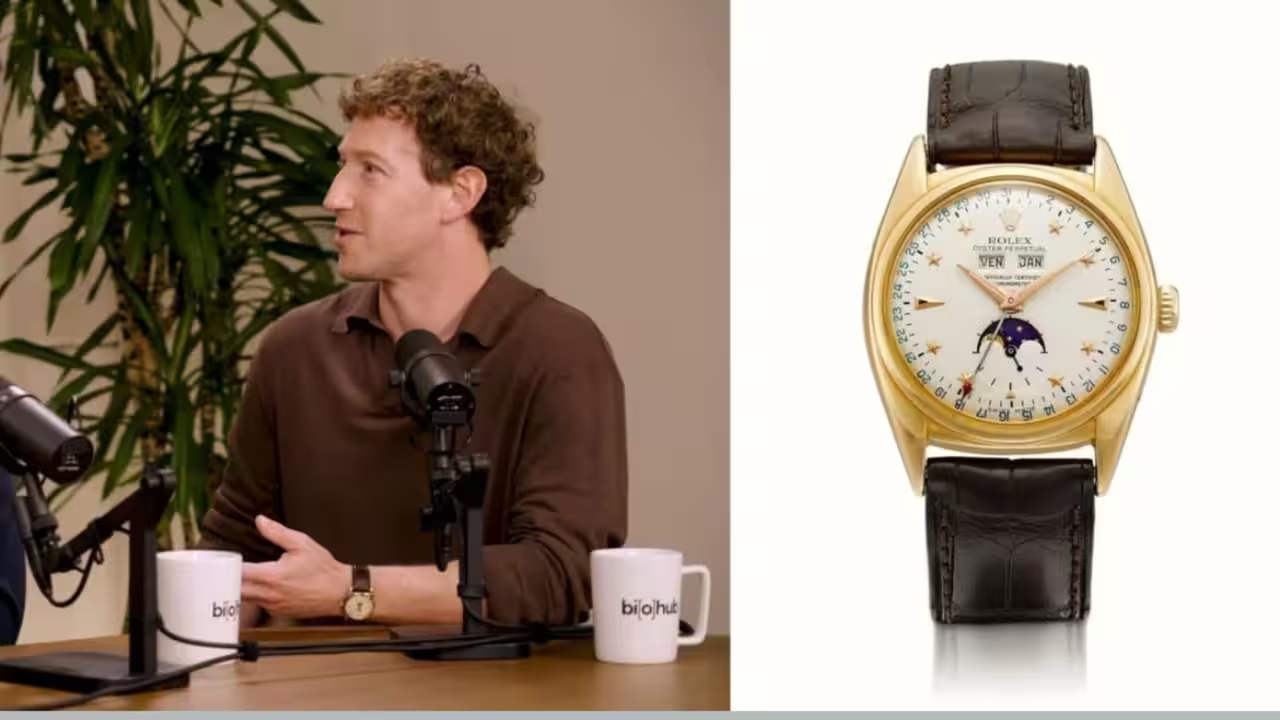
Quick facts:Watch: Rolex ref. 6062 "Stelline"Produced: Briefly, starting around 1950Case: 36mm Oyster, screw-down casebackMovement: Automatic calibre 9¾Complications: Triple calendar + moon phaseTop auction price: $6.2 million (black-dial, diamond-indexed example, 2025)A Watch From Before Rolex Became "Rolex"Long before the Submariner, GMT-Master, and Daytona cemented Rolex’s reputation as a watchmaking powerhouse, the brand introduced a series of elegant and sophisticated dress watches that featured intricate mechanical calendars and other horological complications. The 6062 is among the few references in this category, alongside the 8171, to utilise an automatic triple calendar and a moonphase aperture.The dial does more than show the time:Two small windows near 12 o'clock display the day and monthA central pointer hand tracks the date around the case's outer edgeA moon phase indicator sits at 6 o'clockOn "Stelline" dials, standard hour markers are replaced with tiny stars, Italian for "little stars", giving the watch both its nickname and its distinct lookThere's also a historical footnote collectors love: years before "Cosmograph" became permanently attached to the Daytona, Rolex reportedly used that same term in period advertising for the 6062. For collectors, that detail turns the watch into a quiet ancestor of one of Rolex's most famous modern icons.What Makes It Worth MillionsFactorWhy It MattersScarcityProduced only briefly; very few surviving examplesOriginal dialsUnrestored "Stelline" dials can swing value by hundreds of thousands of dollarsComplicationOne of only two Rolex references with this exact calendar/moonphase setupHistoryEarly link to the "Cosmograph" name, later used for the DaytonaAuction demandRising global collector interest, especially across Asia, the Middle East, and North AmericaThe numbers back this up. A pink-gold Stelline sold at Christie's in 2023 for 2.2 million Swiss francs (about $2.7 million). A black-dial version with diamond hour markers went even further, fetching $6.2 million last year, placing it among the most expensive Rolex watches ever sold.Watches as an Alternative InvestmentZuckerberg’s appearance in this watch reveals as much about luxury good investment trends as it does about high-end horology. The reason vintage timepieces are gaining ground as alternative assets is that they represent a “controlled supply". The houses don’t produce more (Rolex), and fewer pieces retain their original dial over time. These factors, coupled with collectors’ demand, drive prices up for certain watches, making them investment items, with the most prominent representing a peak of affluence, fetching millions at auction, and dominating the financial news.What Buyers Can Learn From ItYou don't need eight figures to apply the lesson. What typically separates a watch that holds its value from one that doesn't comes down to the following:
The Rolex 6062 "Stelline": Inside the Ultra-Rare Watch Mark Zuckerberg Wore on His Wrist
Mark Zuckerberg flaunted his outstanding Rolex ref. 6062 Stelline watch during a podcast, stirring excitement among watch enthusiasts. This exquisite model boasts a triple calendar and an intricate moon phase feature. Its rarity and historical value elevate its auction price, making vintage watches a sought-after investment alternative due to their limited supply. Authenticity and origin play crucial roles in differentiating genuinely valuable pieces from the rest.
418 words~2 min read